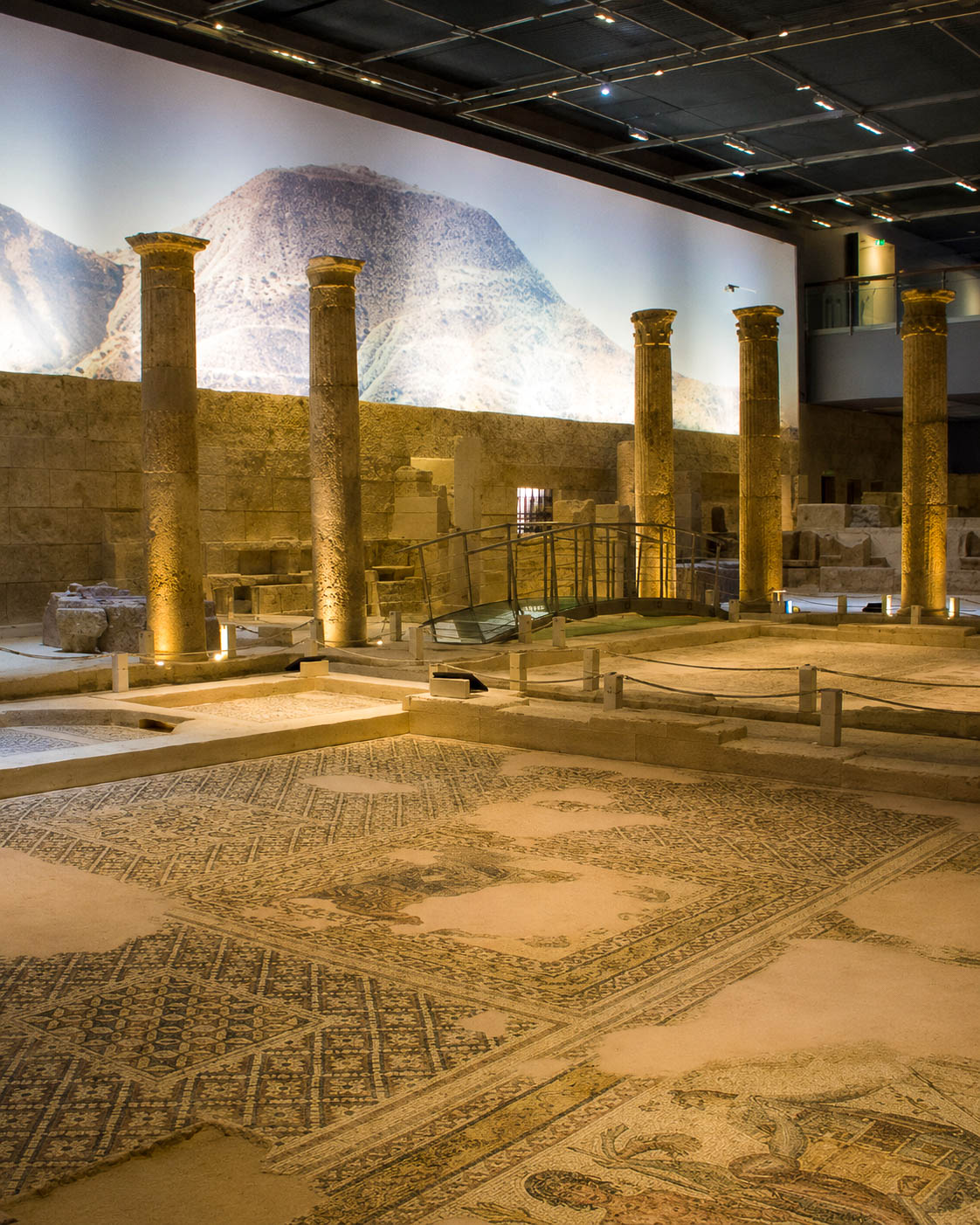
Zeugma Mosaic Museum
One of the largest mosaic museums in the world, built to house the Roman mosaics rescued from the ancient city of Zeugma before it was flooded by a dam. The Gypsy Girl mosaic alone is worth the visit. Budget at least two hours.
UNESCO City of Gastronomy, home of baklava and pistachio
A UNESCO Creative City of Gastronomy in southeast Turkey, where pistachio orchards, copper bazaars and one of the world's finest mosaic museums sit on top of 6,000 years of history.
The reason most people come is the food. Gaziantep is one of UNESCO's designated cities of gastronomy and the standard is genuinely the highest in Turkey: pistachio baklava that defines the dish, beyran soup eaten at dawn, lahmacun, ali nazik kebab, katmer and the most flavourful Antep pistachios in the country. Eat early, eat often, and don't try to pace yourself.
Beyond the table, the city is anchored by the Zeugma Mosaic Museum, one of the largest mosaic museums in the world, with Roman floors recovered from a town now submerged under a dam. The hilltop citadel, the copper bazaars and the cuisine museum in a restored konak make a tight walking circuit through the old town. Day trips reach Sanliurfa and Gobekli Tepe, the sunken village of Halfeti and the Hittite reliefs at Yesemek.
Eight places worth your time. Tap a photograph, the map will follow.
One of the largest mosaic museums in the world, built to house the Roman mosaics rescued from the ancient city of Zeugma before it was flooded by a dam. The Gypsy Girl mosaic alone is worth the visit. Budget at least two hours.
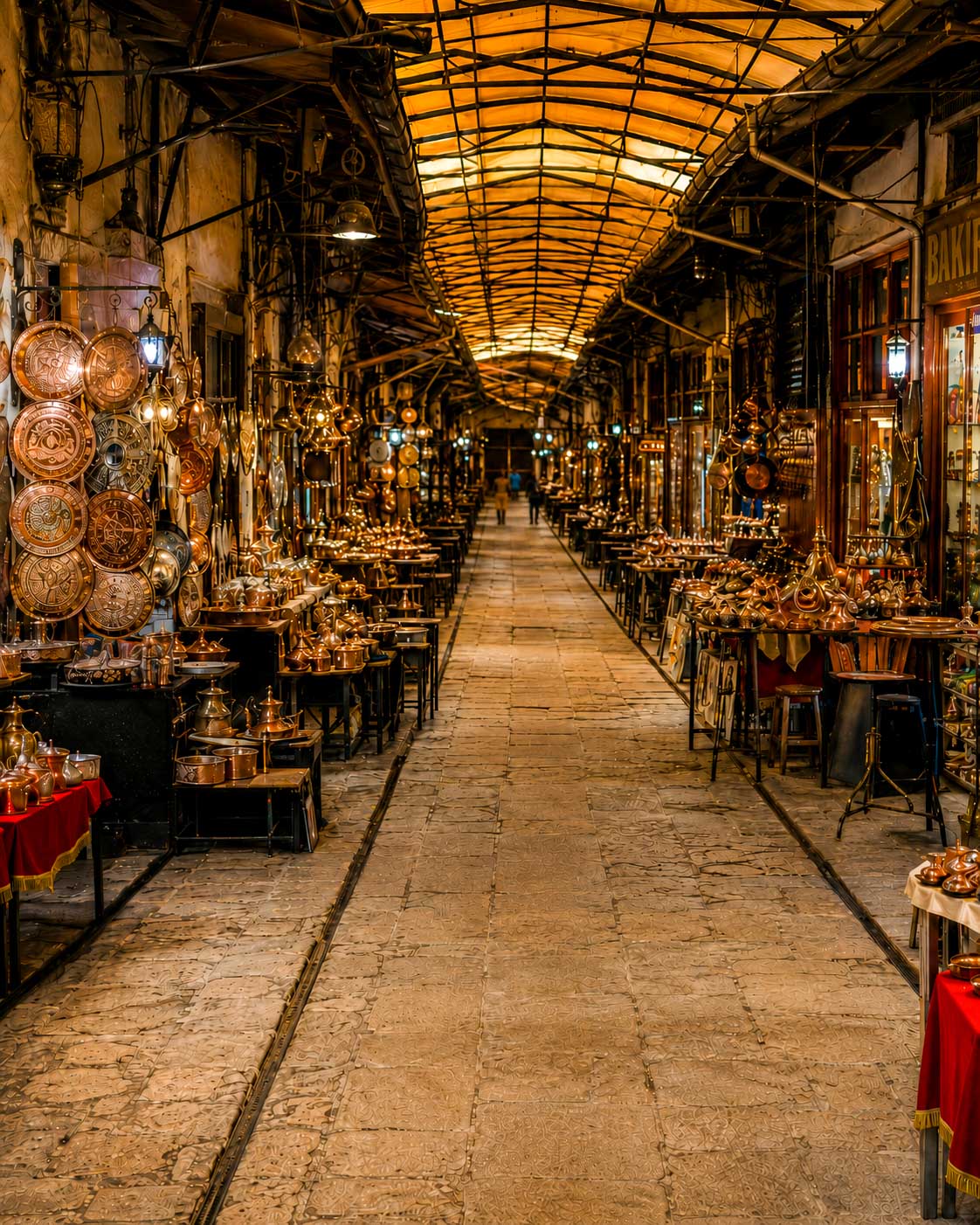
Narrow alleys filled with the sound of hammers on copper. Coffee pots, pans, trays and handmade cezves beaten into shape by master craftsmen. One of the last working copper bazaars in Turkiye. A perfect hour of wandering.
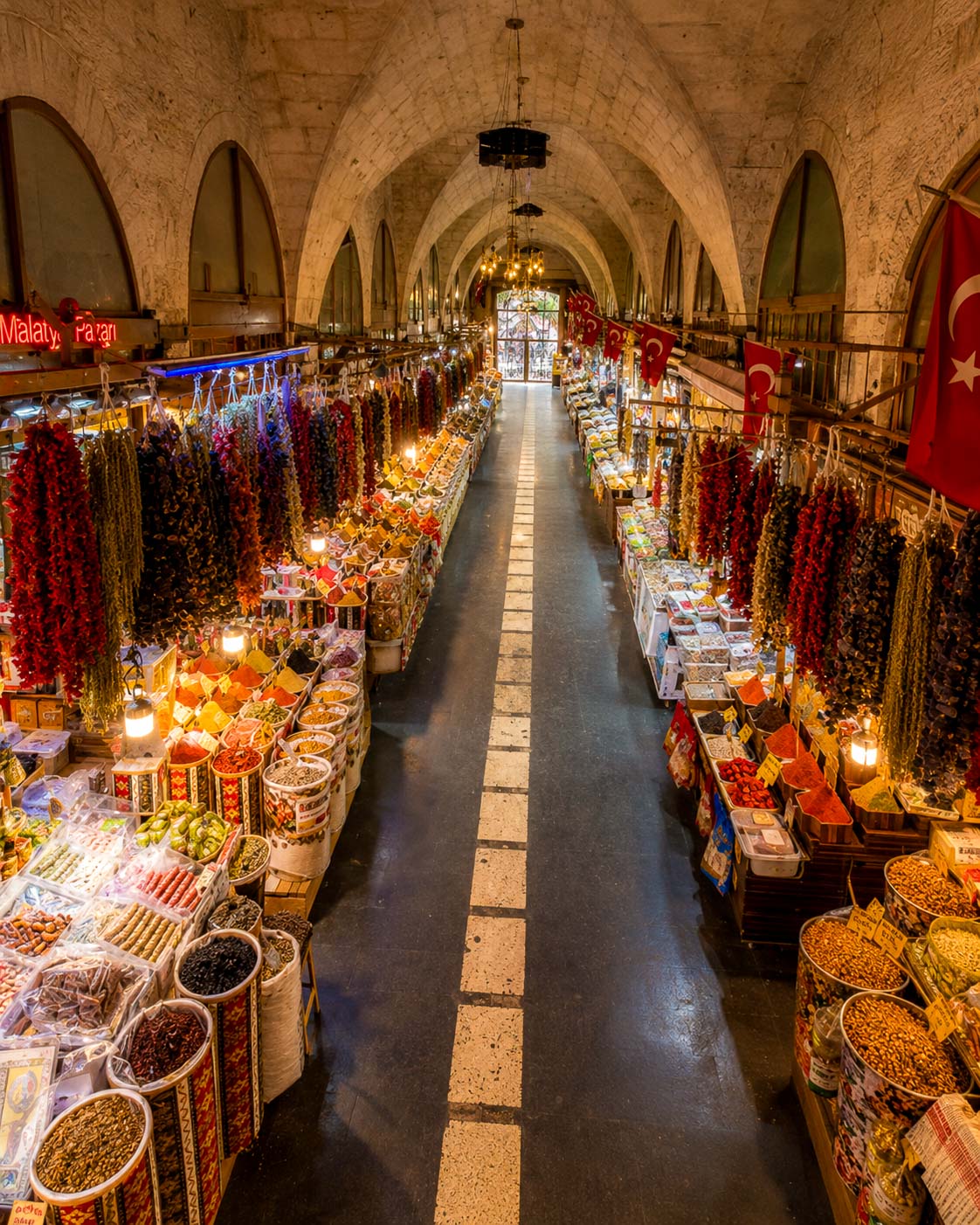
The spice and dried food bazaar in the old town. Walls of pistachios, red pepper flakes, sumac, dried eggplant and cheese. Bring a bag for takeaway. Antep's own pepper flakes and sumac are much more fragrant than what you find elsewhere.
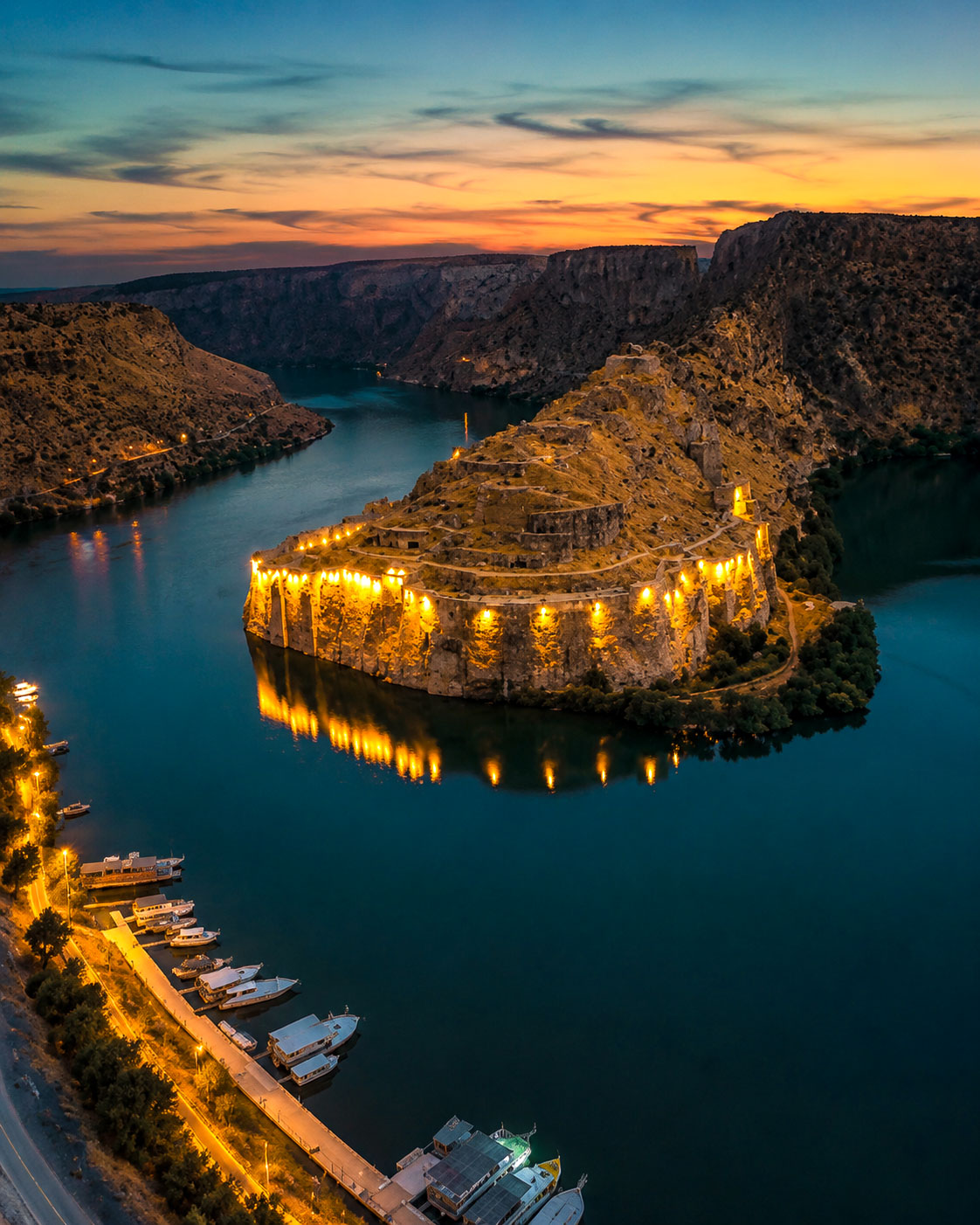
A dramatic ancient citadel perched on a cliff above the Euphrates near Halfeti, now partly surrounded by the still waters of the dam. Built and rebuilt across Roman, Byzantine, Armenian and Islamic periods, it served as a centre of Eastern Christianity and still holds the ruins of churches and a monastery. Reached by boat from the Halfeti shore, the approach across the green water is the experience as much as the citadel itself.
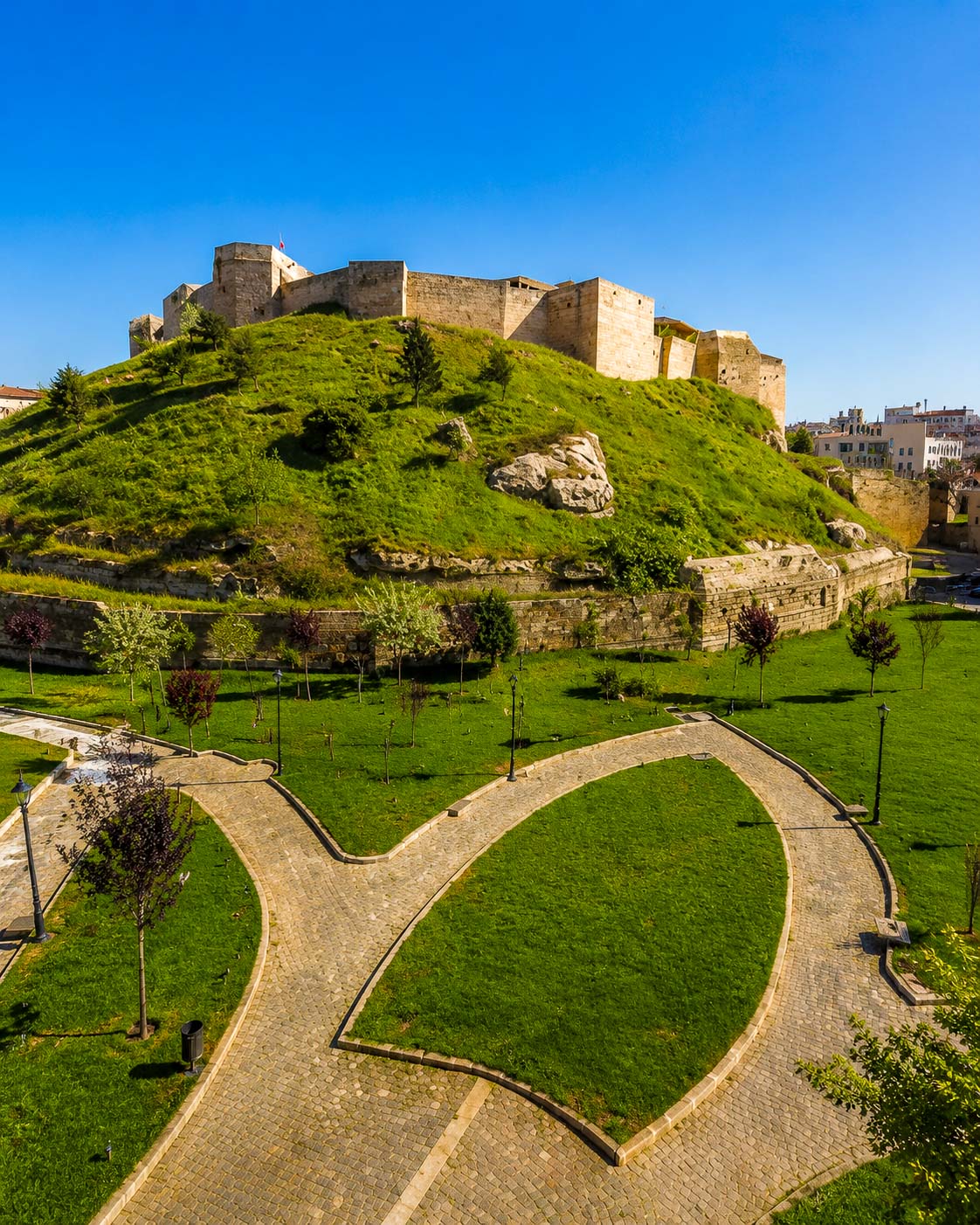
A hilltop Roman citadel later rebuilt by the Byzantines and Ottomans. Badly damaged in the 2023 earthquake, restoration is ongoing. The surrounding neighbourhoods are the oldest in the city and the best place to start exploring.
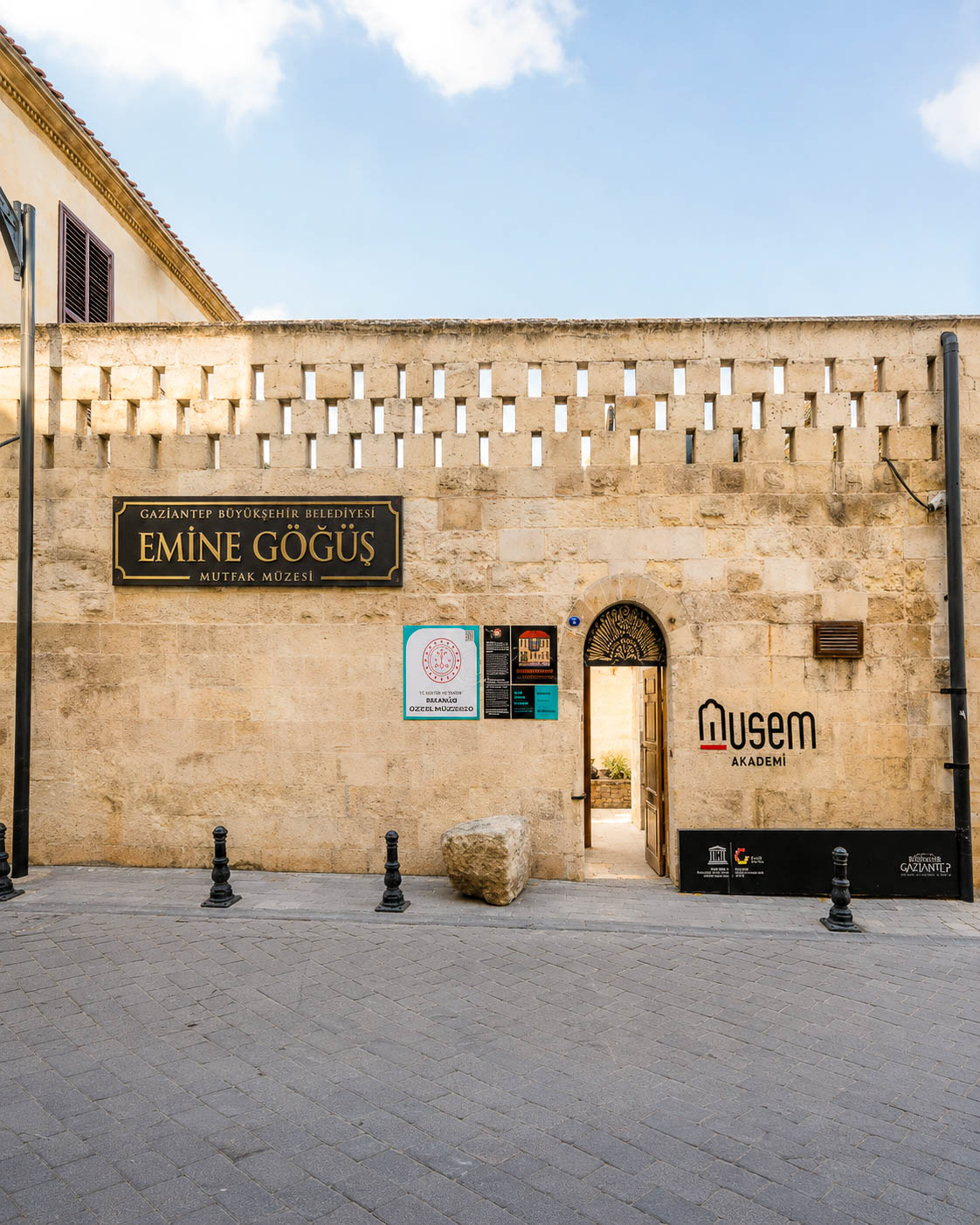
Set inside a restored 19th-century Antep house, a small museum dedicated entirely to Antep cuisine. Traditional kitchens, cookware, ingredient displays and recipes. A must for anyone serious about the food of the region. Short visit, high value.
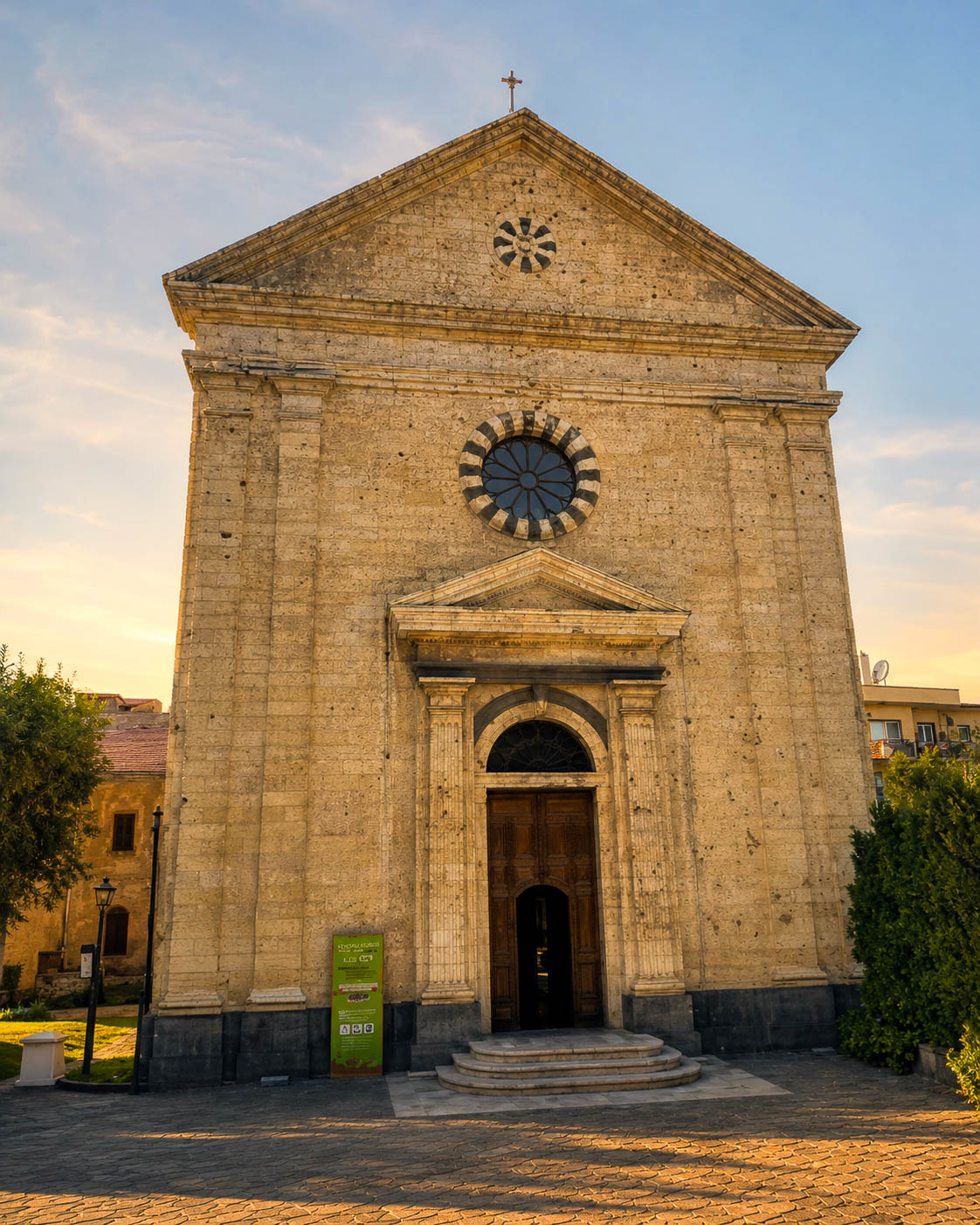
A late 19th-century Catholic church in the old town centre, built with the support of Napoleon III and now restored as a small cultural museum. Stone facade, pointed-arch windows and a peaceful garden, all sitting on a quiet street just off the bazaar. A quick stop that fills in a less-known layer of the city's history beyond the Roman mosaics and the Ottoman bazaars.
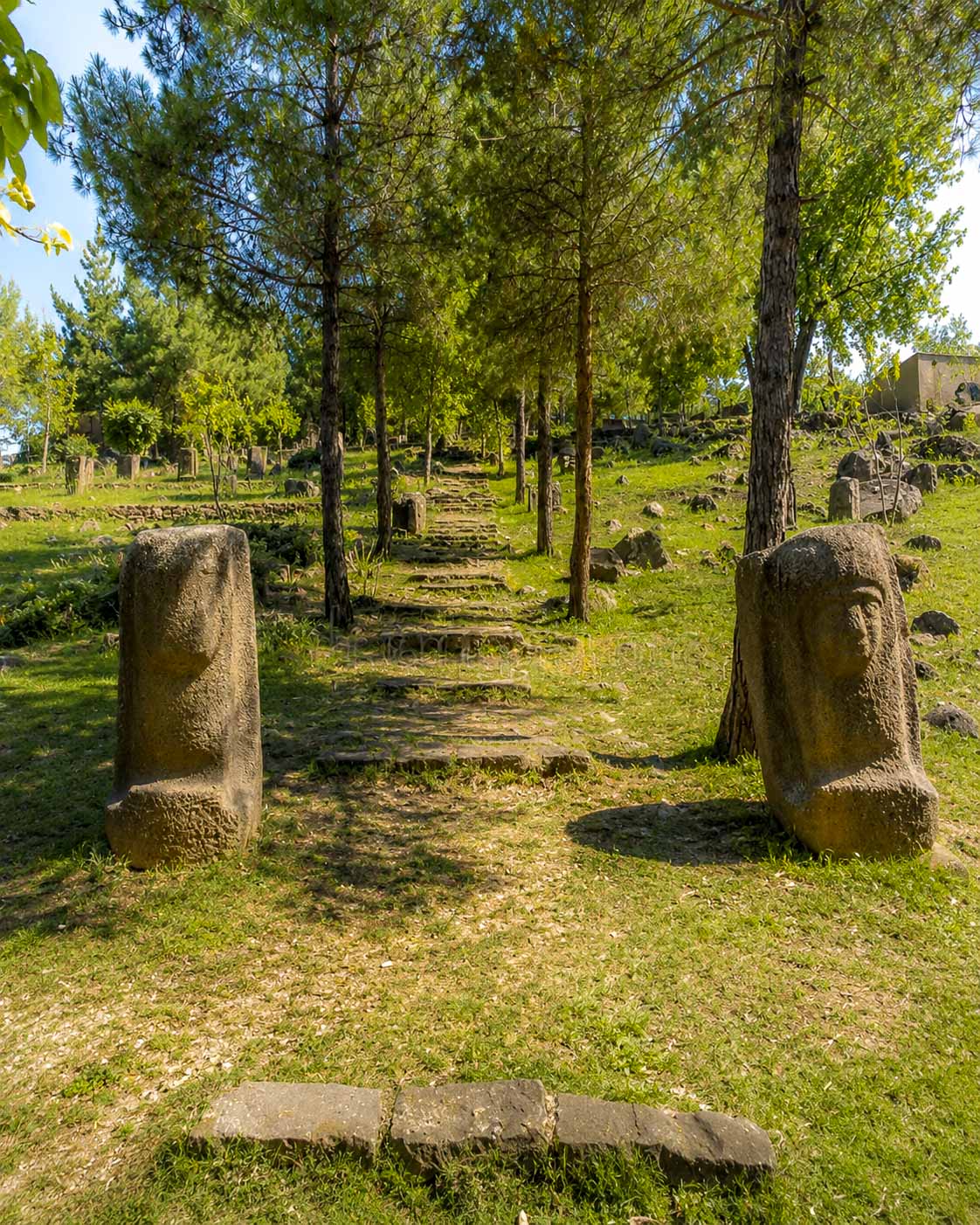
A Hittite statue quarry and sculpture workshop from the 14th to 8th centuries BC, 100 km west of Gaziantep near İslahiye. Over 300 partially carved stone sculptures remain in situ at the quarry - sphinxes, lions and storm gods in various stages of completion - giving a unique insight into how Hittite monumental sculpture was made. One of the most unusual archaeological sites in Turkey.
Gaziantep's cuisine was declared a UNESCO intangible cultural heritage for good reason. Generations of specialists, pistachio orchards that produce the best nuts in the world, and an obsession with technique that borders on ritual. Eating in Antep is a reason on its own to come to Turkiye.
The historic beyran houses for the city's signature dawn soup, the legendary baklava and ali nazik addresses, the 17th-century menengic coffee house and Antep's most loved katmer
A Gaziantep institution since 1887, on the Uzun Çarşı in the heart of the bazaar, run by the same family for five generations. The address for two of the city's signature dishes: ali nazik kebab, where the smoke of charred eggplant meets the cool yoghurt under tender lamb, and the lightest layered pistachio baklava in town. Busy, sometimes long waits, worth every minute.
One of the oldest beyran houses in Gaziantep, opening at five in the morning for the city's signature breakfast: lamb-neck soup with rice, lifted with a kick of pepper paste and garlic. You sit where you can find a seat, the queue moves fast and the bowl arrives steaming. The most authentic way to start an Antep day.
A large, family-run beyran and kebab house in Şahinbey that has become one of the most reliable addresses in the city. Beyran in the morning, free mezes and lentil soup with every order, then a kebab list that runs from onion kebab to küşleme. Warm welcome, fast service and consistent quality even when packed.
A 17th-century stone coffee house just off the Coppersmiths' Bazaar, still in operation since 1635 and one of the oldest in the country. The speciality is menengic, the caffeine-free pistachio-bean drink invented when wartime shortages cut off coffee imports, served from copper pots over hot coals. As much a place to feel the old town as to drink coffee.
The most loved katmer house in Gaziantep, four generations of bakers folding paper-thin dough around clotted cream, butter and ground pistachios, then baking it to gold in a stone oven. You can watch the master at work behind the counter. The portion is generous; share it. Open from breakfast through the evening.
A 19th-century caravanserai on Atatürk Bulvarı, restored as a hotel and restaurant with a beautiful courtyard around the stone arches. The kitchen does a refined take on Antep cuisine: yuvalama, ali nazik, içli köfte, gavurdağı salad and pistachio katmer. Live music some evenings. A good place for an unhurried evening meal with the historic setting as the bonus.
One of the most respected baklava houses in the city of baklava, on Abdulkadir Behçet Caddesi in Şehitkamil. Antep pistachio baklava, şöbiyet and katmer made fresh through the day, with a spacious modern salon, tea service and valet parking. The pistachios are the local PDO crop and the difference shows in every layer. A box to take home is part of the ritual; many regulars rate it the finest in town.
A small, husband-and-wife beyran house in Şahinbey that locals will quietly point you to as the best in the city. Mustafa Usta makes one thing only: beyran, with freshly ground garlic and lamb so tender it falls apart. Open from dawn and almost always sold out by ten in the morning, so go early.
Begin with breakfast katmer at Orkide, a lahmacun stop at Halil Usta, lunch at Imam Cagdas, coffee at Tahmis, dinner at Yasar Usta and a final baklava at Kocak. The definitive Antep day, do it with stretchy trousers.
Anadolu Evleri and the Emine Gogus Museum both run half-day classes. Learn to make lahmacun, yaprak sarma and a classic Antep dessert. A perfect last morning in the city before you fly home.
Wander the stone streets from the castle to the copper bazaar, through the spice and shoe hans, past the Ottoman mosques and the restored mansions. Half a day on foot, stopping at cafes and small museums as you go.
The Zeugma Mosaic Museum deserves a proper visit, not a quick loop. Join a guided tour or pick up the audio guide. The Roman frescoes and the Gypsy Girl room are the highlights. Allow three hours.
Around Antep sit thousands of hectares of pistachio trees. In late summer the harvest runs and small farm visits are possible. Ask your hotel about arranging a visit. The story of how Antep pistachio ended up in every baklava is fascinating.
The restored Ottoman bedesten, now a cultural centre with jewellery, gold and handicraft shops. A peaceful, cool space in the middle of the bazaar. Stop for a coffee on the wooden gallery upstairs and watch the bazaar move.

Choose which cookies you allow. Essential cookies are always on because the site cannot function without them. Your choice is saved on your device and you can change it anytime from the Cookies Policy page.
Required for core features such as remembering your language and that you have seen this notice. Always active.
Help us understand which pages are visited and how the site is used, in aggregate. These may transfer data to providers outside Türkiye. Off until you allow them.
Choose which cookies you allow. Essential and anonymous analytics cookies are always on (legitimate interest, anonymised IP). Your choice is saved on your device and you can change it anytime from the Cookies Policy page.
Required for core features such as remembering your language and that you have seen this notice. Always active.
Google Analytics with anonymised IP, used to understand how the site is used in aggregate. Always active under legitimate interest.
Reserved for future use (e.g. retargeting). Off until you allow it.