Central Anatolia, Turkiye

Konya

The spiritual home of Rumi and the whirling dervishes

Scroll
RegionCentral AnatoliaTurkiye's breadbasket
Best SeasonApr to OctSema in December
Known ForMevlanaSufism, Seljuk art, etli ekmek
AirportKonya (KYA)18 km from the city centre
Why Visit

Konya

The spiritual heart of Turkey, the city of Mevlana and the Whirling Dervishes, built on the wheat plains of Central Anatolia and layered with Seljuk masterpieces and one of the world's oldest settlements.

Konya is the city of Mevlana Celaleddin Rumi, the 13th-century Sufi poet whose tomb, the turquoise-domed Mevlana Museum, is one of Turkey's most visited sites. The Mevlevi order he inspired still performs the sema ceremony here, especially around the Seb-i Arus in mid-December. The city was also the Seljuk capital, and the medreses, mosques and tiled portals from that era make Konya the best place in the country to see Seljuk art.

Beyond Mevlana, Konya is a serious food city: etli ekmek, fırın kebabı baked in covered ovens and bamya çorbası are reasons enough on their own. Outside the city, Çatalhöyük is a UNESCO Neolithic site dating back 9,000 years, one of humanity's earliest known settlements. The salt lake of Tuz Gölü to the north and Cappadocia to the east make this a natural base for a wider Anatolian route.
Places to Visit in Konya · Eight Anchors

Where you actually go in Konya.

Eight places worth your time. Tap a photograph, the map will follow.

01
Mevlana Museum

Mevlana Museum

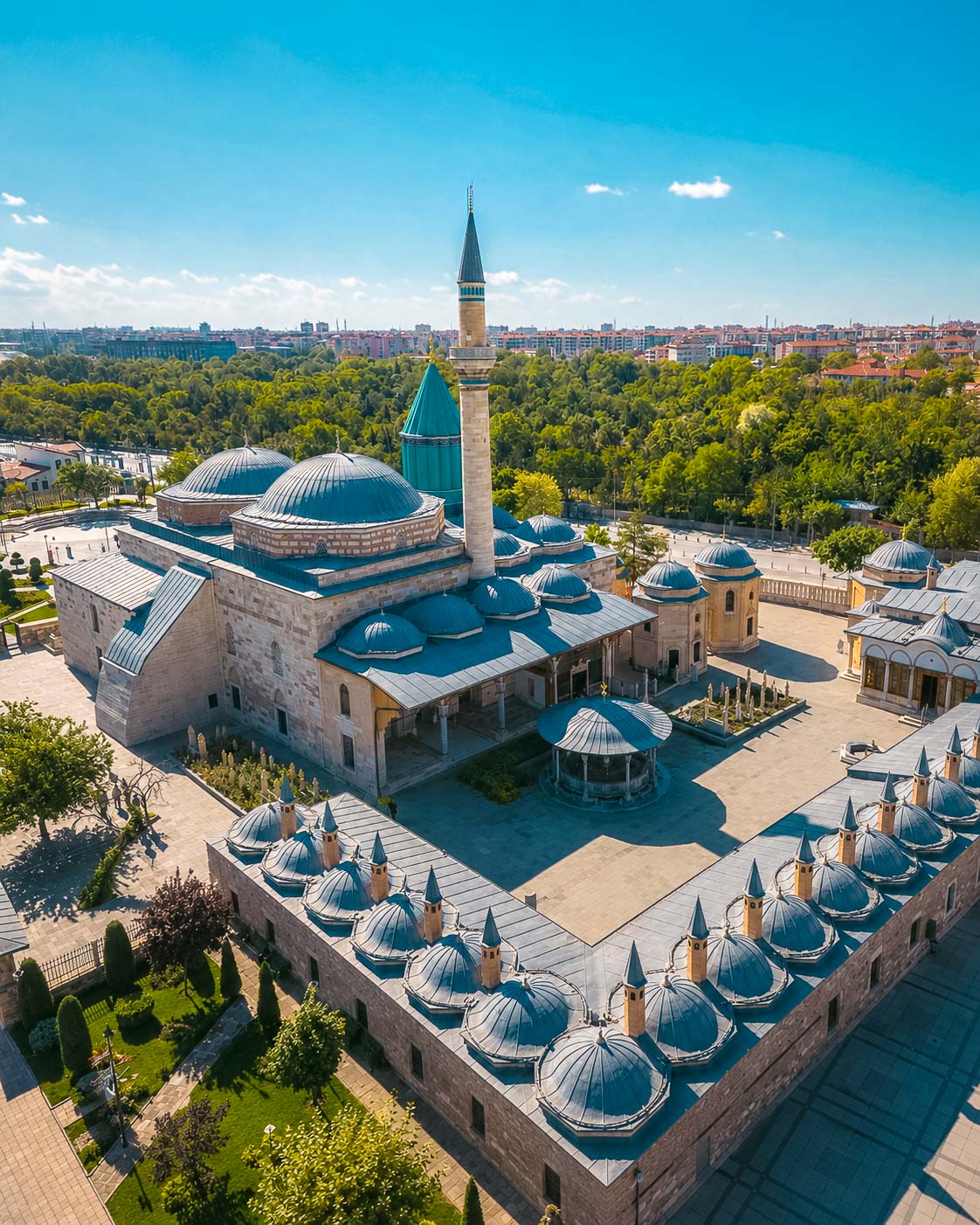
The tomb of the 13th-century mystic Rumi, set under a turquoise-tiled dome that is the symbol of Konya. The complex includes the dervish lodge, ceremonial hall, kitchens and dormitories. Free entry, modest dress, head covering for women.

03
Karatay Medrese (Tile Museum)

Karatay Medrese (Tile Museum)

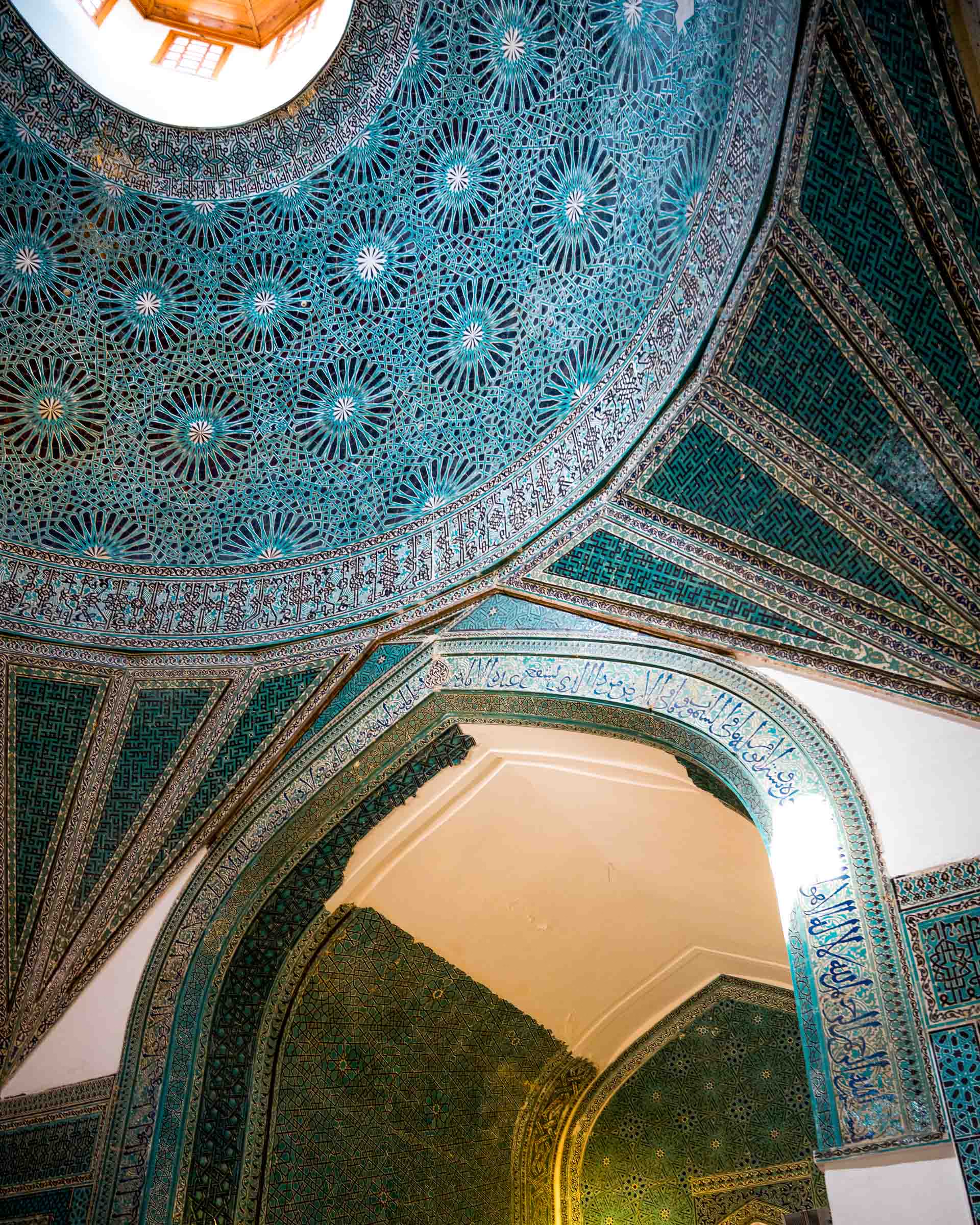
A 1251 Seljuk theological school with a star-shaped dome covered in turquoise and indigo tiles. Now a museum of Anatolian ceramic art, with the most beautiful Seljuk tile collection in the country. Compact, jewel-like.

05
Catalhoyuk

Catalhoyuk

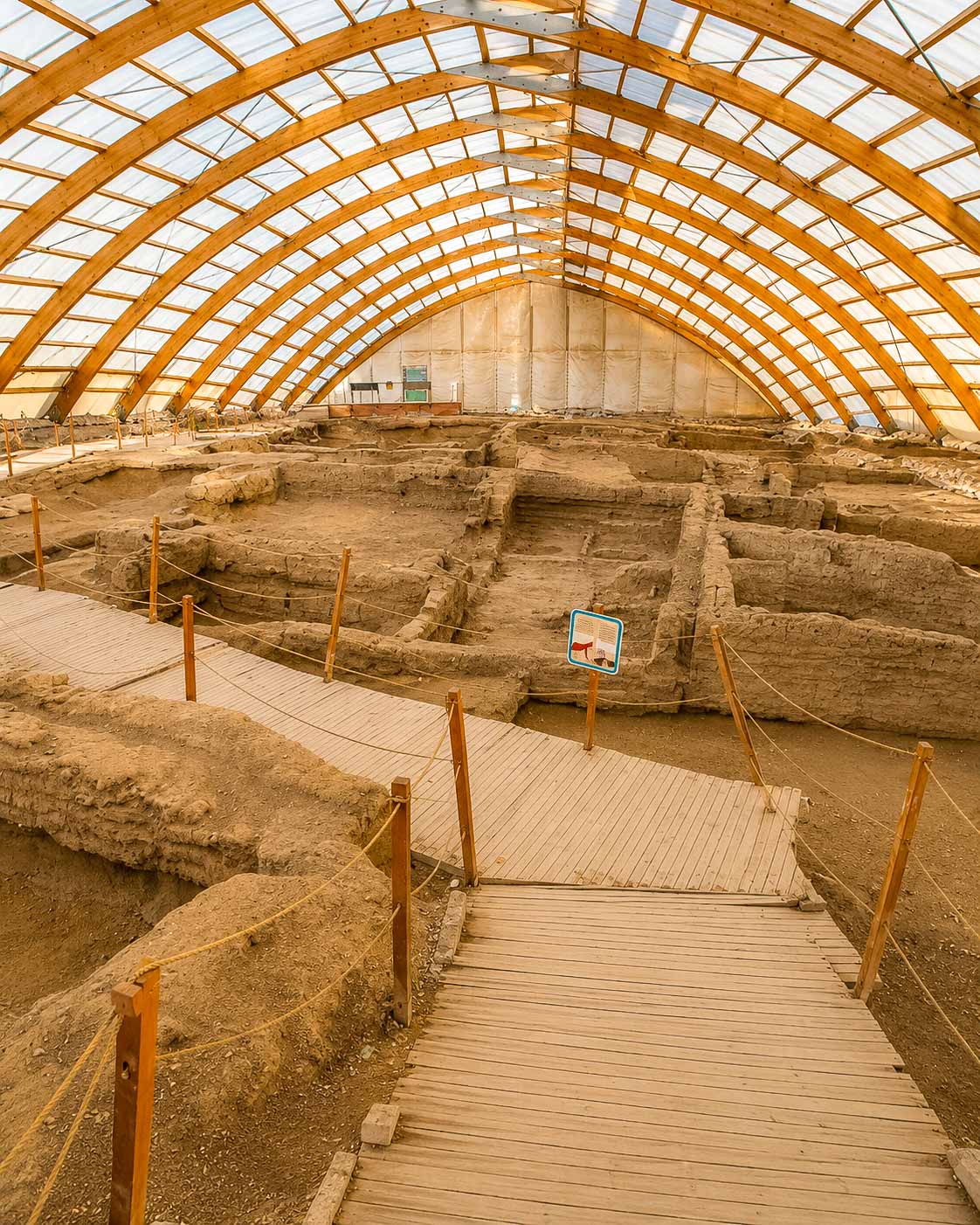
The 9,000-year-old Neolithic settlement, one of the world's oldest known proto-cities. UNESCO World Heritage. Visit the active excavation site under modern protective shelters and the small museum on site. About an hour outside Konya.

07
Konya Panorama Museum

Konya Panorama Museum

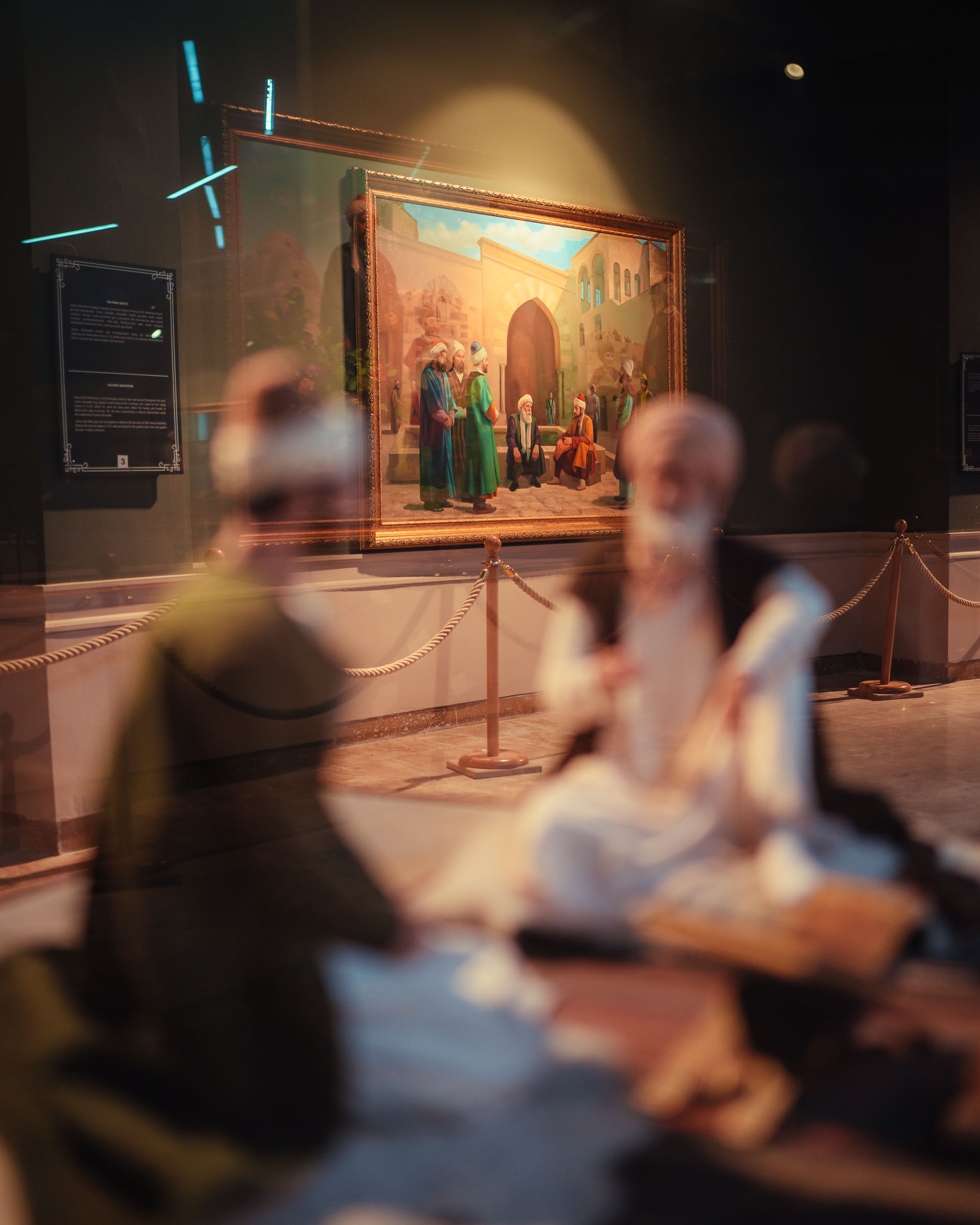
A modern museum complex telling the story of Mevlana, the Seljuk dynasty and the Anatolian Sufi tradition through immersive 360-degree panoramic paintings and interactive displays. A good place to put the city in context before or after visiting the Mevlana Museum itself, especially with children. The contemporary architecture is striking and the museum is open late.

02
Alaeddin Mosque and Hill

Alaeddin Mosque and Hill

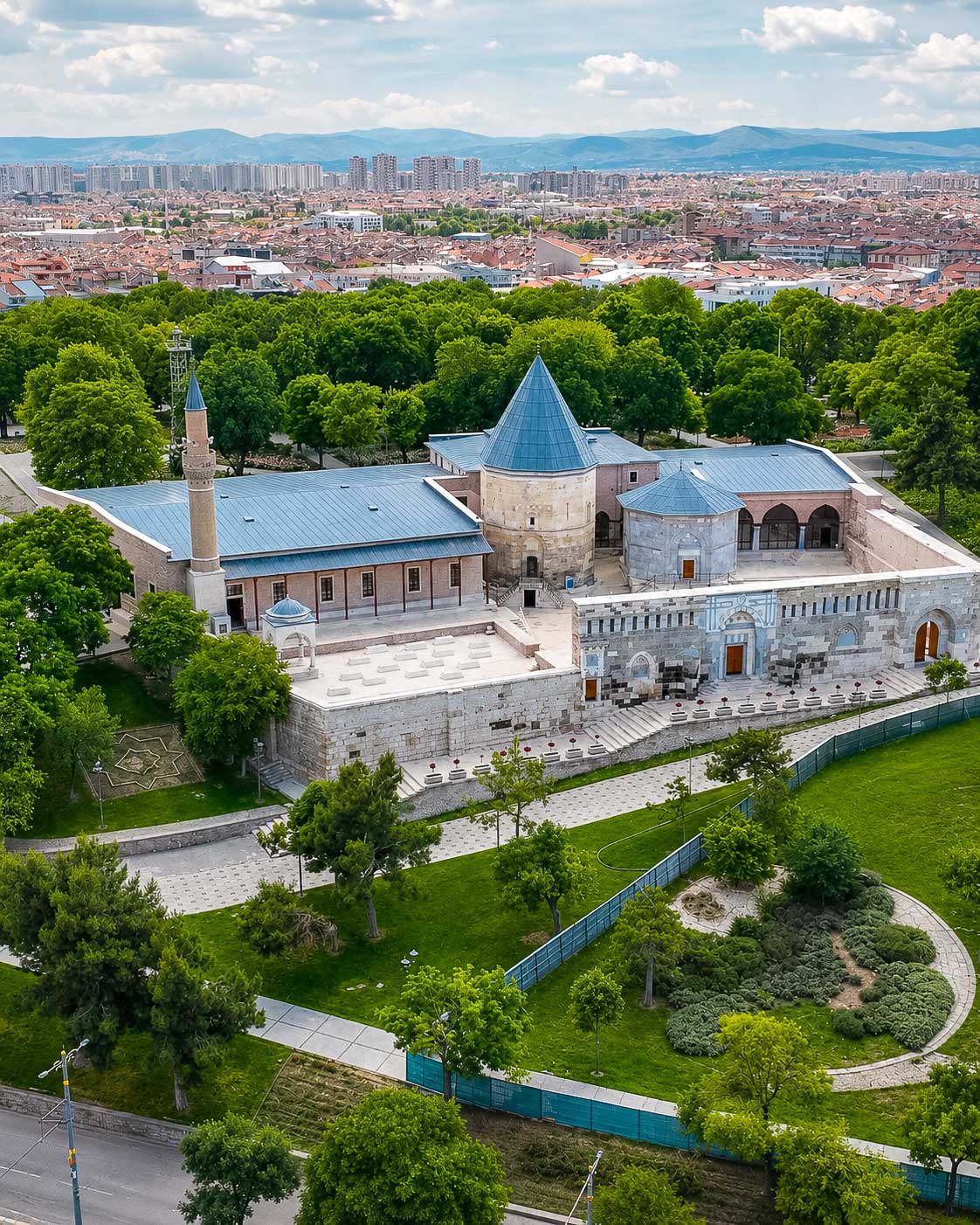
A 12th-century Seljuk mosque on the artificial hill at the centre of the old city. Antique marble columns reused from earlier Roman and Byzantine buildings, a tomb of eight Seljuk sultans next door. The hilltop park is a beloved local hangout in the evenings.

04
Sultan Selim Mosque

Sultan Selim Mosque

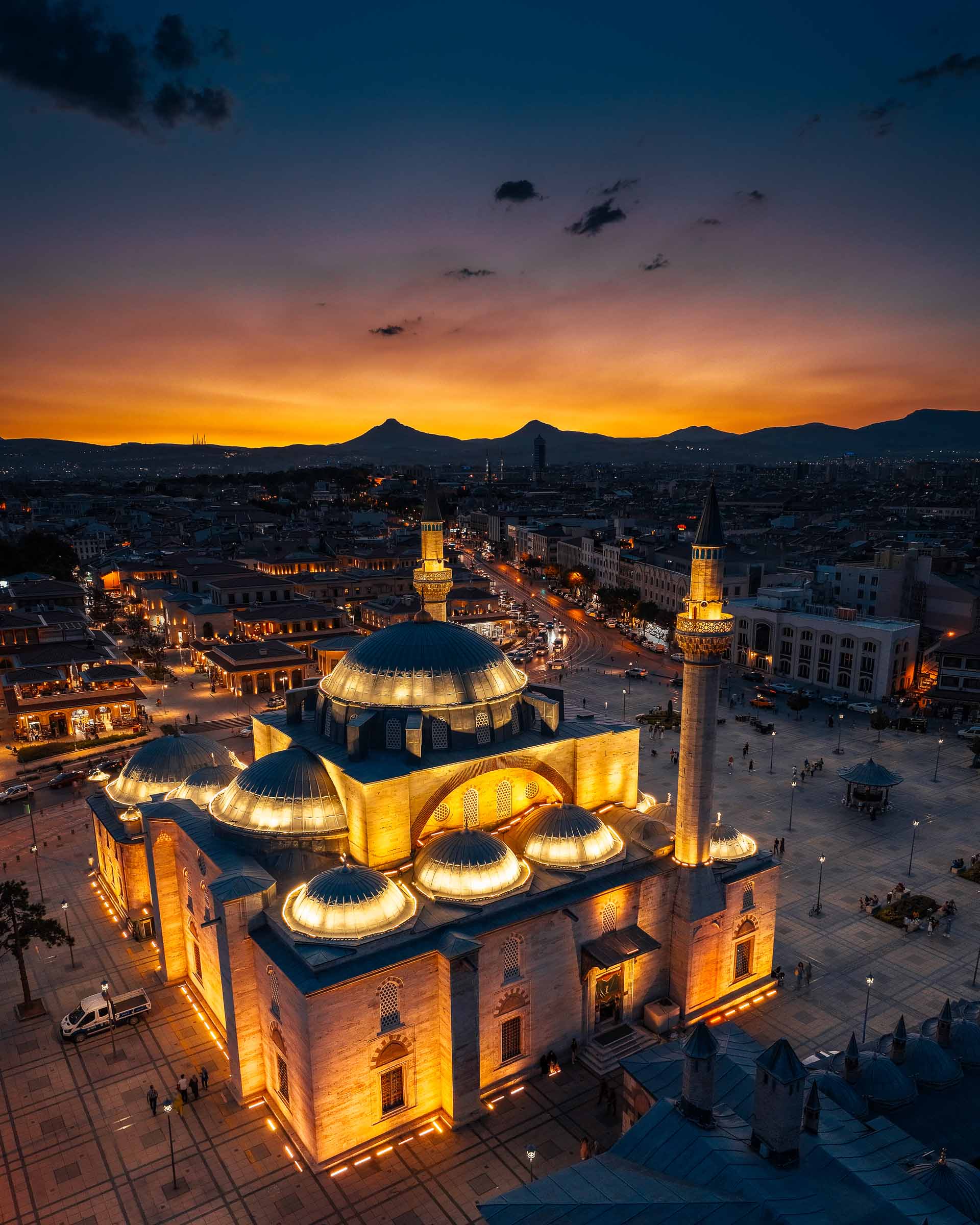
A 16th-century Ottoman mosque commissioned by Selim II, sitting right next to the Mevlana complex and balancing its Seljuk character with classical Ottoman style. A large central dome, twin minarets and a quiet courtyard make it an easy stop on the same visit. Less photographed than the turquoise Mevlana dome but a fine example of Ottoman architecture in the heart of Konya.

06
Bedesten and Aziziye Mosque

Bedesten and Aziziye Mosque

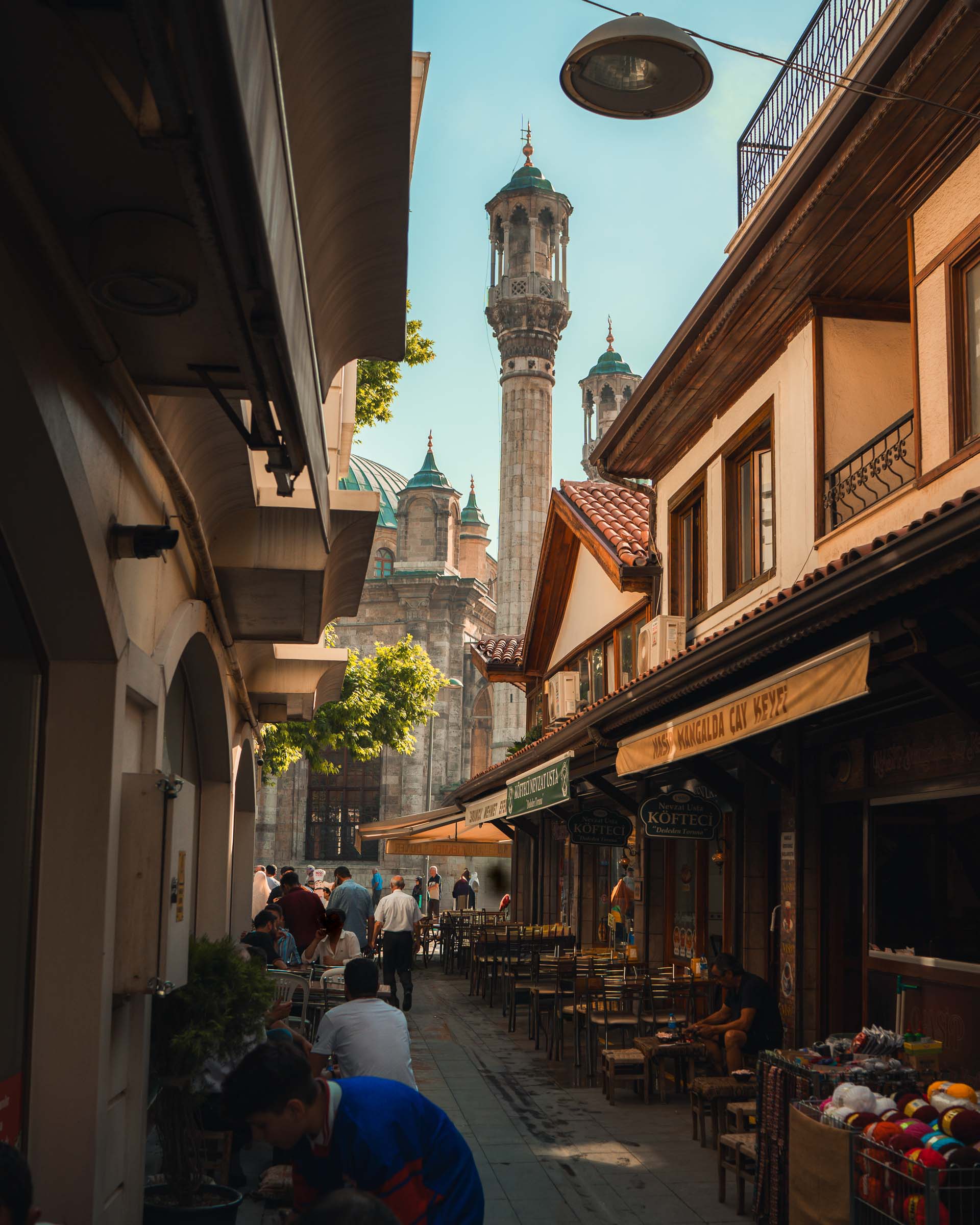
The covered Ottoman bazaar between the citadel and the Mevlana Museum. Carpets, copper, prayer beads and the largest bookshop street in central Anatolia. The Aziziye mosque on the bazaar edge has a unique Baroque-Ottoman style.

08
Konya Tropical Butterfly Garden

Tropical Butterfly Garden

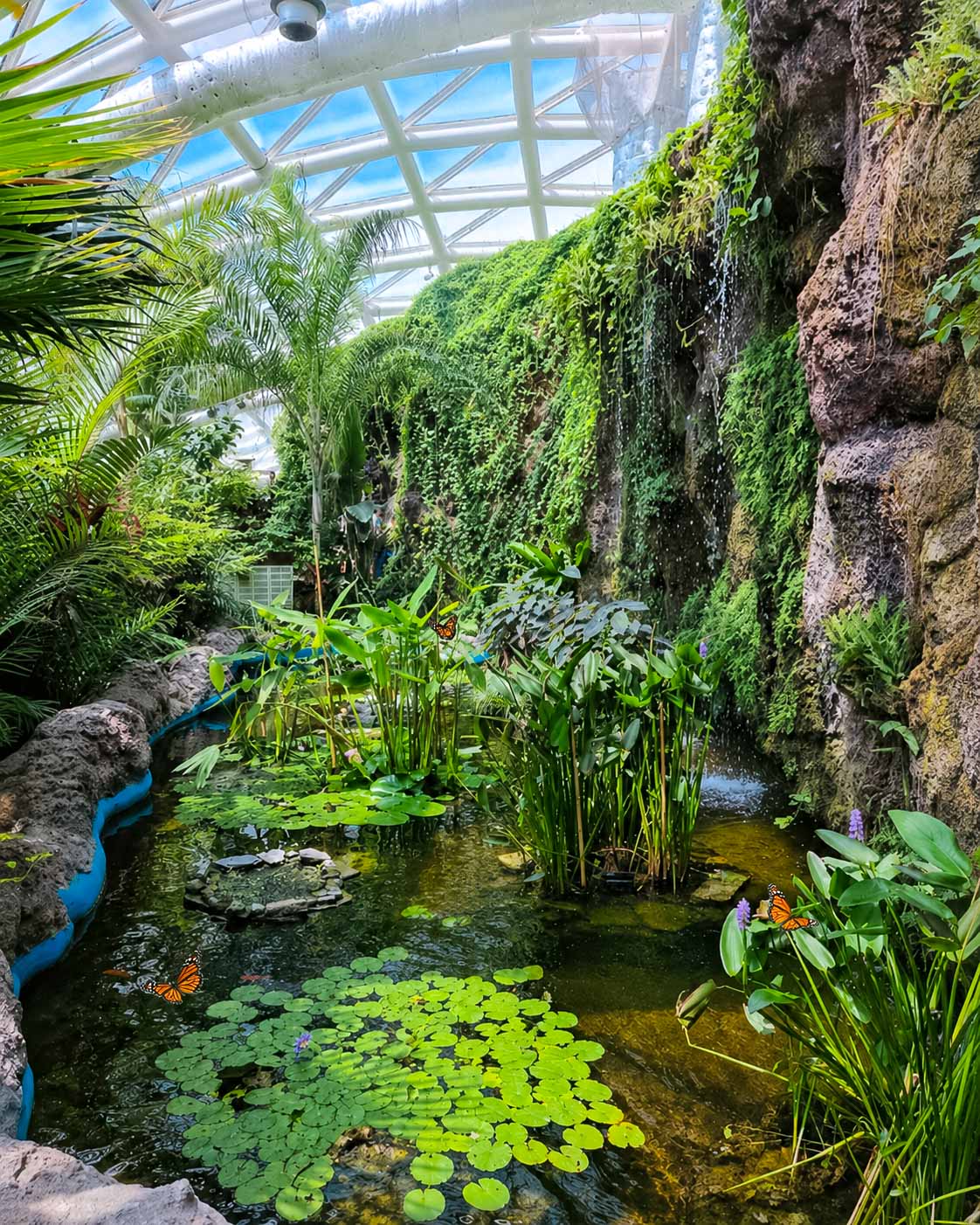
Europe's largest tropical butterfly garden, set in a green park on the edge of the city. Thousands of butterflies from across the world fly free inside a humid glass dome planted with tropical species, alongside an insect museum and a discovery area. A bright, family-friendly counterpoint to the city's Seljuk gravity, and a welcome stop on a hot afternoon.

Next · Food and Cuisine ↓ continue reading
Anatolian Table

Food and Cuisine

Konya food is conservative, generous and rooted in central Anatolian wheat country. Etli ekmek, the long flatbread topped with minced meat, is the signature. Slow-cooked tandoor lamb, sac arasi flatbread sandwiches and traditional sweets like sac kavurma round out the menu. Meat is taken seriously, dairy is excellent.

The Signature
Etli Ekmek

A long thin flatbread topped with seasoned minced lamb and fresh herbs, baked in a wood oven. A metre long when served, sliced and shared. The classic Konya lunch. Sifa Restaurant has the most beloved version in town.

Hand Pasta
Bamya Çorbası

A clear lamb soup with dried okra. Sour, light and surprisingly elegant. A traditional starter at Konya weddings. Often served with lemon wedges to brighten further.

Morning Staple
Saç Arası

Spiced lamb cooked between two iron skillets and served folded into a flatbread sandwich. A late-night Konya favourite, also a classic breakfast. Filling, smoky and addictive.

Cheese Dessert
Höşmerim

Konya's version of höşmerim differs from the Balıkesir reference: heavier on the semolina, often served alongside kabak tatlısı (candied pumpkin) in a single dessert plate. The unsalted cheese is browned in butter with semolina and sugar until the mixture pulls into a soft, slightly grainy texture. A Friday lunch dessert and a wedding food. Listed at the traditional Konya lokantas alongside etli ekmek and tirit.

Layered Pastry
Mevlana Böreği

A coiled or layered börek named for the Mevlevi tradition: thin yufka layers brushed with butter, filled with crumbled cheese and parsley or with minced meat, baked until the surface is dark gold and crisp. A speciality of the Konya pastry houses around the Mevlana complex. Cut into wedges and served warm. The eponymous association is partly marketing and partly genuine - the dish has been a Konya staple for at least a century.

Oven-Roasted Lamb
Fırın Kebabı

The Konya signature: a leg or shoulder of lamb roasted slowly in a wood-fired oven for several hours, without liquid or marinade - just salt, time and the fat rendering through the meat. The traditional fırıns set the lamb on a stone slab inside the oven; the slow heat produces meat that falls apart at the touch with a crisp, salty skin. Sold by weight at the dedicated fırın kebabcıs around the old town. The reference establishments have been operating for generations.

Where to Eat

Top Restaurants in Konya

Konya's most loved etli ekmek and oven-roast lamb spots, the historic tirit room, the famous yağ somunu, and the Mevlevi-flavoured Lokmahane

Cemo Etliekmek
★★★★ 4.1 (6,300+ reviews)

The Konya address for etli ekmek, the long, thin spiced-mince flatbread the city is famous for, in a large bright dining room in Selçuklu. Cemo has been doing it since 1984 and the oven runs all day, with bamya çorbası and sac arası to start and finish. A reliable, family-friendly place to try the dish on its home ground.

Etli ekmek
Tarihi Mithat Tirit
★★★★ 4.4 (6,100+ reviews)

A tiny third-generation family restaurant in a back alley near Aziziye, serving one dish only: tirit, lamb piled over flatbread soaking in a rich, slightly tangy broth. No menu, no choices, just the dish and a glass of ayran. Lunch only, packed with locals, and one of the most authentic meals you can have in Konya.

Tirit
Yağ Somunu Pideci Hasan Şendağlı
★★★★ 4.4 (4,300+ reviews)

A small bakery near the Mevlana that popularised Konya's yağ somunu, a crisp, butter-soaked round bread stuffed with a blend of seven cheeses, then baked again until golden. You can also add pastırma, sucuk or kavurma. The classic Konya breakfast, eaten fresh from the oven with tea on the side. A bench seat, fair prices, real character.

Yağ somunu
Ehil Fırın Kebap
★★★★★ 4.7 (2,800+ reviews)

A family-run institution since 1934, doing fırın kebabı the proper way: lamb slow-cooked for hours in copper pots in a stone oven, served falling-apart tender on tırnak pide. Lunch only and closed most of the week, so check before going. When it's open it's worth crossing the city for.

Fırın kebabı
Köfteci Sofu
★★★★★ 4.6 (2,100+ reviews)

A small esnaf lokanta running since 1952, near the industrial belt on the road to Cappadocia, with köfte made of pure lamb mince that has made it famous well beyond the neighbourhood. Charcoal-grilled and served with rice, beans and a sharp piyaz salad. A useful and very honest lunch stop coming in or out of the city.

Lamb köfte
Lokmahane
★★★★ 4.1 (2,200+ reviews)

A pretty stone konak on Mengüç Caddesi just behind the Mevlana, doing a more refined take on Konya cooking with influences from the Mevlevi kitchen. A long Turkish breakfast, bamya and tarhun soups, fırın kebabı and homemade hamur işi. A good place for an unhurried lunch in atmospheric surroundings.

Konya mutfağı with Mevlevi notes
Kebapçı Dedeler 1929
★★★★★ 4.7 (1,000+ reviews)

A small side-street kebap house in the old town behind the Şükran mosque, family-owned and running since 1929. One menu item: fırın kebabı, lamb slow-roasted in its own fat over wood, served with a thick chewy bread, fresh tomato and onion. Hidden, hearty and probably the most generous version of the dish in the city.

Fırın kebabı
Hacı Şükrü 1907
★★★★ 4.3 (1,900+ reviews)

The oldest of Konya's fırın kebabı houses, going since 1907 and now in a clean, modern room near the city centre. The single-item menu is the city's standard, lamb sourced from Central Anatolia and slow-roasted for hours, served by weight on flatbread. Open lunch only, polite English, easy to find.

Fırın kebabı
On the Ground

Activities and Experiences

01
Mevlana Museum Morning

Go early, before the tour groups arrive. Visit the tomb hall, the dervish lodge, the ceremonial hall and the kitchens. Read the small placards on Sufi practice. Sit in the garden afterwards.

02
Saturday Sema Ceremony

The free Whirling Dervishes ceremony at the Mevlana Cultural Centre, every Saturday evening. Arrive at least 30 minutes early. Silence is requested throughout. Deeply moving even for non-religious visitors.

03
Seljuk Architecture Walk

Alaeddin Mosque, Karatay Medrese and Ince Minare Medrese, plus the Sirceli Mescid in between. Three hours, all within walking distance, the most refined Anatolian Seljuk art on the planet.

04
Catalhoyuk Half Day

An hour south of Konya, one of the world's oldest known proto-cities. Visit the active excavations under shelters and the on-site museum. Bring a hat and water in summer. Combine with lunch in Cumra on the way back.

05
Bazaar Browse

Konya is famous for prayer beads, religious calligraphy and conservative wedding goods. The Aziziye area bazaars are quieter than Istanbul's and prices are more honest. Books, beads and tea sets make great Konya souvenirs.

06
Sille Village

A historic Greek-Christian village 8 kilometres from Konya, with a restored Byzantine church and stone-house cafes. A quiet half-day escape with a good lunch stop.

Day Trips from Konya

235 km East, about 3 hours
Cappadocia

Konya is the southern gateway to Cappadocia, with regular buses to Goreme and Urgup. Combine your Konya stop with a couple of nights in a cave hotel. The drive itself crosses spectacular Anatolian steppe.

110 km North, about 1.5 hours
Salt Lake (Tuz Gölü)

Turkey's second largest lake, a wide salt flat north of Konya on the road to Cappadocia. Shallow water turns pink in places in the heat and draws flamingos in the warmer months. An easy stop to break up the drive, with white salt flats along the shore that are striking in the soft light of early morning or late afternoon.