City Guide · Mediterranean

Antalya Travel Guide

Kaleiçi, Aspendos, and the Lycian Coast.

Show Me Türkiye May 2026 8 min read
Field notes

Antalya: tips for first-timers.

  1. 01 Stay in Kaleiçi, not Lara. Boutique pensions in the old walls usually cost less than Lara’s all-inclusives, and you walk to the harbour.
  2. 02 Antray tram or HAVAŞ shuttle from the airport. The tram runs directly from the terminal to Kaleiçi (İsmetpaşa stop) avoiding all city traffic. For the eastern ancient cities, rent a car for one day.
  3. 03 Get the Museum Pass. Covers Aspendos, Perge, Side and Termessos. Eat a few blocks back from the harbour, not on it.
  4. 04 Mornings for ruins, afternoons for the sea. Aspendos and Termessos are unshaded and brutal after eleven. Save Phaselis for after lunch.

Antalya is the largest Turkish city most international travellers have heard of without quite knowing where it is. It sits on the Mediterranean, anchors the Turquoise Coast, and serves as the air gateway to a hundred kilometres of ancient sites and beach towns on both sides.

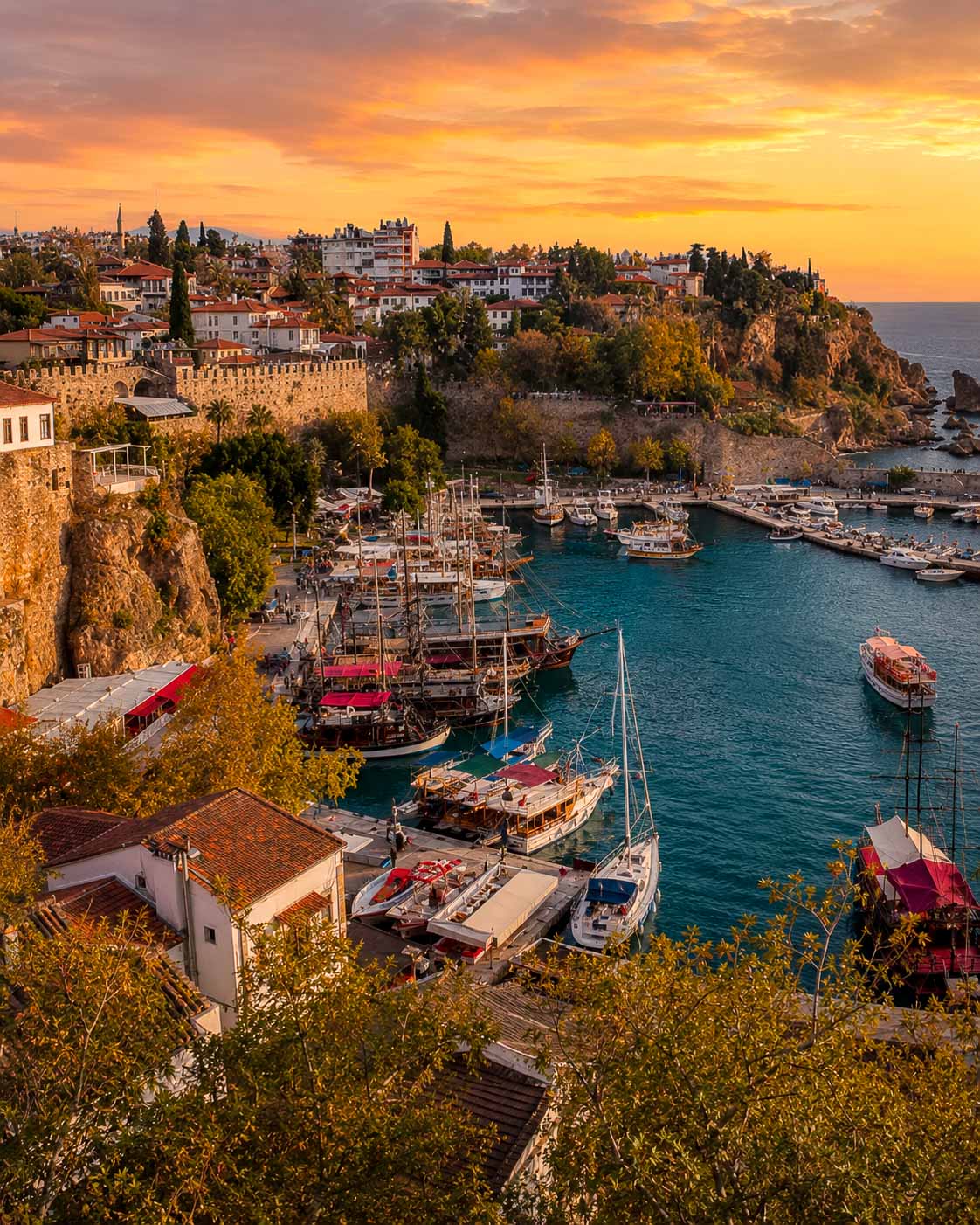
The city itself is bigger than its reputation, about two million people, but the tourism centre is concentrated in Kaleiçi, the old walled town wrapped around the Roman harbour. Beyond Kaleiçi, the province stretches west toward Olympos and the Lycian Way, and east toward Aspendos and the Manavgat waterfalls.

This guide starts with the practical groundwork: how to get in from the airport and how to move around a province this spread out. Then it walks through the old city and beaches, the ancient cities within an hour's drive, the canyon country to the north, and the coast running west to Kaş and east to Side and Alanya. Five days minimum if you want to do it justice, longer if you head out to the far ends of the coast.

§
01Arrival

Getting there.

From the airport into town.

2 min read

Antalya Airport (AYT) sits about thirteen kilometres east of the centre, just off the D-400 coast road, and it is the gateway not only to the city but to the whole resort strip from Kemer to Side. It has three terminals: a domestic one and two international ones, so check which terminal your flight uses, since they are a couple of kilometres apart.

The cleanest way into town is the AntRay tram. The line stops right by the domestic terminal and the first international terminal, runs through the centre and past the Otogar (intercity bus station), and avoids the road traffic entirely. One thing to watch: the airport branch is the T1A; the T1B from the centre runs to the Expo grounds and skips the airport, so check the front of the tram before you board. The tram does not reach the second international terminal, which is linked by a free shuttle.

If you are headed straight to a hotel with luggage, the Havaş airport shuttles run to the centre, and licensed metered taxis or a pre-booked transfer are the door-to-door options. Take taxis only from the official airport rank, and agree the fare or insist on the meter before you set off. There are also public buses (lines 600 and 800) to the Otogar and the Lara side.

The single most useful thing you can do on arrival is pick up an AntalyaKart. One card covers the tram and the city buses, and you top it up at machines in the stations.

§
02City transport

Getting around.

Trams in town, a car for the coast.

2 min read

In the city itself, the same AntRay tram handles most of what a visitor needs, linking the airport, the Otogar, the centre, and the İsmetpaşa stop nearest Kaleiçi. There is also a Nostalji Tramvay, a slower vintage tram line through the old centre that is more about the views than the speed. Everything runs on the AntalyaKart. Antalya has no passenger train, so all the intercity connections leave from the Otogar by bus.

The catch is that Antalya's best days out are spread along the coast and up into the mountains, and public transport thins out fast once you leave the centre. For the ancient cities, the canyons, and the western beaches around Kaş and Kalkan, a rental car is by far the most flexible option, and the D-400 coast road is straightforward to drive. If you would rather not drive, the dolmuş minibuses and intercity buses from the Otogar reach most of the resort towns, and organised day tours cover the harder-to-reach sites like Köprülü Canyon and Termessos.

One seasonal warning: in July and August the coast road and the city traffic both clog up, so lean on the tram in town and start any day trip early to beat both the heat and the queues.

§
03Old Town · Harbour

Kaleiçi, the old town and the Roman harbour.

A walled quarter wrapped around an ancient port.

1 min read

Kaleiçi is what survives of Antalya's Roman and Ottoman past, narrow lanes, restored stone houses, the partially intact city walls, and a small protected harbour that has been operating since the second century BC.

Walk in any direction. The streets are short, the architecture changes every block, and there is always either a small mosque, an old church (mostly converted), or a hidden courtyard around the next corner. The Hadrian's Gate on the eastern edge of Kaleiçi was built in 130 AD for the Emperor Hadrian's visit, it is still the most graceful gate in the old town.

Spend your first afternoon and evening here. Eat at a restaurant on the harbour. For sunset, walk to the southern edge of the walls where the Hıdırlık Tower stands, then into the adjoining Karaalıoğlu Park, whose seafront terraces look straight out over the Gulf of Antalya to the Beydağları mountains behind. It is where locals go in the evening, and it is the best free view in the old town. This is the version of Antalya everyone falls in love with first.

Hadrian's Gate has been the formal entrance to Antalya since 130 AD. It still works as one.

§
04Düden · City edges

Düden Waterfalls.

Two waterfalls, one upper and one falling into the sea.

1 min read

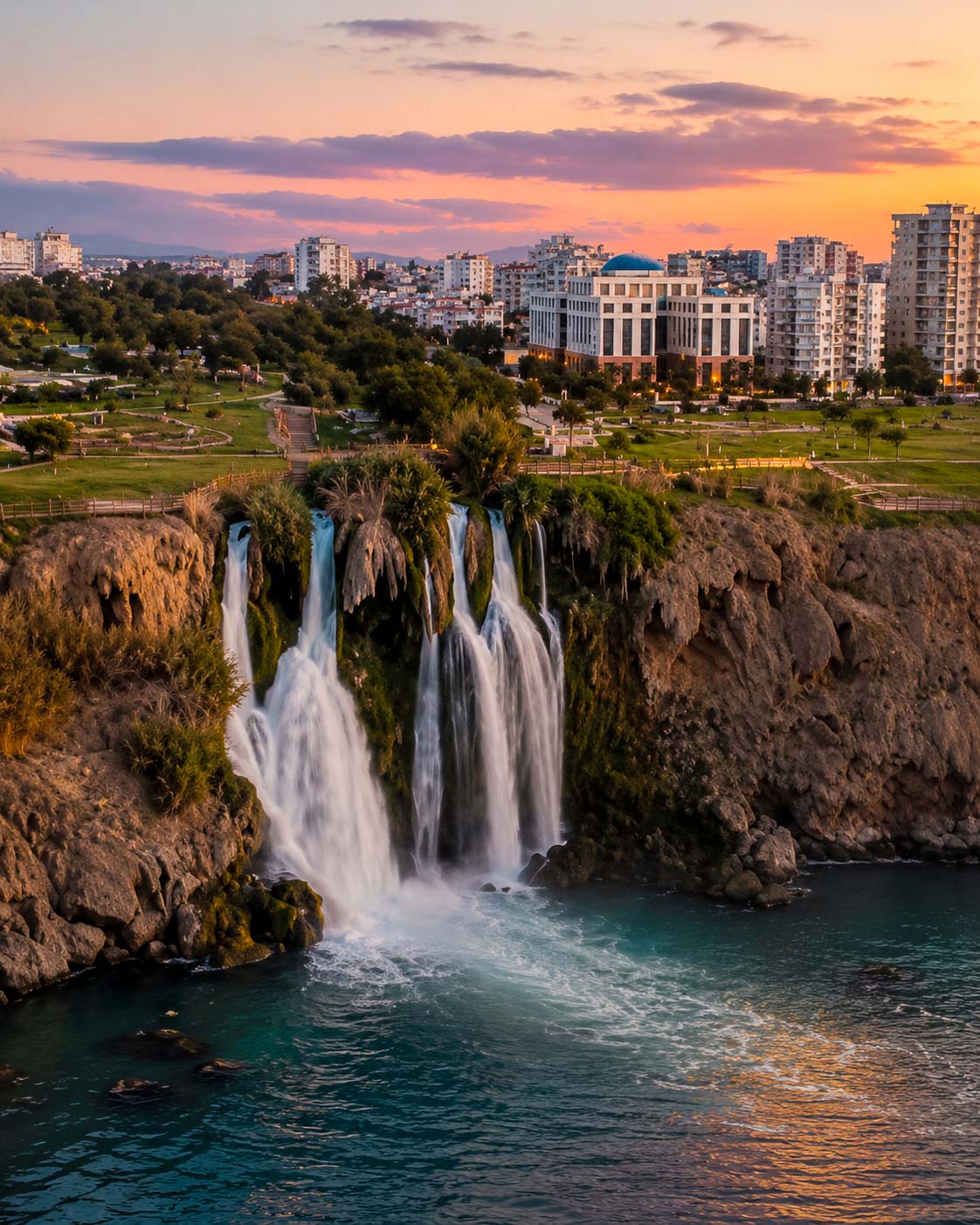
The Düden Waterfalls are a pair of falls on the eastern edge of the city. The Upper Düden sits in a wooded park about ten kilometres from the centre, a tumbling cascade you can walk behind on a footpath through the rock.

The Lower Düden is more dramatic: the river drops about forty metres directly off the cliff edge into the Mediterranean. Boat tours from Antalya's harbour run past it; you can also see the falls from the cliff-top park.

Both stops together work as a half-day if you have a car. Worth it for the cliff-top fall in particular.

§
05Coast

Lara and Konyaaltı Beaches.

The city's two main beaches.

1 min read

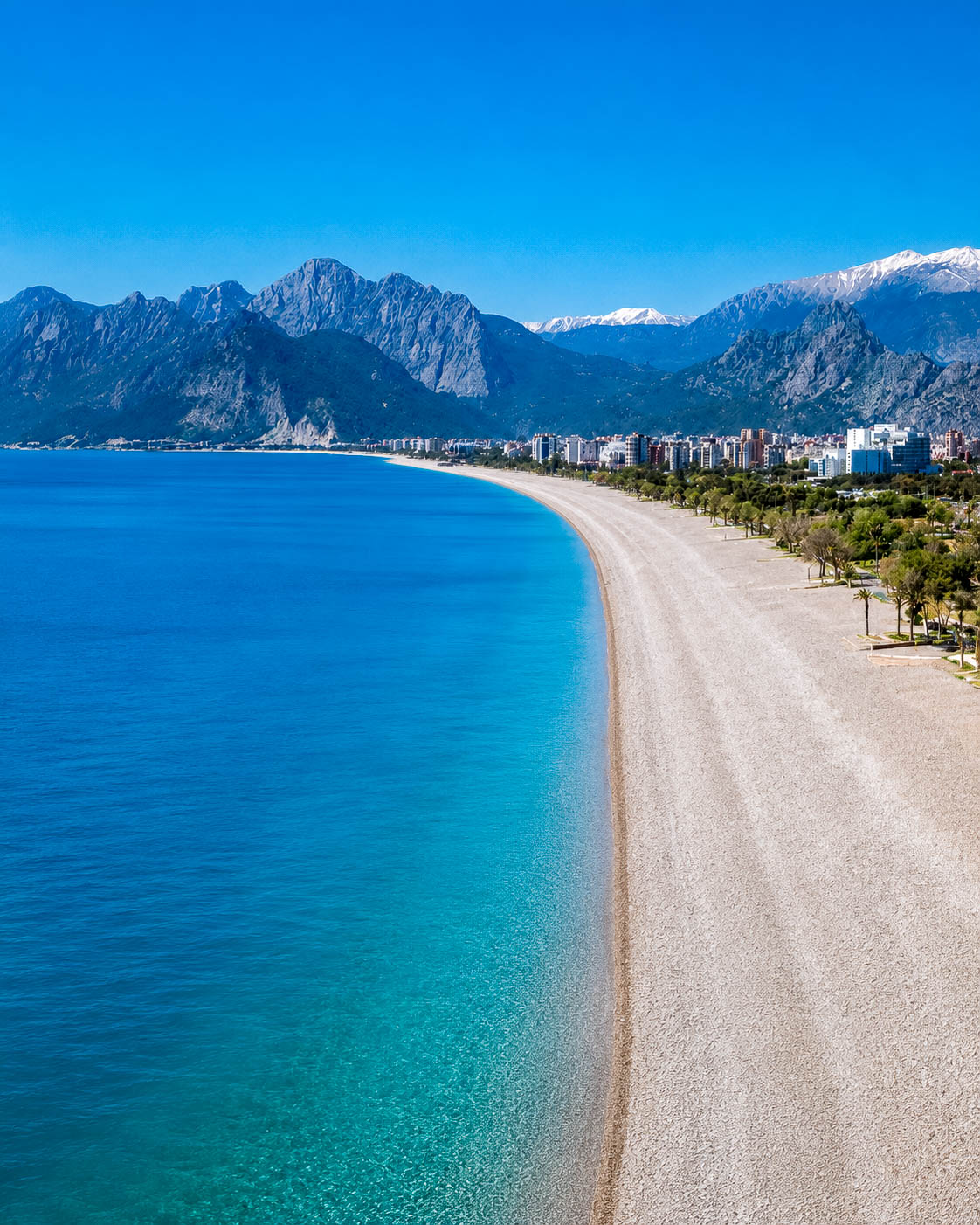
Antalya has two long urban beaches. Konyaaltı stretches west of the centre, pebble beach, long promenade, the Beydağları mountains rising behind. Lara, to the east, is sand and is where the biggest hotels concentrate.

Konyaaltı is the better walk-and-swim option if you are staying in town. Lara is where the family resort experience lives. Both are clean and the swimming is excellent from May to October.

§
06Ancient cities · East

Perge, Aspendos, and the eastern ancient cities.

A long Roman afternoon.

1 min read

Drive east from Antalya and within an hour you have the two best-preserved ancient cities in the province. Perge was a major Pamphylian city, its colonnaded street, stadium, and theatre still stand at scale.

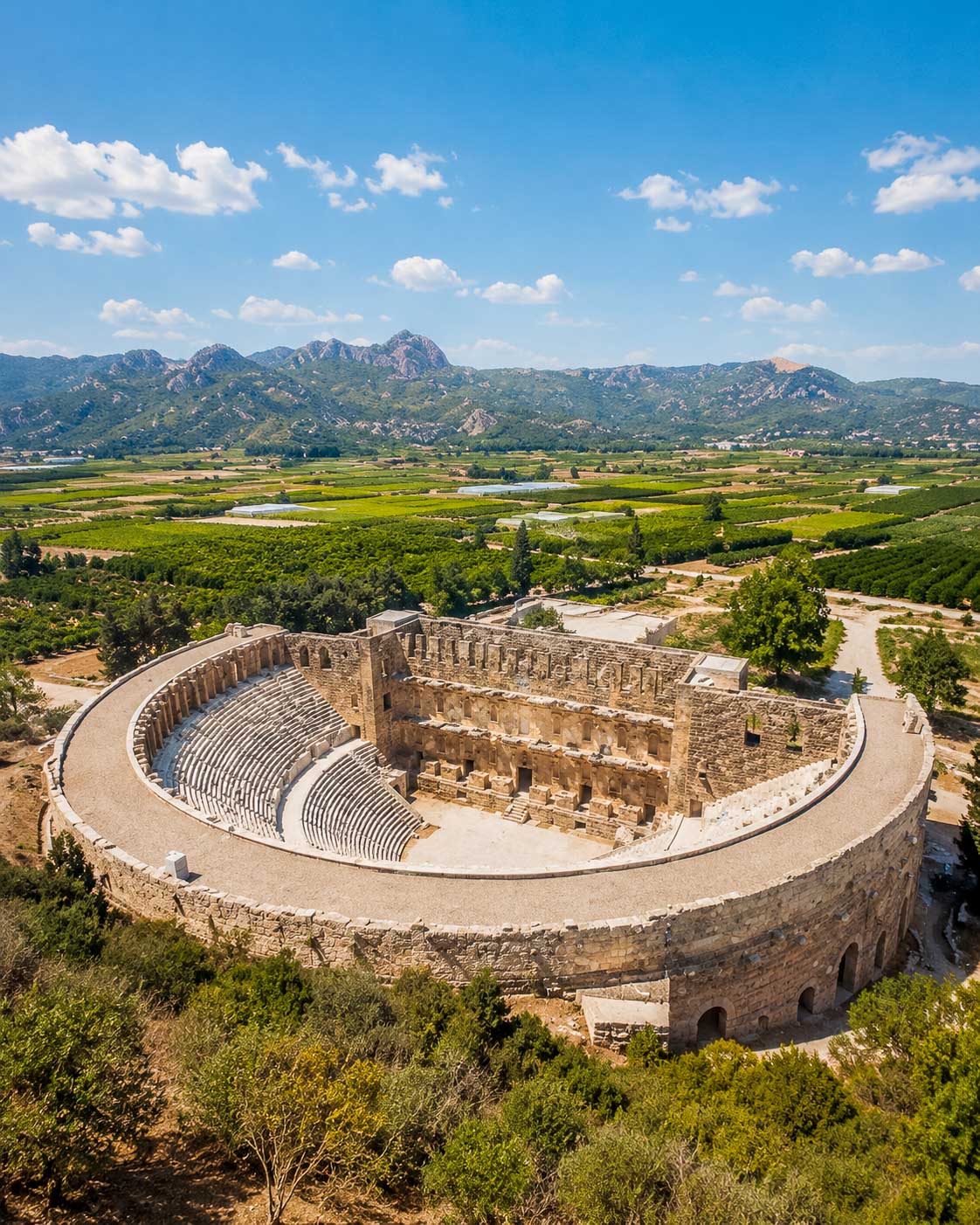
Aspendos, fifteen minutes further, has the most complete surviving Roman theatre in the Mediterranean. The acoustics are still perfect, concerts and the Aspendos International Opera and Ballet Festival are held here annually. You can sit in the upper rows where actual Romans sat in the second century AD, the theatre was built during the reign of Marcus Aurelius (161–180 AD). Most visitors see the theatre and leave; if you have the legs for it, climb the hill behind it to the acropolis and the aqueduct, which almost nobody bothers with and which give you the rest of the city.

Side, on the coast nearby, is the third pin on this route, a small coastal town built around the ruins of an ancient port. Plan a full day for all three, but time your arrival in Side for the late afternoon. The sunset through the standing columns of the Temple of Apollo, right on the water's edge, is the defining photograph of the eastern coast.

§
07Ancient city · Mountains

Termessos.

The city Alexander could not be bothered with.

1 min read

Termessos sits at 1,000 metres in the mountains north-west of Antalya. It is unexcavated, unfenced, almost always empty on weekdays, and one of the most extraordinary ancient cities in the Mediterranean.

The Pisidians built here in the 4th century BC. In 333 BC Alexander the Great surrounded the city, decided the siege was not worth the losses, and moved on. The ruins still stand: theatre, agora, necropolis with sarcophagi still in place, all wrapped in pine forest with a long view down toward the coast.

The walk up from the parking takes about forty minutes and is moderately steep. Bring water. Wear shoes. The reward is one of the rare ancient sites where you genuinely feel alone with the past.

A few practical notes. You drive up through the Güllük Dağı-Termessos National Park and pay the gate fee on the way in. There are toilets at the car park, and the ruined Temple of Artemis sits right beside it, so look for it before you start the climb rather than after. Closing time is earlier in winter than in summer, so check before you set out and start early. On the way back down, the Antalya Museum is roughly on the route, and its archaeological collection is one of the best in the country if you still have an hour of daylight.

Alexander surrounded Termessos in 333 BC, decided it wasn't worth the losses, and left. The city has been sitting in the pine forest mostly intact ever since.

§
08West of Antalya

The Lycian Coast, Olympos, Phaselis, Kemer.

Roman ruins where you can swim.

1 min read

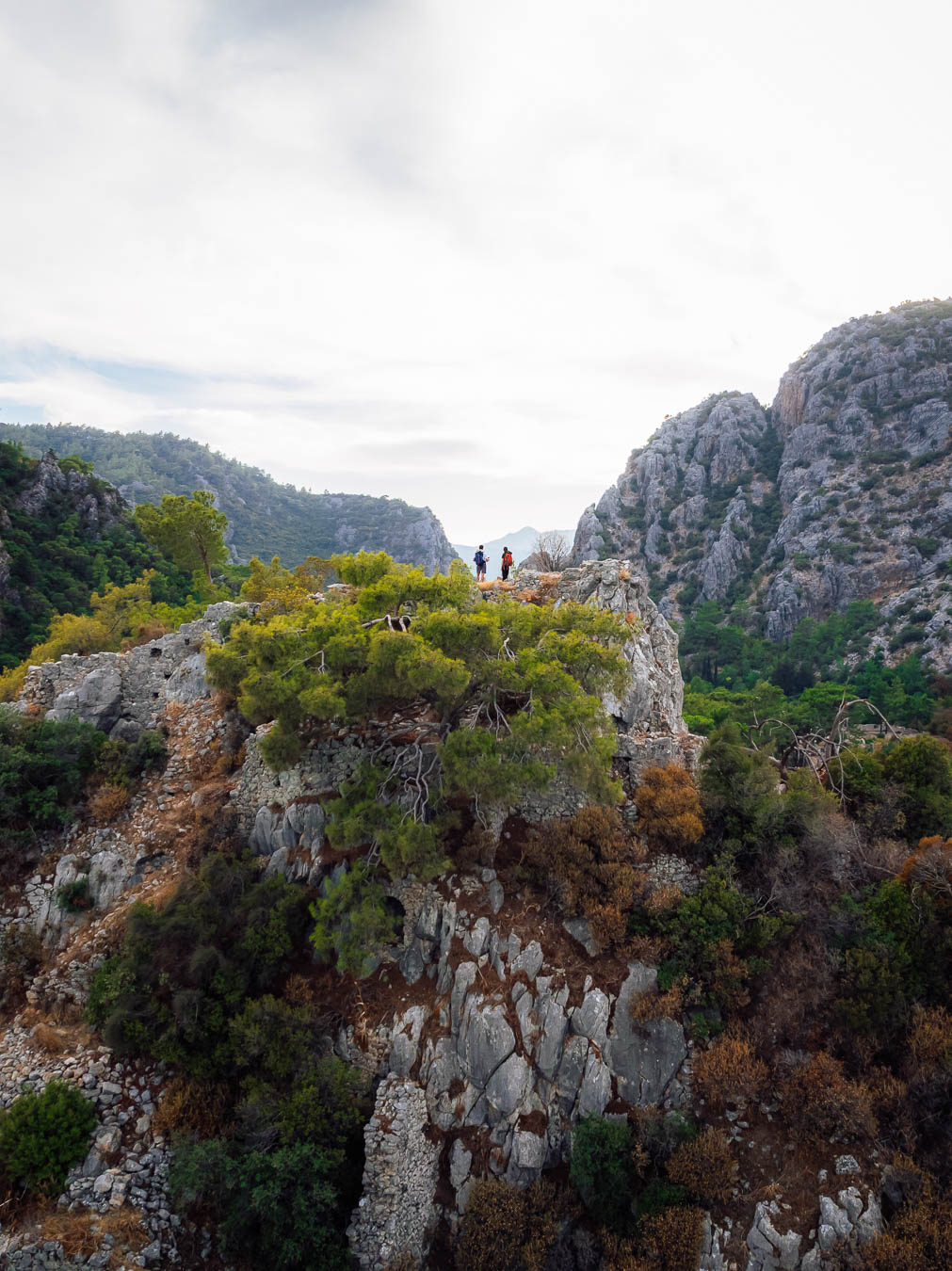
Drive west from Antalya along the coast road and you enter the historic territory of Lycia. Olympos sits in a river valley where Roman ruins and pine forest blur into each other, the path to the beach winds through partially excavated stone houses, with the mountain looming behind. The famous Chimaera flames, natural gas vents on the slope above Olympos, are worth seeing at night, but they require a steep, unlit 30-minute uphill hike in the dark. Wear actual shoes, bring a flashlight, and don't underestimate the climb.

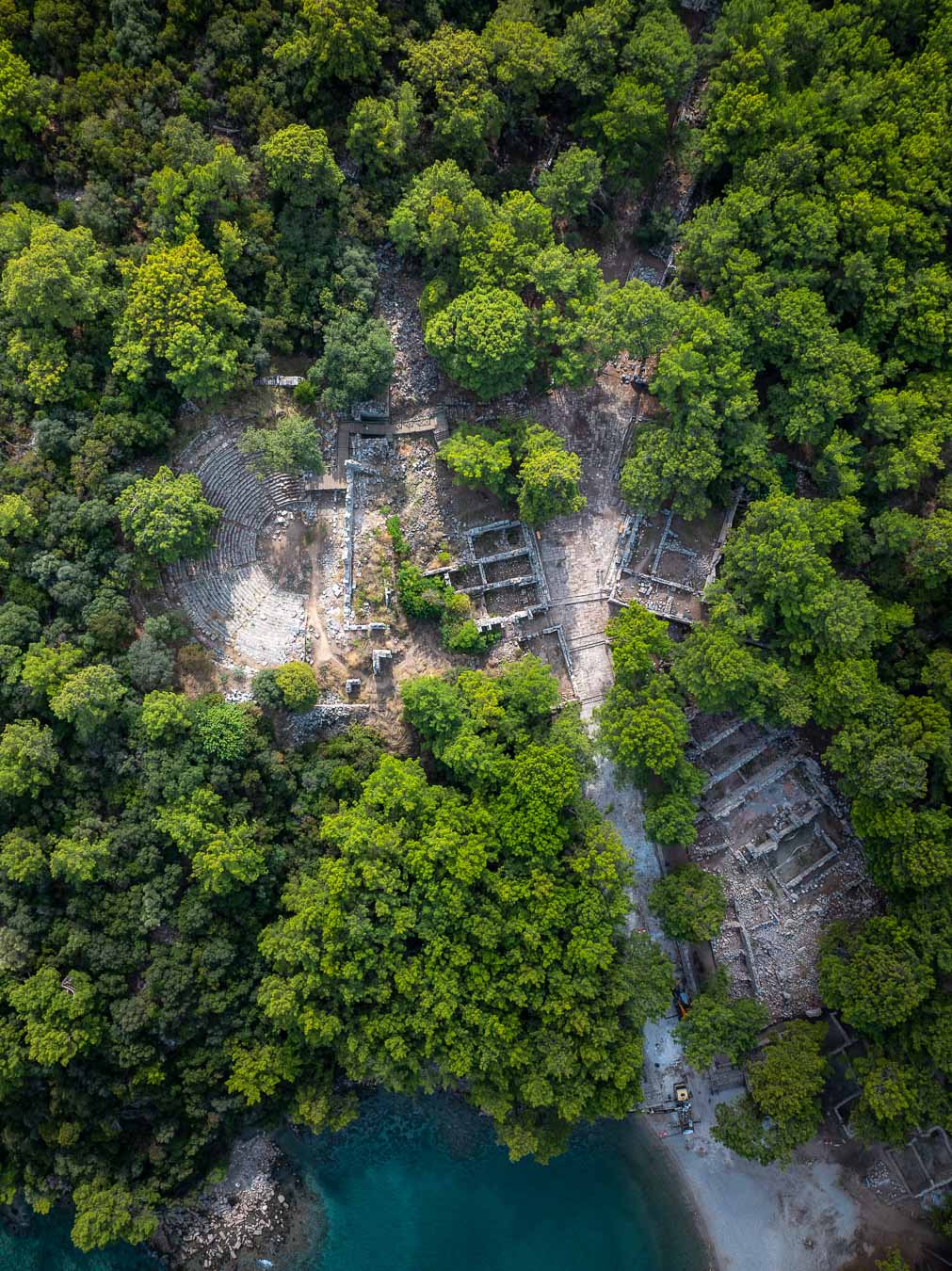
Phaselis, ten minutes closer to Antalya, was a Lycian port city with three small harbours you can now swim between. Roman columns lie partly in the water. The site is unfenced (with a modest entry fee), and the combination of ancient ruins and turquoise swimming coves is one of the more compelling experiences on this coast. In peak summer (July-August), the single entry road to Phaselis gets gridlocked. Go early in the morning or stick to weekdays.

Kemer is the modern resort town between them, useful as a base for swimming and onward exploration. The Beydağları rise directly behind, with cable-car access to Tahtalı summit (2,365m) for a long view across the Mediterranean.

§
09Canyon · North

Köprülü Canyon.

Antalya's rafting country.

1 min read

About an hour and a half north of the city, in the Manavgat district, the Köprüçay River runs cold and fast between high canyon walls. Rafting is the headline activity, graded easy enough for first-timers and families, with zip-lining, jeep and ATV runs alongside it. At the top of the valley sits the ruined Roman city of Selge, reached over an ancient stone bridge, if you would rather walk than paddle.

You can drive yourself and spend the day in the national park instead of booking a tour. If you do take one, reserve a day ahead, and be wary of the cheapest deals; the headline price can climb two or three times over once the extras are added on, so confirm what is included before you book.

§
10Waterfall · North

Kurşunlu Waterfall.

A shaded half-day.

1 min read

Closer to town, in Aksu, the water drops around eighteen metres into a wooded park with walking trails and picnic areas, a cool, shaded escape on a hot afternoon. There is a small ticket counter at the entrance, and because it sits near Perge, the two pair neatly into one trip east of the city.

§
11Far west

Kaş and Kaputaş.

The quiet end of the coast.

1 min read

Keep driving west, past Kemer and Olympos, and the resorts thin out. Kaş is the reward for going this far, a small harbour town of narrow cobbled lanes, whitewashed houses, and bougainvillea climbing the walls. It is the closest point of the Turkish mainland to the Greek islands, and from the harbour you look straight across the water to Kastellorizo. There are no big hotels here, just small boutique places, and the town has stayed unspoilt in a way the eastern resorts have not. It is also one of the best diving bases on the coast.

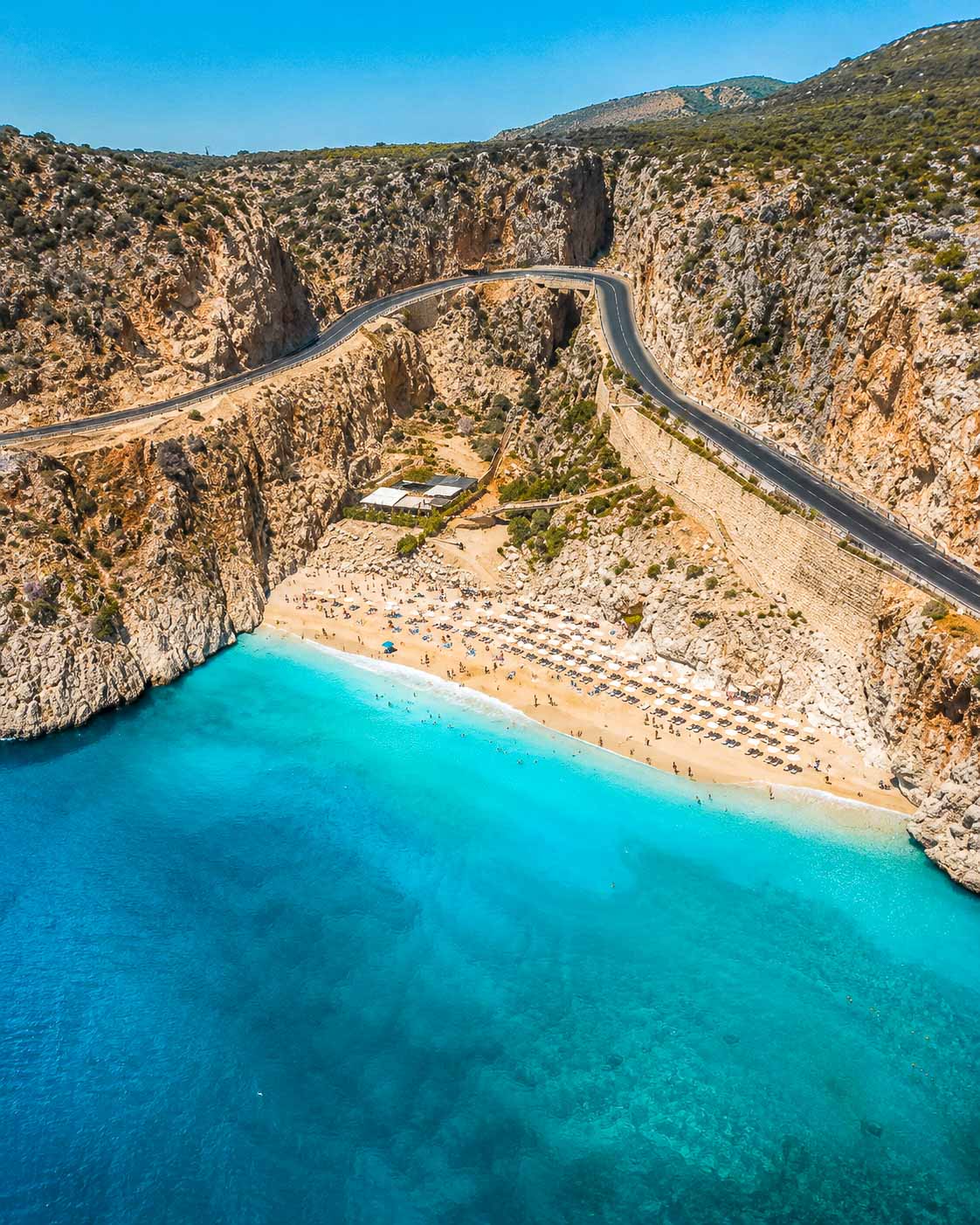
Between Kaş and Kalkan, Kaputaş Beach is the one off the tourism posters, a narrow strip of sand at the foot of a V-shaped gorge, with tall cliffs rising on both sides. You reach it down a long staircase from the main road, or by boat from Kalkan or Kaş. Go early; the small beach fills up fast in summer, and the staircase is no fun in the midday heat.

§
12East coast

Side and Alanya.

Ancient columns and a beach with a legend.

1 min read

East of the city the coast runs toward Manavgat and beyond. Side is the stop worth timing carefully: a small town built directly on the ruins of an ancient port, with a colonnaded street, a Roman theatre, and the standing columns of the Temple of Apollo right at the water's edge. Arrive in the late afternoon and stay for sunset, when the sun drops behind the temple columns over the sea. It is the defining photograph of this stretch of coast, and the reason most people come.

Further east, Alanya sits under a castle-topped headland that pushes out into the Mediterranean. Its Cleopatra Beach, just below the castle in the town centre, is a Blue Flag stretch of soft golden sand, named for the legend that the queen swam here. It is busy and lively rather than secluded, with sunbeds, water sports, and cafés along the front, and entry is free. The nearby Damlataş Cave, with its humid air, is an easy add-on if the afternoon turns hot.

The Lycian coast west of Antalya — pine cliffs dropping straight into turquoise water.
Watch the films

See Antalya in motion.

Two short cinematic films from our journeys along this coast.

Show Me Türkiye
Written by
Show Me Türkiye Editorial
Field notes, routes, and city guides from across Türkiye.
Ready to go?

Plan your Antalya trip.

The full Antalya guide covers what to see, where to eat, when to go and where to stay.

Read the full Antalya guide