Coast · Planning Guide

The Best Beaches in Türkiye by the Trip You Want

Aegean or Mediterranean, sand or pebble, cove or ten-mile strand: how to choose the coast first and the beach second.

Show Me Türkiye October 2026 8 min read

This guide helps you pick a coast and a type of beach before you pick a town or a hotel. There is no single best beach in Türkiye: Kaputaş, Patara and Ölüdeniz each win for a different traveller and lose for another. Decide first between the warm, long-season Mediterranean and the breezier, shorter-season Aegean; then choose by what the beach day needs to do: long swims, sand to walk, easy days with children, a small cove, quiet, or a stop on a road trip.

If you want one beach holiday on one coast, the Mediterranean between Fethiye and Kaş puts the widest range within two hours' drive: a lagoon at Ölüdeniz, a cliff cove at Kaputaş, and a dune-backed strand at Patara. If the town, the table and the evening matter as much as the water, the Aegean around Çeşme, Bodrum or Datça is the better trade.
§
01Aegean or Mediterranean?

Aegean or Mediterranean?

1 min read

The two coasts meet in Muğla, roughly at the Datça peninsula and the gulfs around Marmaris and Fethiye, and they swim differently.

MediterraneanAegean
StretchFethiye, Kaş, Kemer, Antalya, Alanya, MersinAyvalık, Çeşme, Kuşadası, Bodrum, Datça
WaterWarmer; very warm by midsummerCooler, noticeably so in the north
WindCalmer summer afternoonsSummer north wind; chop on exposed beaches
Swim seasonMid-May into October; November near AntalyaCore June–September
SceneryMountains close to the sea; cliffs and pinePeninsulas, bays, olive groves, small towns

The Mediterranean has the longest swimming season in the country. The Taurus and Beydağları ranges come down close to the sea, so the scenery is vertical. In July and August the real constraint is the heat on land, not the water.

The Aegean is broken into peninsulas and bays, and the summer north wind keeps afternoons bearable; it is also why Alaçatı is known for windsurfing. Food, wine and small-town evenings are a large part of why people come.

Choose the Mediterranean if swimming is the main event, you travel in the shoulder months, or young children will stay in the water for hours. Choose the Aegean if you care as much about the town and the table as the beach, or you run hot and want the wind.

§
02Best overall swimming

Best overall swimming: Fethiye to Kaş.

1 min read
  • Location: The Lycian coast, eastern Muğla and western Antalya
  • Best for: Clear water, several beach types within short drives
  • Best season: Late May–June, September–October
  • Access: Dalaman or Antalya airport; a car links the beaches

Ölüdeniz. The lagoon and its sand spit sit inside a nature park with paid entry, and the water stays calm when the open sea isn't. Belcekız, the long open beach next to it, is free and just as good for swimming. In July and August it is busy, and paragliders land on the sand all day. Detail: Muğla guide.

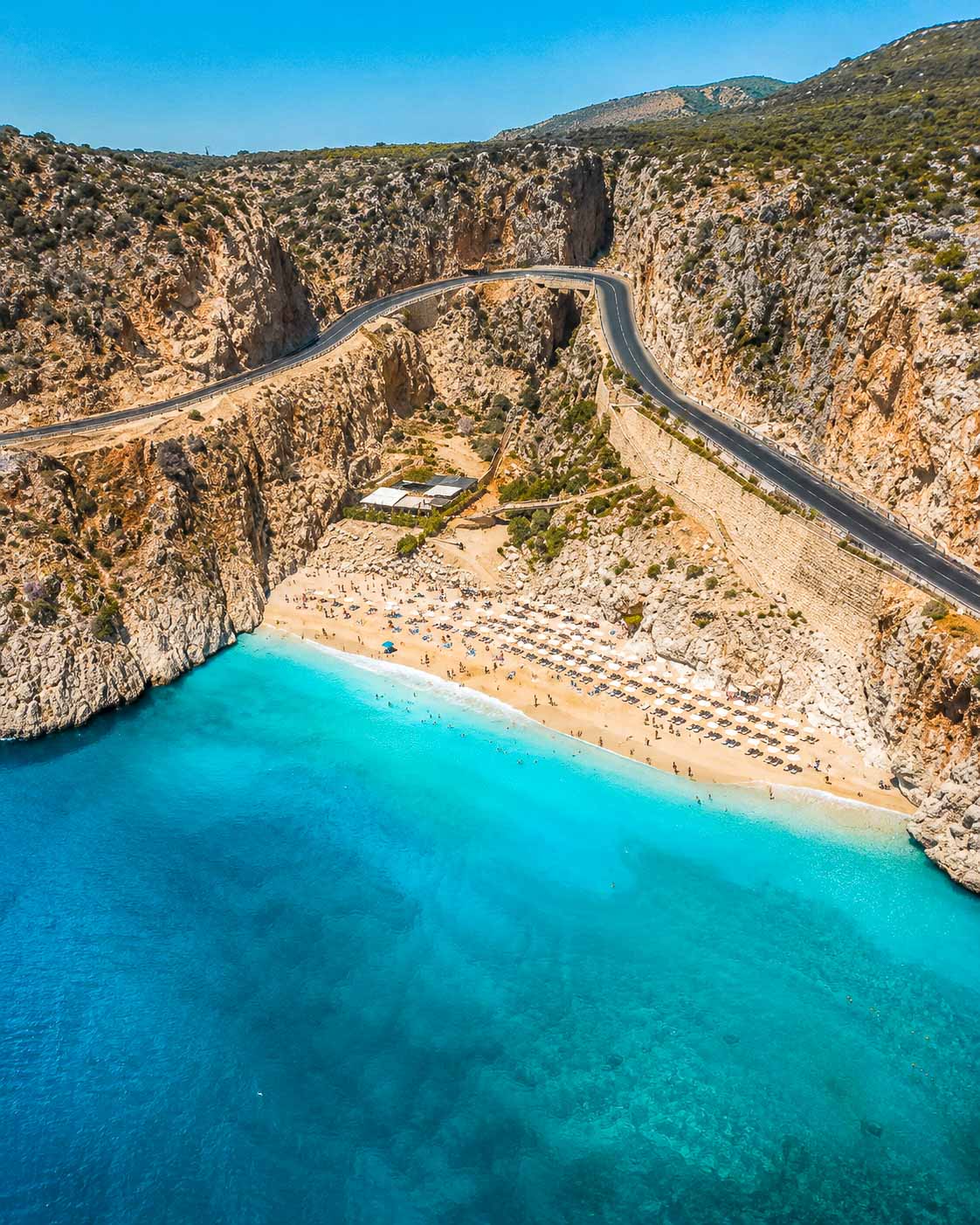
Kaputaş cove below the coast road between Kaş and Kalkan
Kaputaş: one intense swim, reached by a long staircase from the road.

Kaputaş. A short cove of fine pebble and pale sand at the mouth of a gorge between Kaş and Kalkan, with intensely turquoise water. Access is a long staircase down from the coast road, parking at the top is limited, and there is little shade. Detail: Antalya guide and things to do around Antalya.

Kaş itself has few sandy beaches, and that is the point: you swim off rocks and platforms into very clear, deep water, and boat days to Kekova anchor in coves.

Kaputaş is the beach for an hour; Patara is the beach for a day.

Choose Kaputaş over Patara if you want one intense swim on a drive along the coast and can manage the stairs. Choose Patara over Kaputaş if you want space, sand underfoot and a whole day, or you are carrying children and gear. Base in Fethiye/Ölüdeniz for easy beach days and boat trips, or in Kaş/Kalkan for clearer water and a quieter town; two bases cover the whole stretch.

Patara at sunset: kilometres of dune-backed sand and no hotels on the beach.
03Best for long sand

Best for long sand: Patara and İztuzu.

1 min read
  • Location: Patara (Kaş district, Antalya); İztuzu (Dalyan, Ortaca, Muğla)
  • Best for: Walking, space, wild landscape, older children
  • Best season: May–June and September–October; summer by day only
  • When to skip: With toddlers in midsummer, or if you want beach bars and shade

Patara is one of the longest beaches on the Mediterranean, many kilometres of sand backed by dunes, with the ruins of a Lycian capital a short walk inland. There are no hotels on the beach, only a small facilities area at the main access point, so the further you walk, the emptier it gets. Wind and surf can pick up in the afternoon.

İztuzu is a sand bar between the Dalyan river delta and the open sea. It lies within the protected Köyceğiz-Dalyan area, where permanent building on the beach is tightly restricted to protect the nesting ground. Most people arrive by river boat from Dalyan, past the Lycian rock tombs, so the journey is part of the beach day. Detail: Muğla guide.

Patara or İztuzu? Patara suits travellers with a car who want to walk and be alone; İztuzu suits a base in Dalyan and a boat-and-beach day. Both are protected sea-turtle nesting beaches, which shapes the day.

§
04Turtle beaches

Turtle beaches: what changes for you.

1 min read

Türkiye's Mediterranean coast holds a few dozen sea-turtle nesting beaches, used by loggerheads (Caretta caretta) and, further east, green turtles. Patara, İztuzu and Çıralı are the ones visitors most often meet; Belek near Antalya, behind the resort hotels, is one of the most important loggerhead nesting sites.

The rules are set by the Ministry of Agriculture and Forestry (General Directorate of Nature Conservation and National Parks). For the 2026 season the ministry announced:

  • No entry to the listed nesting beaches from 20:00 to 08:00, from May to the end of September.
  • No fires, barbecues, tents or vehicles on the sand; fines are heavy.
  • Nests are often marked with cages or stakes. Don't move them; keep umbrellas clear.
  • Hatchlings head for the brightest horizon, so a phone torch on the sand at night does real harm.

In practice: sunsets from the dunes, not the waterline, and no night swims on these beaches. The rest of the coast is unaffected. Protected nesting beaches commonly carry seasonal restrictions, and dates and hours are announced each season, so check the notice at the beach entrance.

§
05Best coves, and swimming

Best coves, and swimming among ruins.

1 min read

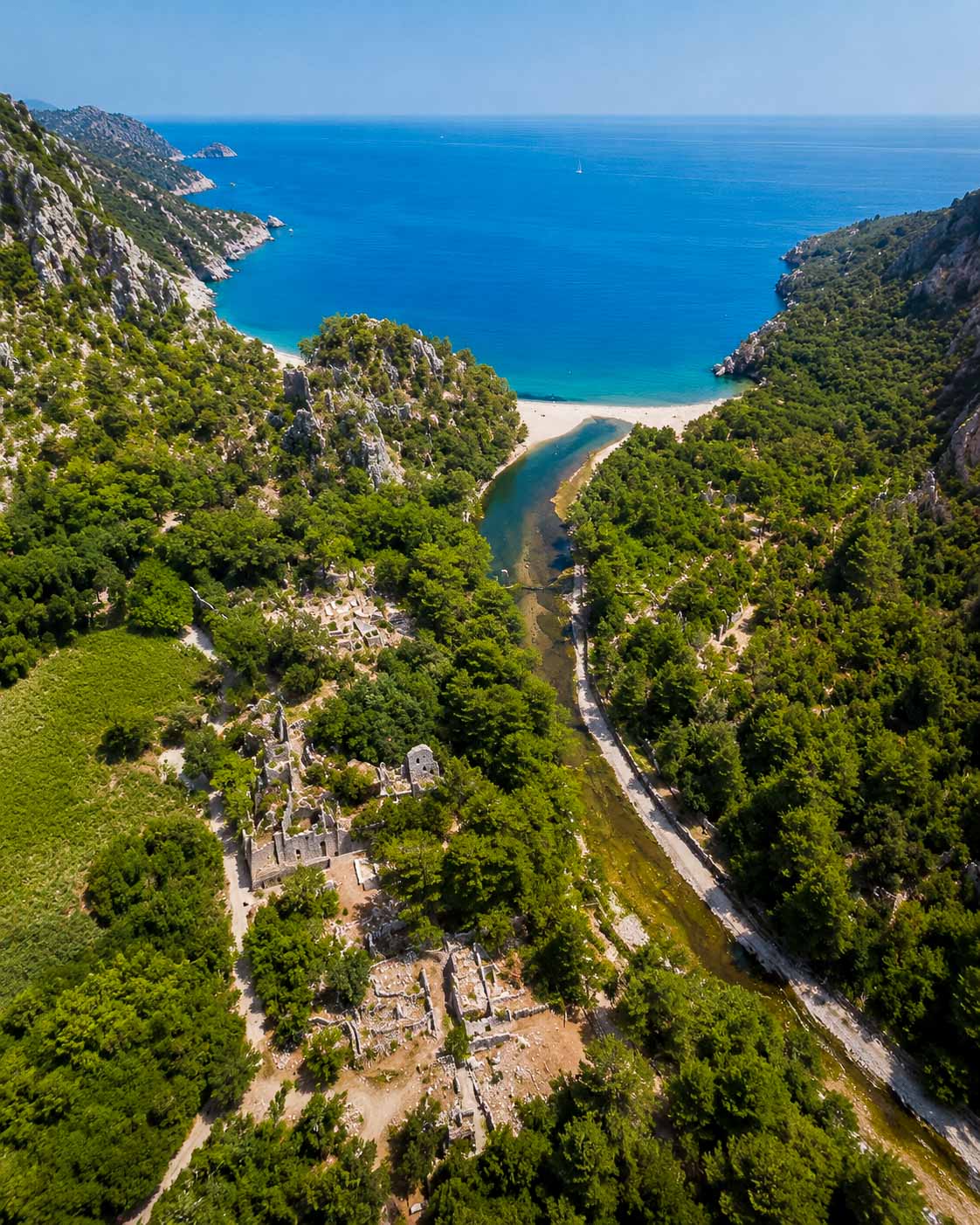
Phaselis, south of Kemer, was a Lycian port with three small harbours; you can swim from all of them, with columns and an aqueduct in the pine behind you. Olympos puts a pebble beach at the end of a forested valley of ruins. Çıralı, next to it, is the quieter, protected half of the same bay, lined with small pensions and citrus groves rather than resort hotels. Detail: Kemer guide and Antalya guide.

Olympos valley of ruins running down to the beach
Olympos: a pebble beach at the end of a forested valley of ruins.

Butterfly Valley, between Ölüdeniz and Faralya, is a beach at the foot of a steep valley, normally reached by boat from Ölüdeniz. The path down the cliff is very steep and exposed, not a casual way to the beach, and its condition and access can change. It feels remote because getting in and out is genuinely awkward, so it is a poor choice with small children or heavy bags. Detail: Muğla guide. The cliff-top villages above it sit on the Lycian Way.

On the Aegean, the most rewarding coves are generally reached by boat: a gulet day out of Bodrum or Göcek, or the small bays of the Datça peninsula.

§
06Best for families

Best for families.

1 min read

The best family beaches have shallow, gently shelving water, sand rather than pebble, shade and toilets within reach, and a short walk from the car or hotel. By that test, the famous coves (Kaputaş, Butterfly Valley) are the hardest family beaches on the coast.

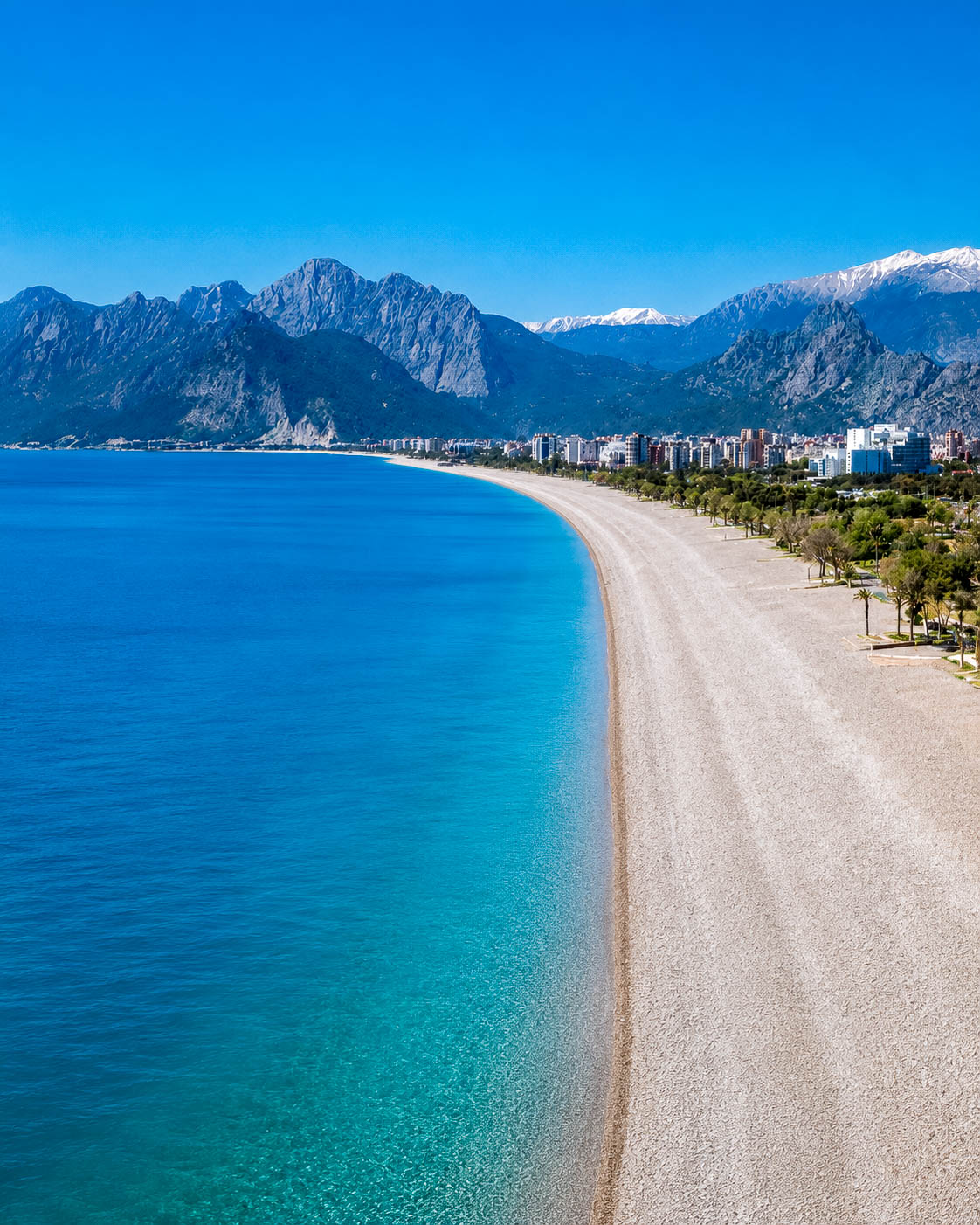
Konyaaltı beach and promenade in Antalya
Konyaaltı: pebble, but with a promenade, shade and the city behind it.

Ilıca, Çeşme: shallow, soft sand and a promenade; one of the easiest Aegean beaches with small children. Detail: İzmir guide.

Cleopatra Beach, Alanya: soft golden sand in the town centre, with facilities. Detail: Antalya guide.

Lara, Antalya: long sandy beach lined with large resorts; easy with an all-inclusive base.

Konyaaltı, Antalya: pebble, but a long promenade, shade, cafés and city access. Detail: Antalya guide.

Ölüdeniz/Belcekız: calm water, though busy in high summer.

Patara suits older children who enjoy space and dunes. With toddlers, the walk, sun and afternoon waves make it harder work.

§
07Best for quiet

Best for quiet.

1 min read

Quiet on this coast is mostly a matter of when and how you arrive, not which beach you pick.

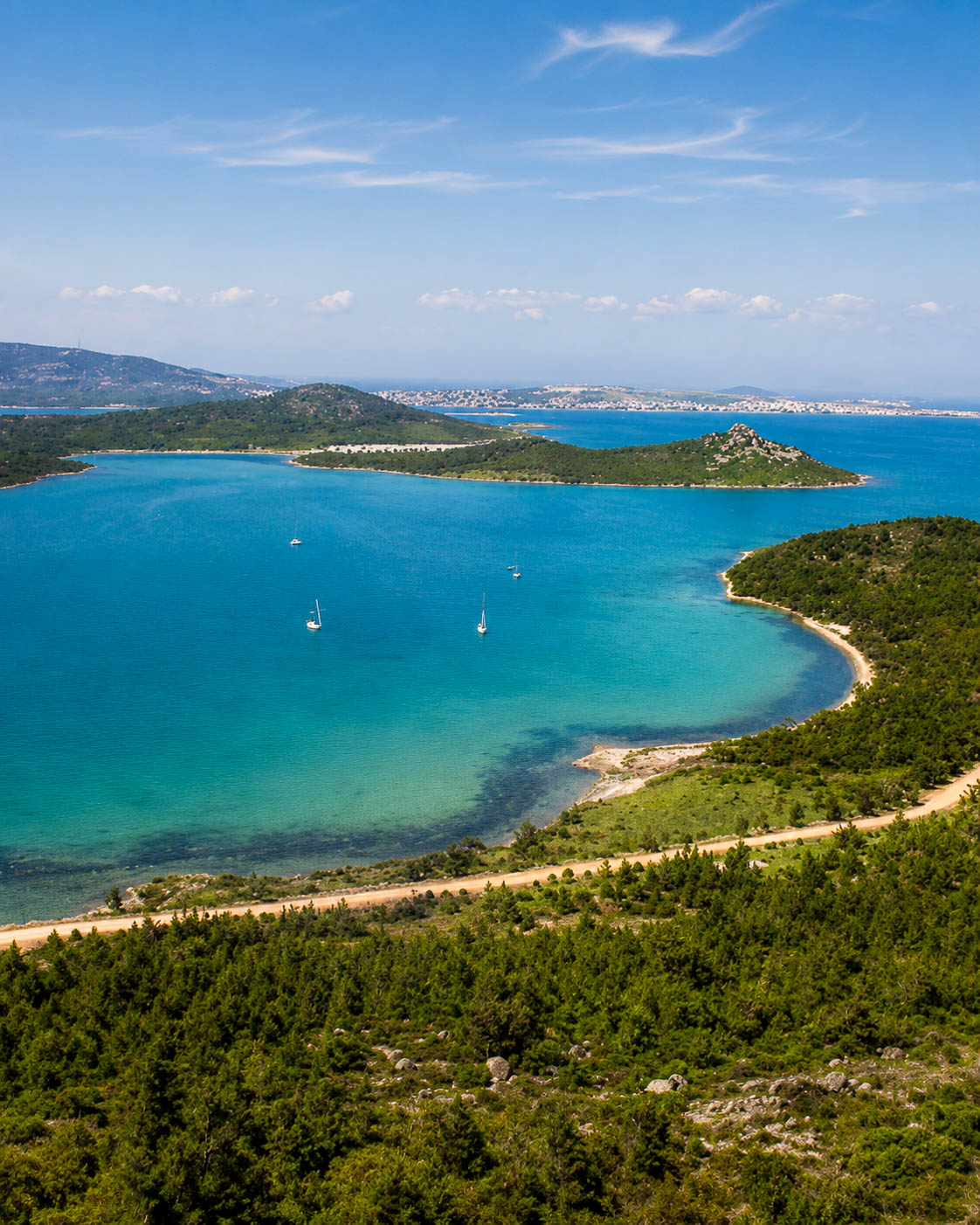
Islands and bays off Ayvalık in the north Aegean
Ayvalık Islands Nature Park: cooler water, a shorter season, fewer crowds.

Patara past the first kilometre, on any weekday.

Çıralı, where turtle protection keeps the beachfront low-rise.

The Datça peninsula, where the long road filters out day-trippers. Detail: Muğla guide.

Ayvalık and Cunda, a Turkish holiday coast more than a package one; many of the islands and bays are protected as the Ayvalık Islands Nature Park (Ayvalık Adaları Tabiat Parkı). Cooler water, shorter season. Detail: Balıkesir guide.

Kızkalesi in Mersin, a village beach facing a castle on an island, low-key outside July and August. Detail: Mersin guide.

§
08Best for the shoulder season

Best for the shoulder season.

1 min read

In late May, late September, October or, around Antalya, into November, stay on the Mediterranean. Antalya, Kemer, Side and Alanya hold their sea warmth longest, and their towns stay open because they are cities, not seasonal villages. Kaş and Fethiye are close behind.

The Aegean beach season is winding down by October. Bodrum or Çeşme can still be pleasant, but expect shorter swims and some closed beach clubs. Month by month: when to visit Türkiye.

The Lycian Way runs above much of the D400 beach road between Fethiye and Antalya.
09Best beach road trip

Best beach road trip.

1 min read

The most efficient beach road trip in Türkiye is the D400 from Fethiye to Antalya. In order, it passes Ölüdeniz, Patara, Kalkan, Kaputaş, Kaş, Olympos/Çıralı and Phaselis, with the Lycian Way above much of it. Allow five to seven days with two or three bases, and fly into Dalaman and out of Antalya (or the reverse) so you don't double back.

Kaputaş is the natural roadside stop on this drive: go early, when there is still parking at the top of the stairs. Patara needs a detour off the main road and deserves a half-day at least.

On the Aegean, the Aegean Coast Escape links İzmir, Ephesus, Bodrum, Datça and Fethiye in eight days, swimming most afternoons. For a whole-country version with a beach stretch inside it, see the Grand Tour.

§
10What about the Black Sea?

What about the Black Sea?

1 min read

The Black Sea coast has beaches, but it isn't a beach-holiday coast in the Mediterranean sense. The water is cooler, the weather less settled, and the shore often pebble or dark sand. Uzunkum in Ordu is a long, clean city beach, and Giresun has a rocky shore at Deliklitaş. Treat these as part of a highland trip, not the reason for one.

§
11How to read Blue Flag

How to read Blue Flag.

1 min read

Türkiye ranks near the top worldwide for Blue Flag beaches (third in the 2026 awards, with several hundred beaches), and Antalya province holds the largest share. The flag certifies water quality, safety equipment, environmental management and facilities for that season. It is reassuring for families in resort areas, says nothing about how a beach looks, and many wild beaches don't carry it because they have no managed facilities. Check the current list on the national Blue Flag site before relying on it.

§
12Choosing in one line

Choosing in one line.

1 min read
  • Swimming: Fethiye to Kaş, two bases
  • Long sand: Patara with a car; İztuzu from Dalyan by boat
  • Families: Ilıca, Cleopatra Beach, Lara, Konyaaltı
  • Coves: Phaselis, Olympos/Çıralı, Butterfly Valley, Datça by boat
  • Quiet: Patara on a weekday, Çıralı, Datça, Ayvalık
  • Road trip: D400 Fethiye–Antalya; Kaputaş as the early-morning stop
  • Shoulder season: Antalya, Kemer, Side, Alanya, then Kaş and Fethiye
Show Me Türkiye
Written by
Show Me Türkiye Editorial
Field notes, routes, and city guides from across Türkiye. Last checked October 2026.
Halil BekarReviewed by Halil Bekar, founder of Show Me Türkiye
Plan the coast

Walk the Lycian shore.

Between Fethiye and Antalya the trail runs above some of the best swimming coast in the country.

The Lycian Way →