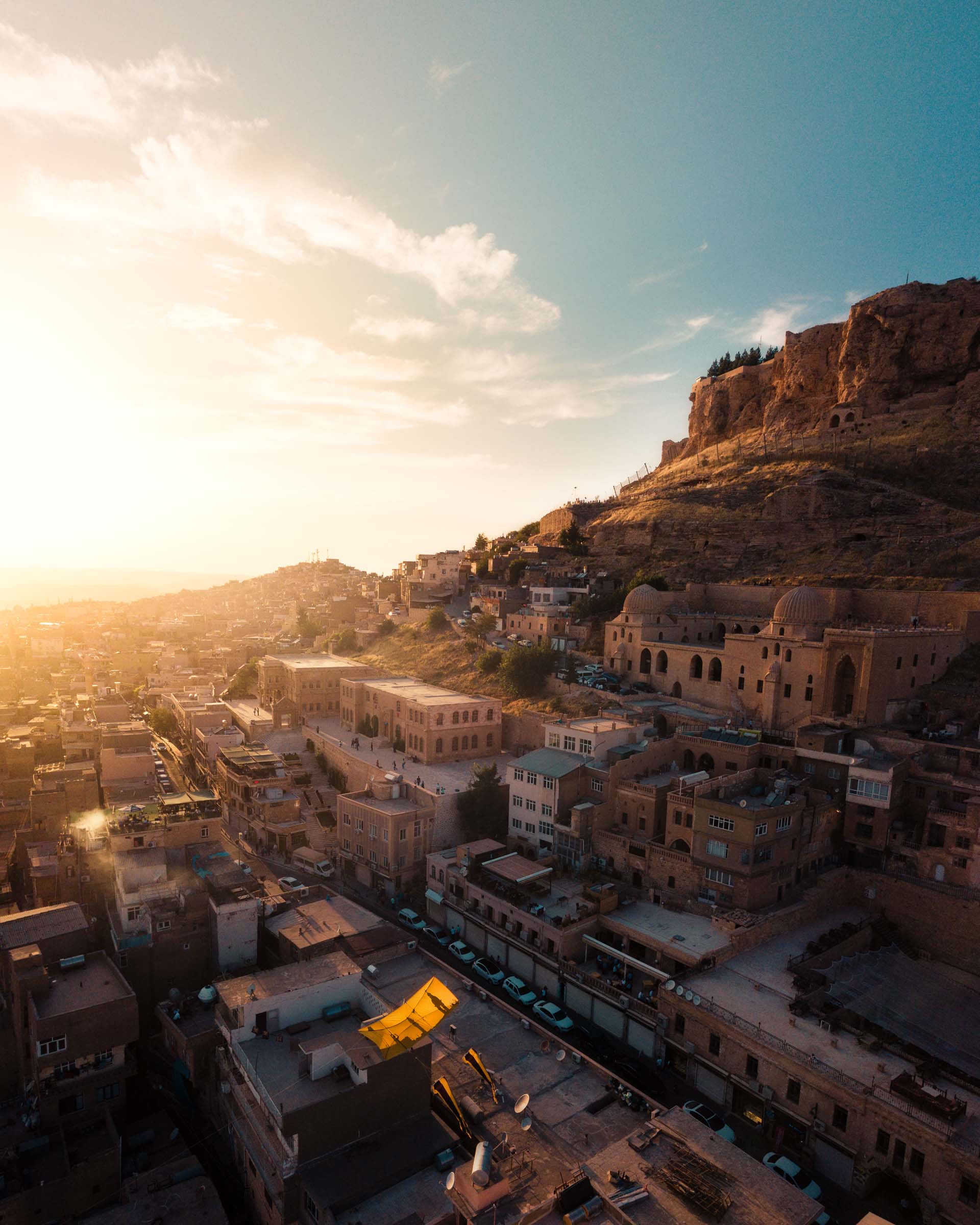
Mardin Old Town
The entire golden-stone historic centre, stacked up the hillside with the citadel at the top. Narrow stone lanes, arched passages, madrasahs and churches. Wear good shoes, everything is steep and cobbled.
The golden stone city overlooking the Mesopotamian plain
An old stone city on the edge of the Mesopotamian plain, where Arabic, Kurdish, Turkish and Syriac have been spoken in the same lanes for centuries.
Mardin sits on a ridge above the plain, a tight maze of honey-coloured limestone houses, madrasahs and mosques layered over the rock. The Zinciriye and Kasimiye madrasahs and the courtyard of the Ulu Cami are the obvious anchors, but the city is best taken slowly: the bazaar, the silversmiths and the rooftop terraces at sunset, when the plain below turns gold and the call to prayer carries across the stone.
Beyond the old town lies the Tur Abdin plateau, the historic heartland of Syriac Christianity. The fifth-century Deyrulzafaran monastery still has a working community a short drive away, and Mor Gabriel near Midyat has been continuously inhabited since 397 AD. The Roman city of Dara, Midyat's twin-faith old town and easy onward trips to Sanliurfa and Hasankeyf make this a region worth several days, not a stopover.
Eight places worth your time. Tap a photograph, the map will follow.
The entire golden-stone historic centre, stacked up the hillside with the citadel at the top. Narrow stone lanes, arched passages, madrasahs and churches. Wear good shoes, everything is steep and cobbled.
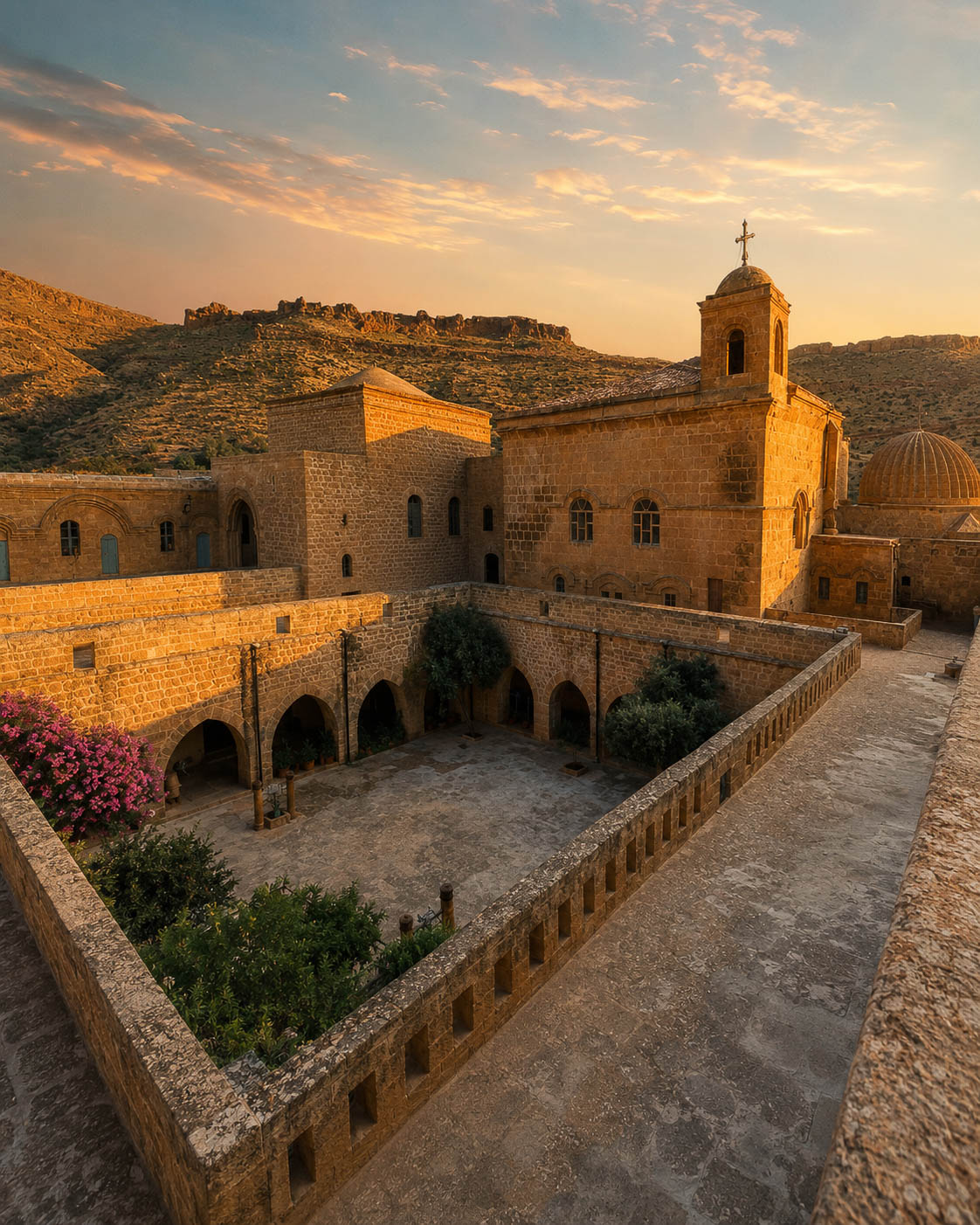
The Saffron Monastery, a 5th-century Syriac Orthodox monastery five kilometres east of Mardin. Active monastic community, Sunday services in Syriac (Aramaic), crypts that predate the monastery. Small dress code, covered shoulders and knees.
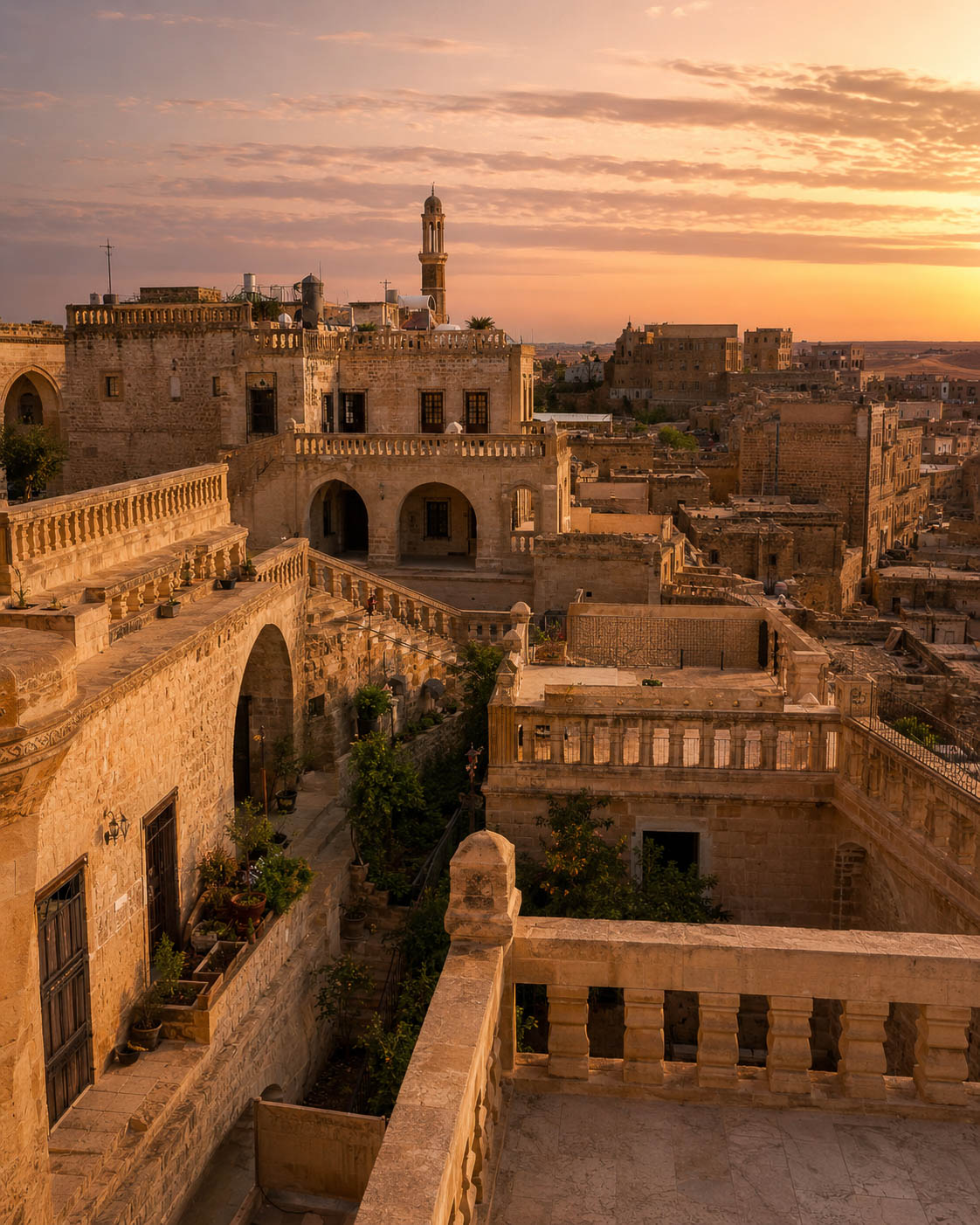
An hour east of Mardin, Midyat is the heart of the Syriac Christian Tur Abdin plateau. Beautiful stone houses, active Syriac monasteries nearby and excellent silver workshops. The wine shops sell the local Suryani white wine.
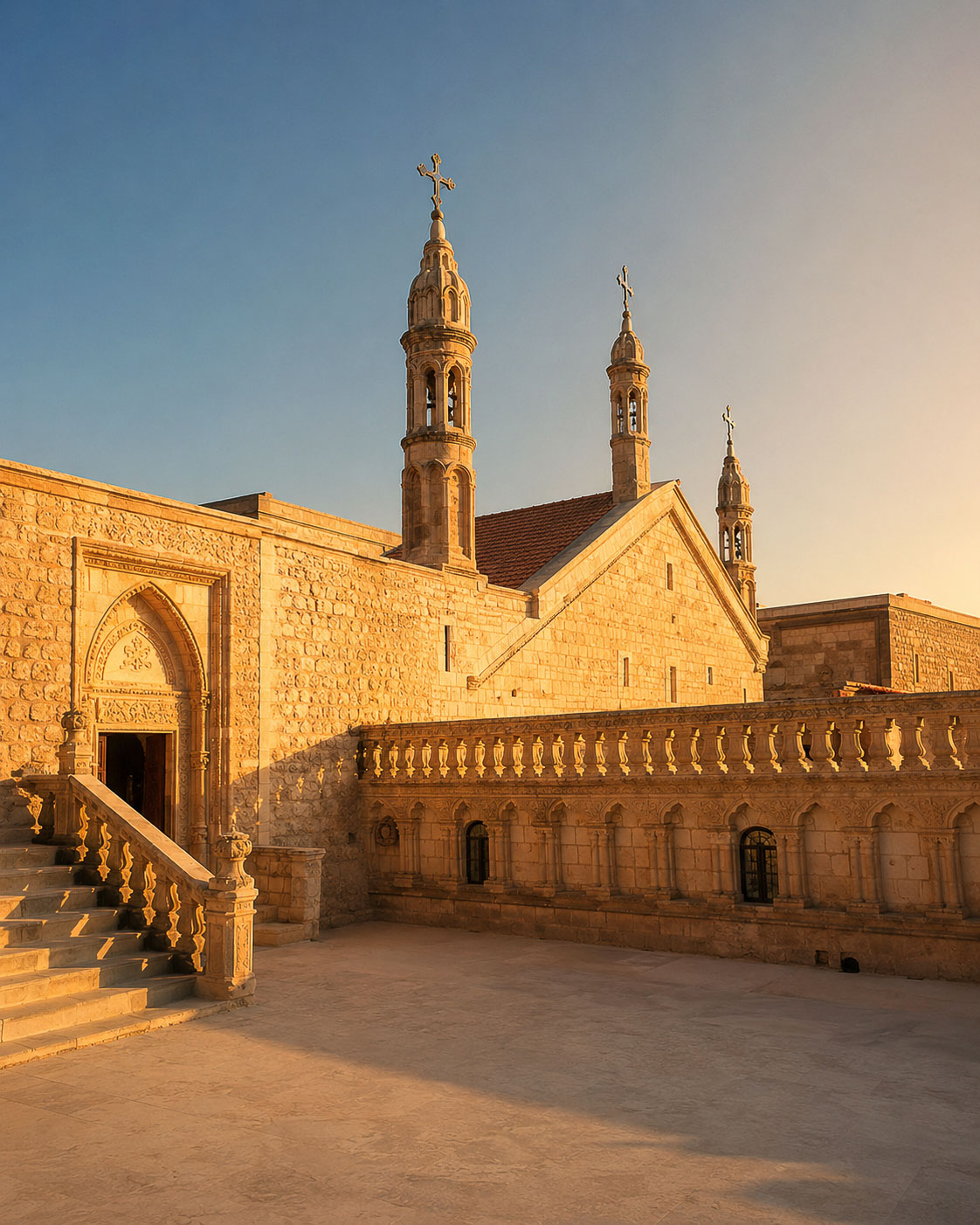
One of the oldest continuously active Christian monasteries in the world, founded in 397 AD, on the Tur Abdin plateau 80 km east of Mardin near Midyat. The monastery still houses a small community of Syriac Orthodox monks and nuns. The church of the Mother of God dates from the 5th century; the complex walls, towers and gardens have been maintained for over 1,600 years. Visits by guided tour; check opening hours in advance.
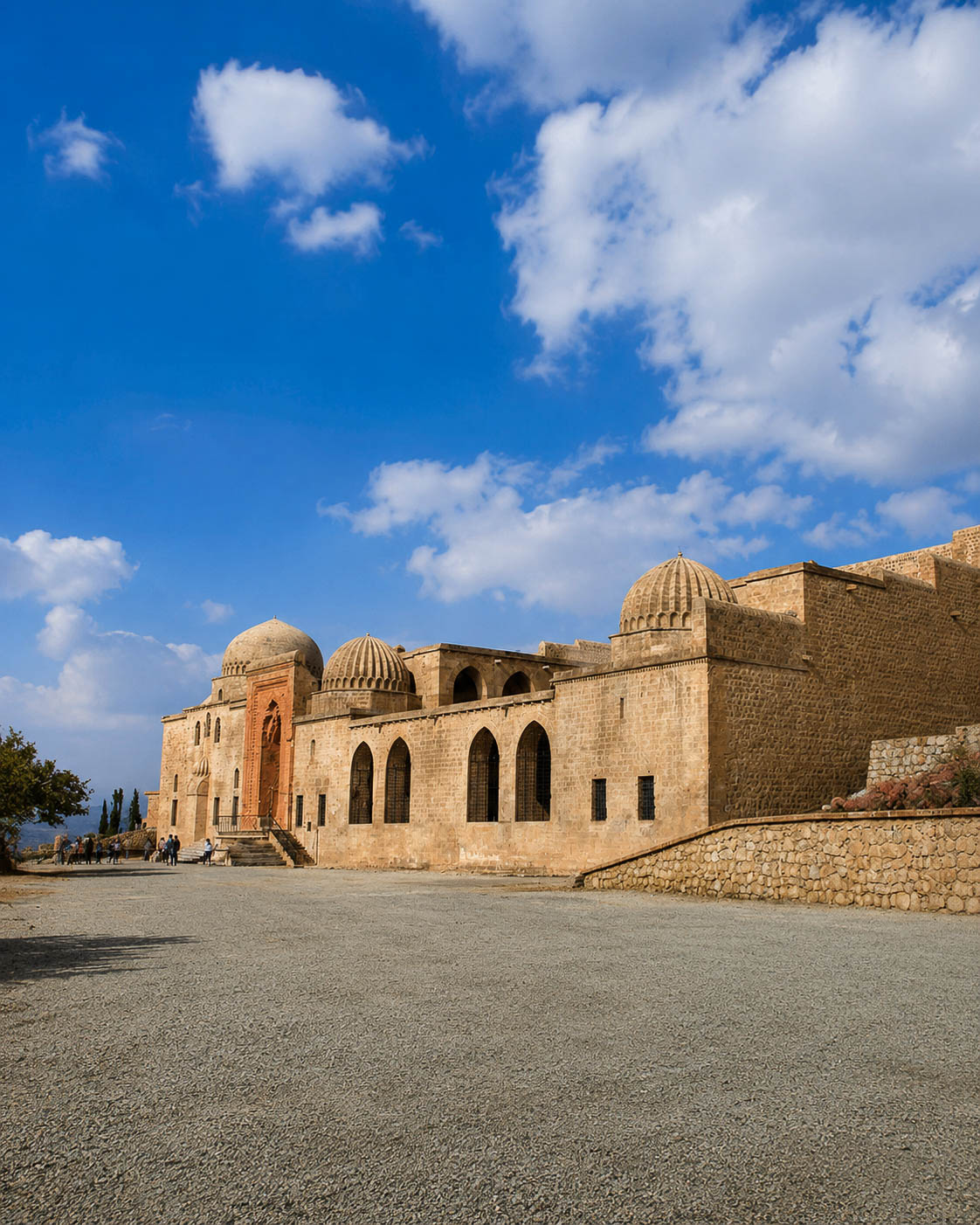
A 15th-century theological school with a stunning stone facade, central pool and symbolic channels representing life, death and eternity. A masterpiece of Artukid and Akkoyunlu architecture, with the best panoramic view in the old town.
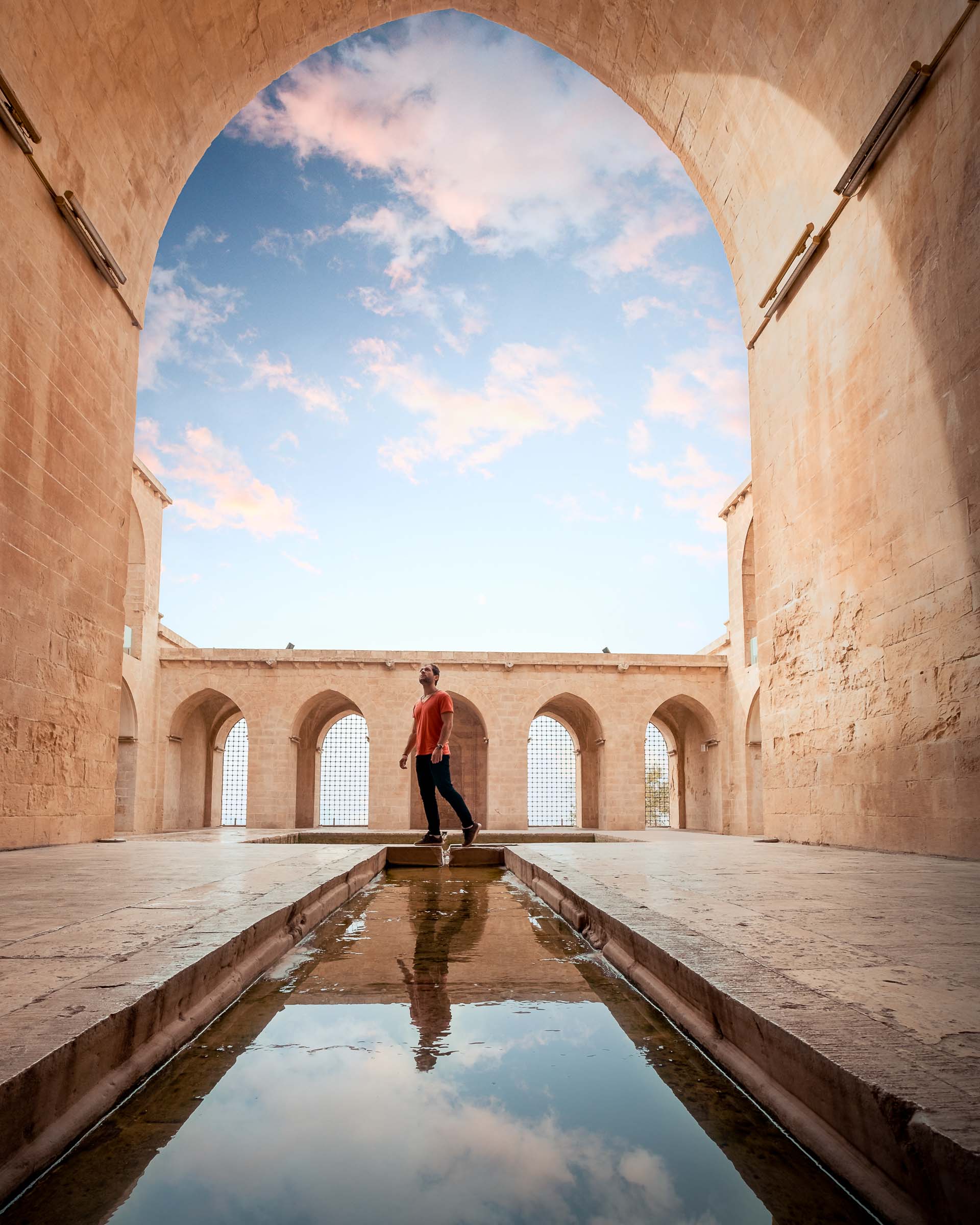
The 12th-century Grand Mosque of Mardin, with a striking fluted minaret visible from all over the old town. Originally built under the Artukid dynasty. Simple, beautiful interior.
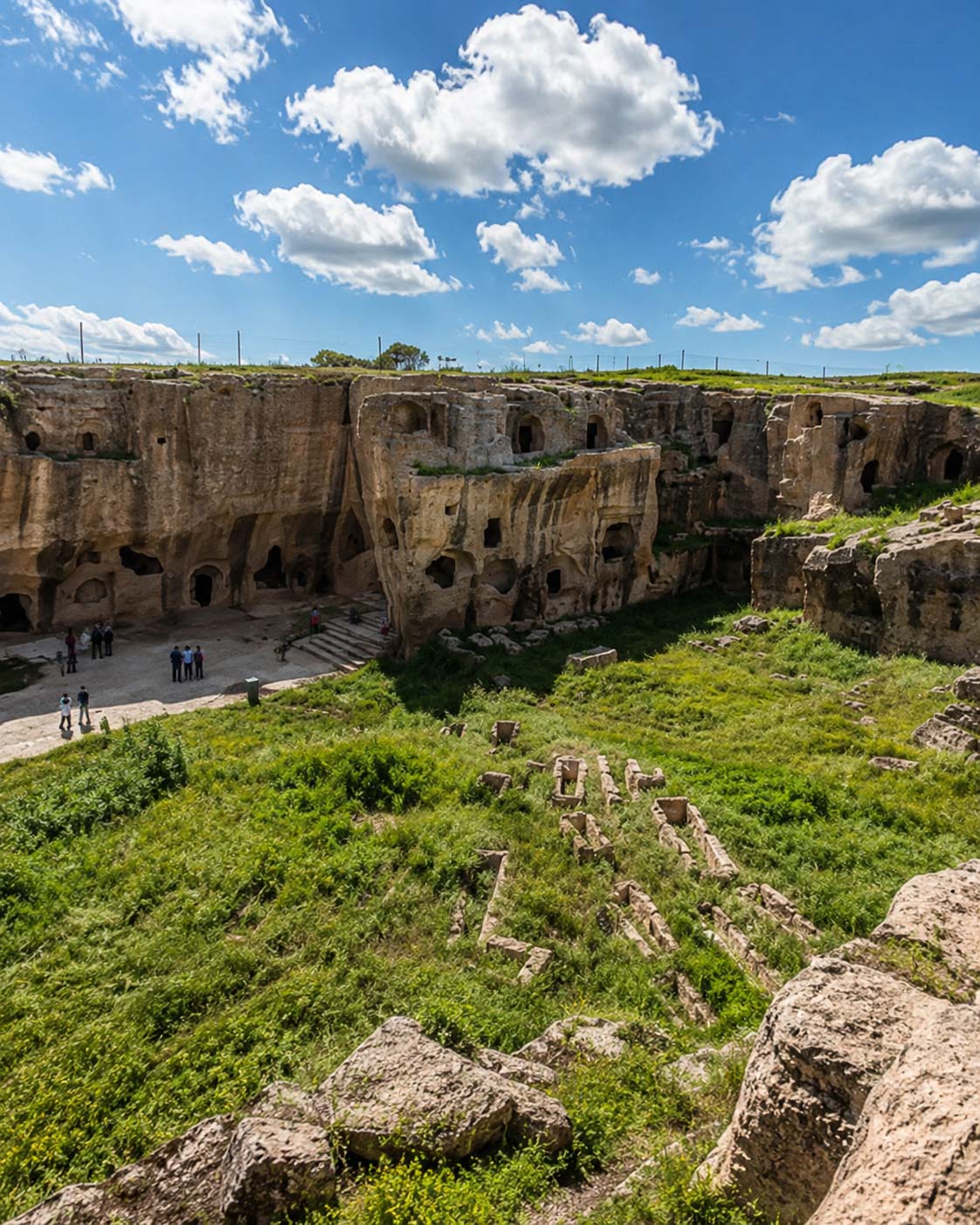
A late Roman frontier city 30 km southeast of Mardin, founded in the 6th century as a fortress against the Sasanian Persians. Carved into the soft rock are immense cisterns, a necropolis of rock-cut tombs and the remains of city walls, gates and a dam, all sitting in a small farming village where the modern houses lean against the ancient stones. A short, atmospheric stop on the road to the Mesopotamian plain.
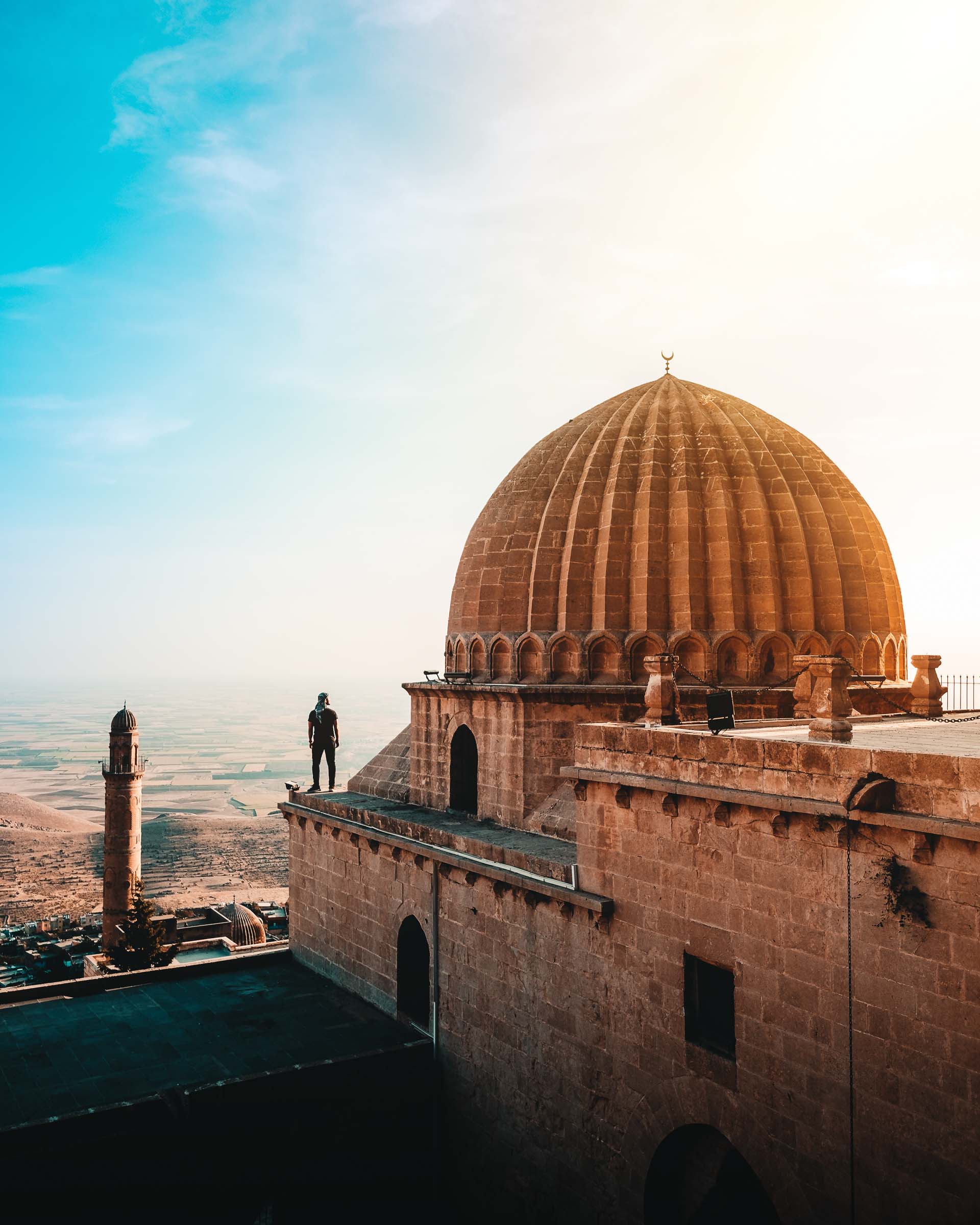
A 14th-century Artuqid madrasah at the top of the old town, with twin domed prayer halls and a courtyard pool. The terrace and rooftop offer one of the best views in Mardin, looking out across the stone city and down over the Mesopotamian plain that stretches into Syria. A short, steep climb from the bazaar and the natural place to end an afternoon as the light softens on the stone.
Mardin food reflects its crossroads location, Arab, Syriac, Kurdish and Turkish. Kibbeh in many forms, rich stuffed intestines, spiced lamb stews, and Syriac Christian wines from the surrounding villages. Almond-paste sweets and flower-water pastries. Everything served in stone courtyards or on cliff-edge rooftops.
The Mardin old town's restored stone konaks for kaburga dolması and Syriac dishes, plus rooftop spots above the plain and the Süryani heart of Midyat
The most loved address in the old town, in a stone konak just next to the Mardin Museum, where the regional cooking is delivered with care and a real sense of place. Almost everything from the food map appears on the menu: kaburga dolması, kitel raha and irok, alongside a long meze table and seasonal stews. Vintage decor, attentive staff and live music later in the evening.
An old stone mansion in the heart of the old town that has become the Mardin name internationally, with a long set menu of regional dishes brought out over an hour or so. The Syriac dishes are the point: dobo, kitel raha and lamb stuffed with vine leaves. Service is warm, the chef often comes to the table, and the rooftop is one of the best places in the city for dinner.
A rooftop terrace beside the Ulu Cami with a panoramic view across the old town and the Mesopotamian plain. The kitchen does proper traditional Mardin breakfast with the local cheeses, jams and pastries, plus simple grilled mains. Come for breakfast or for tea at sunset, when the city turns gold and the call to prayer carries.
A centuries-old stone konak right on the main bazaar street, atmospheric and a bit more polished than the lokantas. Regional classics including kaburga dolması, kara erik kebabı and a strong meze table, with live music and a fixed menu upstairs in the evenings. A pretty room for a long dinner with friends.
A restored boutique hotel on the 1st Caddesi with a rooftop terrace that may be the best view in the old town, looking straight across the Mesopotamian plain. The traditional Mardin breakfast served up here is a proper morning event, and the terrace is open for tea and snacks through the day too.
A smaller place in the centre of the old town run mostly by women, with a quiet garden and ambient lighting that make it a calmer alternative to the bigger konaks. The Mardin platter is generous and brings most of the local specialities in one go, including mumbar and yoghurt-based mezes. Honest cooking, fair prices, warm welcome.
A small, friendly restaurant in the heart of the Midyat bazaar, run by the local Syriac community. Live music, attentive service and a menu that covers both the heavier konak dishes and lighter everyday plates. The natural lunch or dinner stop on a day exploring Tur Abdin and Mor Gabriel.
A serious esnaf lokanta in Midyat, the kind of place locals stop for lunch, with the aşçı tabağı (chef's plate) the order of choice: a generous mixed grill of regional cuts with rice, salad and bread. Open from early morning until late, fair prices, no fuss. The straightforward alternative to the konak menus if you want a quick proper meal.
Start at Kasimiye Medrese, descend through the old bazaar, visit Ulu Cami, the old church of Kirklar, and finish at a rooftop cafe at sunset. All within a kilometre, all golden limestone. A full half-day.
Five kilometres out of town, the Saffron Monastery is still an active Syriac Orthodox community. Early morning visit, guided tour of the crypt, church and old residences. Sundays there are services in Aramaic.
The defining Mardin ritual. Climb up to any rooftop cafe 30 minutes before sunset, order wine or raki, watch the stone walls turn amber and the swallows fill the sky. Seyr-i Mardin is the classic, less-known spots are everywhere.
A full day east to Midyat and the ancient monasteries of the Tur Abdin plateau. Mor Gabriel, founded in AD 397, is one of the oldest continuously active Christian monasteries in the world and the spiritual heart of the Syriac Orthodox Church. Midyat silver shops and a long Syriac lunch.
Thirty kilometres from Mardin, the ruins of the ancient Byzantine fortress city of Dara. Rock-cut necropolis, cisterns and walls from the 6th century. Dramatic and relatively uncrowded. Half a day.
A lazy afternoon in the Mardin bazaar. Watch the copper smiths, the soap makers, the silver workshops. Stop at Fikret Sirin for almond-paste sweets. Finish at a terrace cafe with Turkish coffee.

Choose which cookies you allow. Essential cookies are always on because the site cannot function without them. Your choice is saved on your device and you can change it anytime from the Cookies Policy page.
Required for core features such as remembering your language and that you have seen this notice. Always active.
Help us understand which pages are visited and how the site is used, in aggregate. These may transfer data to providers outside Türkiye. Off until you allow them.
Choose which cookies you allow. Essential and anonymous analytics cookies are always on (legitimate interest, anonymised IP). Your choice is saved on your device and you can change it anytime from the Cookies Policy page.
Required for core features such as remembering your language and that you have seen this notice. Always active.
Google Analytics with anonymised IP, used to understand how the site is used in aggregate. Always active under legitimate interest.
Reserved for future use (e.g. retargeting). Off until you allow it.