Central Anatolia

Cappadocia

Fairy chimneys, cave churches, underground cities. Nothing else looks like this.

Scroll
RegionCentral AnatoliaNevşehir Province
Best SeasonApr to JunAlso Sep to Nov
Known ForBalloonsFairy chimneys, cave cities, churches
Base TownGöremeBest access to all major sites
Why Visit

Cappadocia

A landscape like nowhere else on earth, where volcanic rock was carved into churches, homes and whole underground cities, and balloons rise over the valleys at dawn.

Millions of years of eruption and erosion left soft tufa that people began carving three thousand years ago. The fairy chimneys of Pasabag, the Byzantine frescoes of the Goreme Open Air Museum, and the underground city of Derinkuyu that sheltered twenty thousand people are all within a short drive of each other.

The sunrise balloon flights have become the region's signature image and are worth doing once. But Cappadocia rewards going slowly on foot through the valleys. Base yourself in Goreme or Uchisar, stay at least three nights, and catch the light on the rock walls at the start and end of each day.

Places to Visit in Cappadocia · Eight Anchors

Where you actually go in Cappadocia.

Eight places worth your time. Tap a photograph, the map will follow.

01
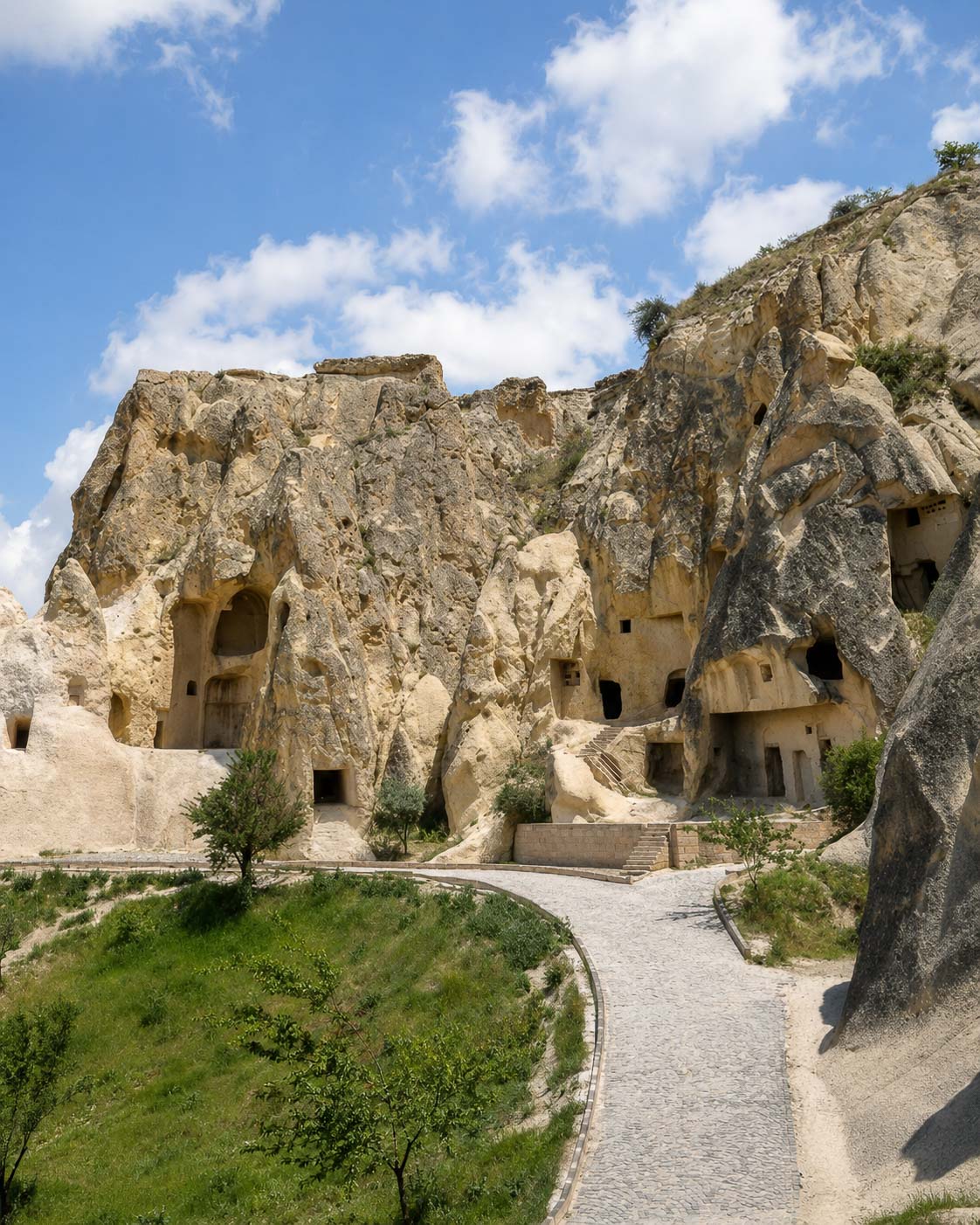
Göreme Open Air Museum

Göreme Open Air Museum

A UNESCO World Heritage Site and the most important Byzantine monastic site in Cappadocia. The complex holds around fifteen rock-cut churches and refectories from the 10th to 12th centuries, with frescoes in exceptional condition. The Dark Church has the best-preserved paintings and requires a separate ticket. Arrive at opening (08:30) and go to the Dark Church first before groups arrive. Photography not permitted inside the churches.
03
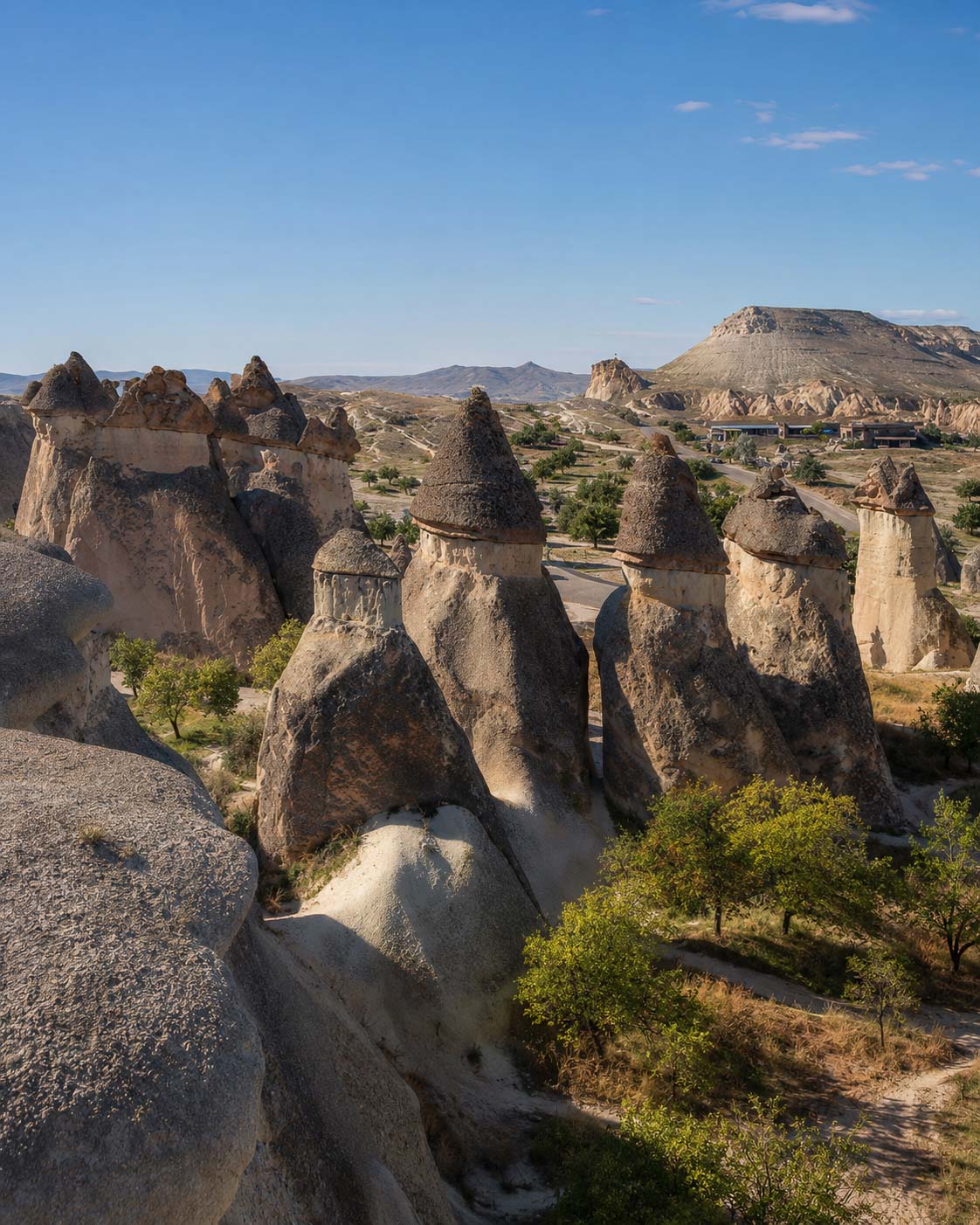
Paşabağ Monks Valley

Paşabağ Monks Valley

The finest fairy chimneys in Cappadocia, with three-headed formations rising from a vineyard. Early Christian monks carved hermitage cells and small chapels into the cones in the 4th and 5th centuries. The valley is a 10-minute drive northeast of Göreme on the Avanos road, or can be reached by dolmuş. Entrance fee applies. Go early morning or late afternoon for the best light and fewer groups.

05
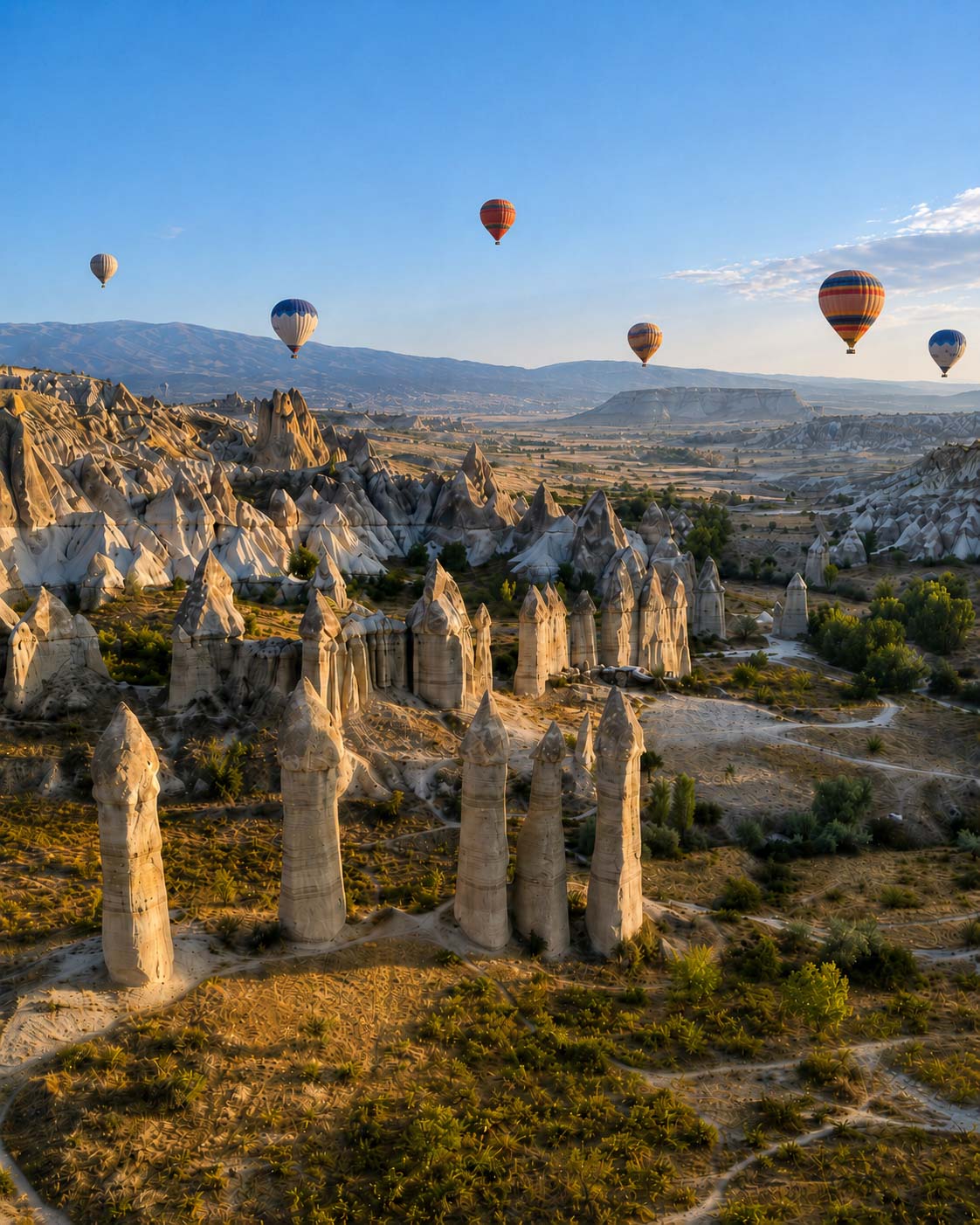
Love Valley

Love Valley

An easy 1.5 km walk north of Göreme, famous for its tall cylindrical rock formations rising straight out of the valley floor. The walk in is gentle and the light is best in the late afternoon. Free of charge and quiet on weekdays, with a viewpoint on the Göreme-Uçhisar road for those who would rather drive than hike.

07
Güvercinlik (Pigeon) Valley

Güvercinlik (Pigeon) Valley

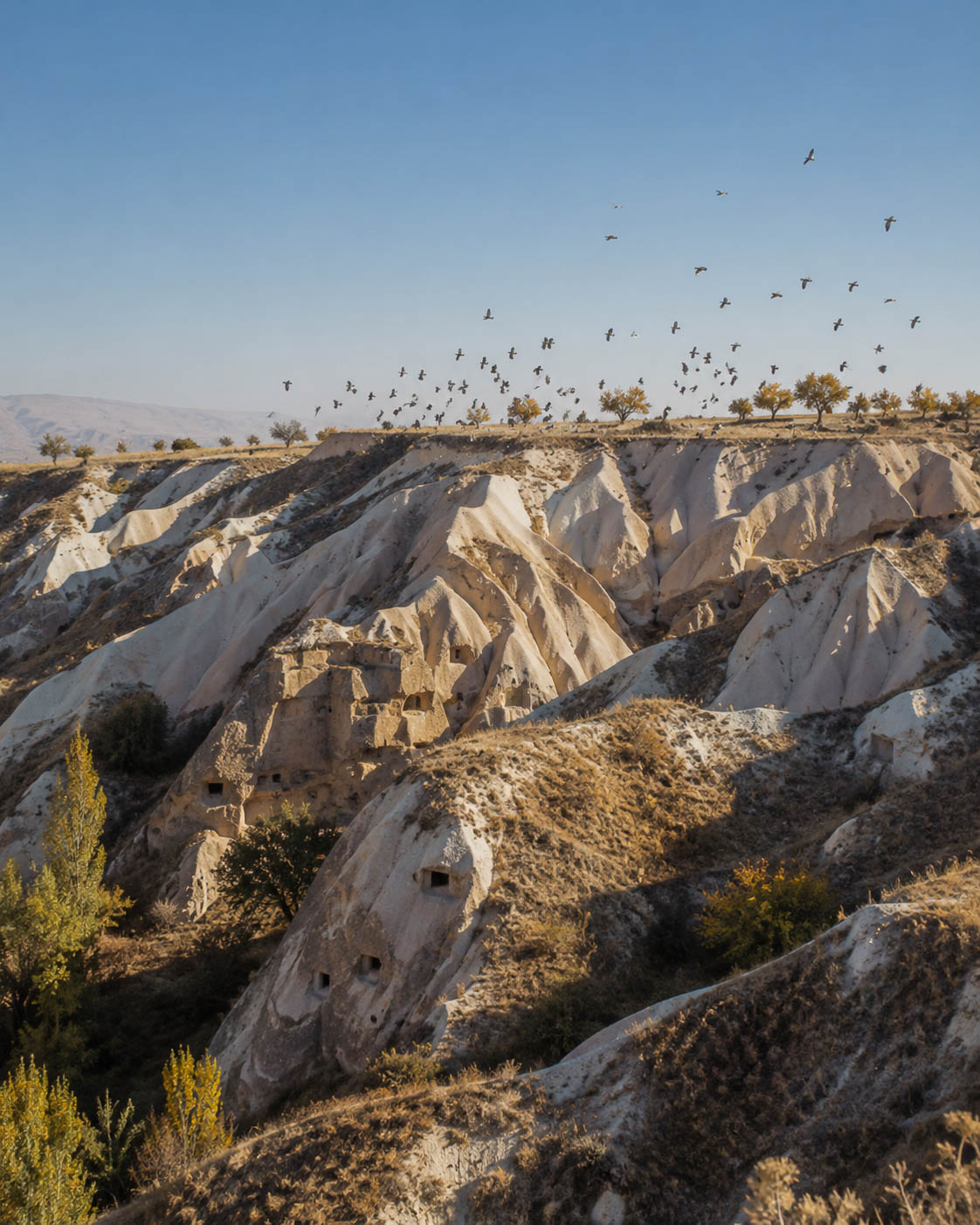
The valley running between Göreme and Uçhisar, named for the thousands of pigeon houses carved into its soft cliffs over the centuries. Locals kept the birds for their droppings, used to fertilise the vineyards and orchards below. The walking path links the two villages in about an hour, with the best views from the Uçhisar end at sunset.

02
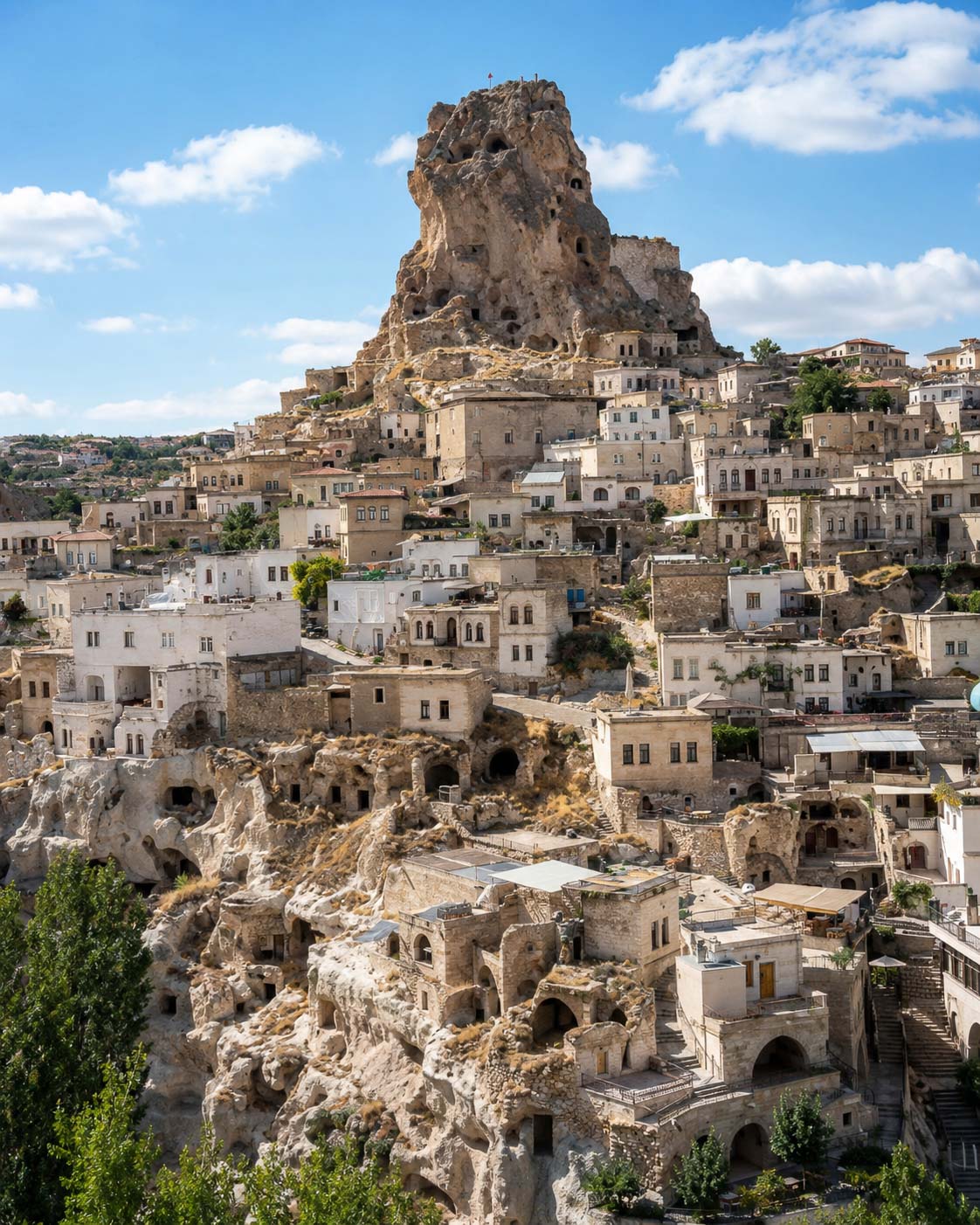
Uçhisar Castle

Uçhisar Castle

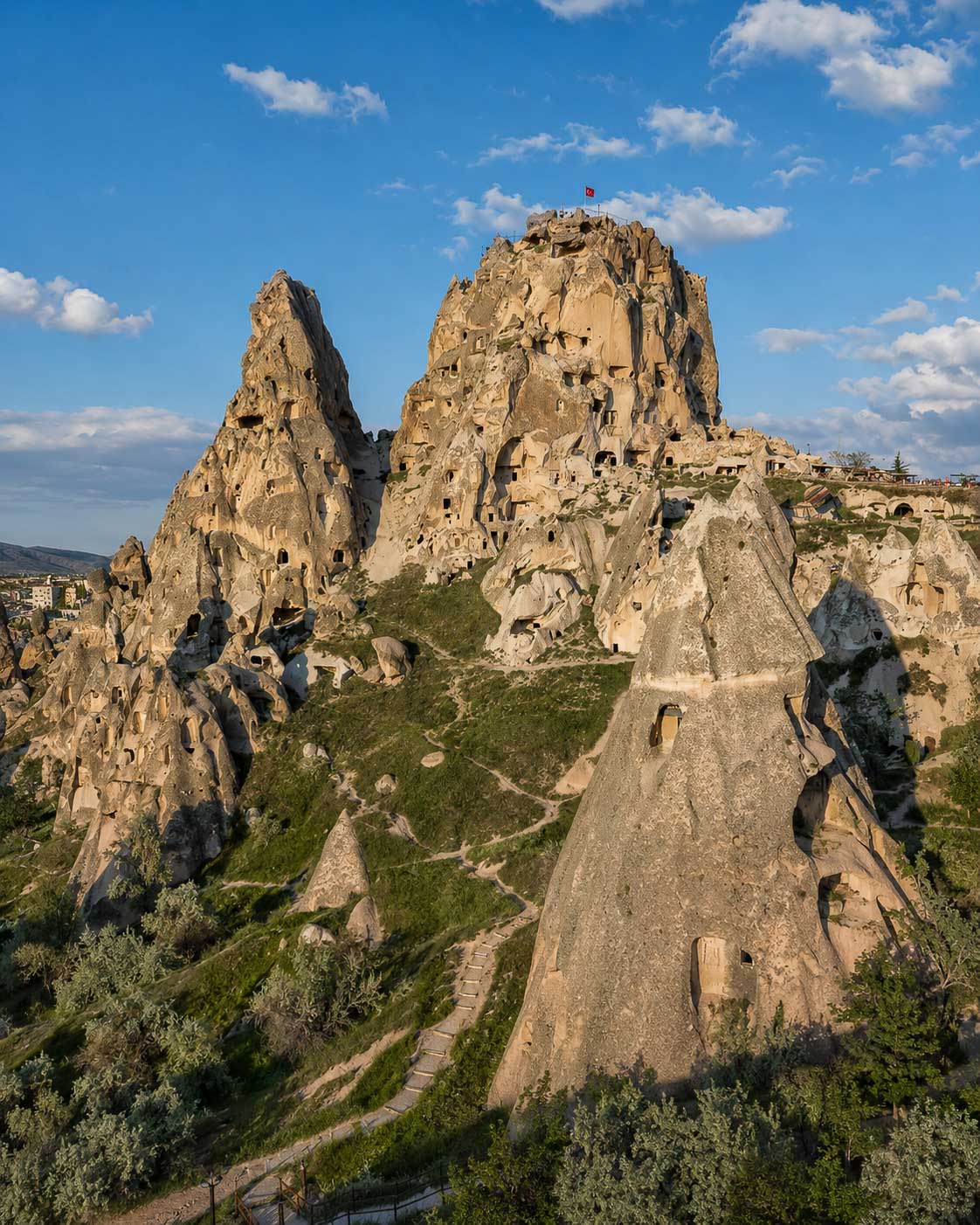
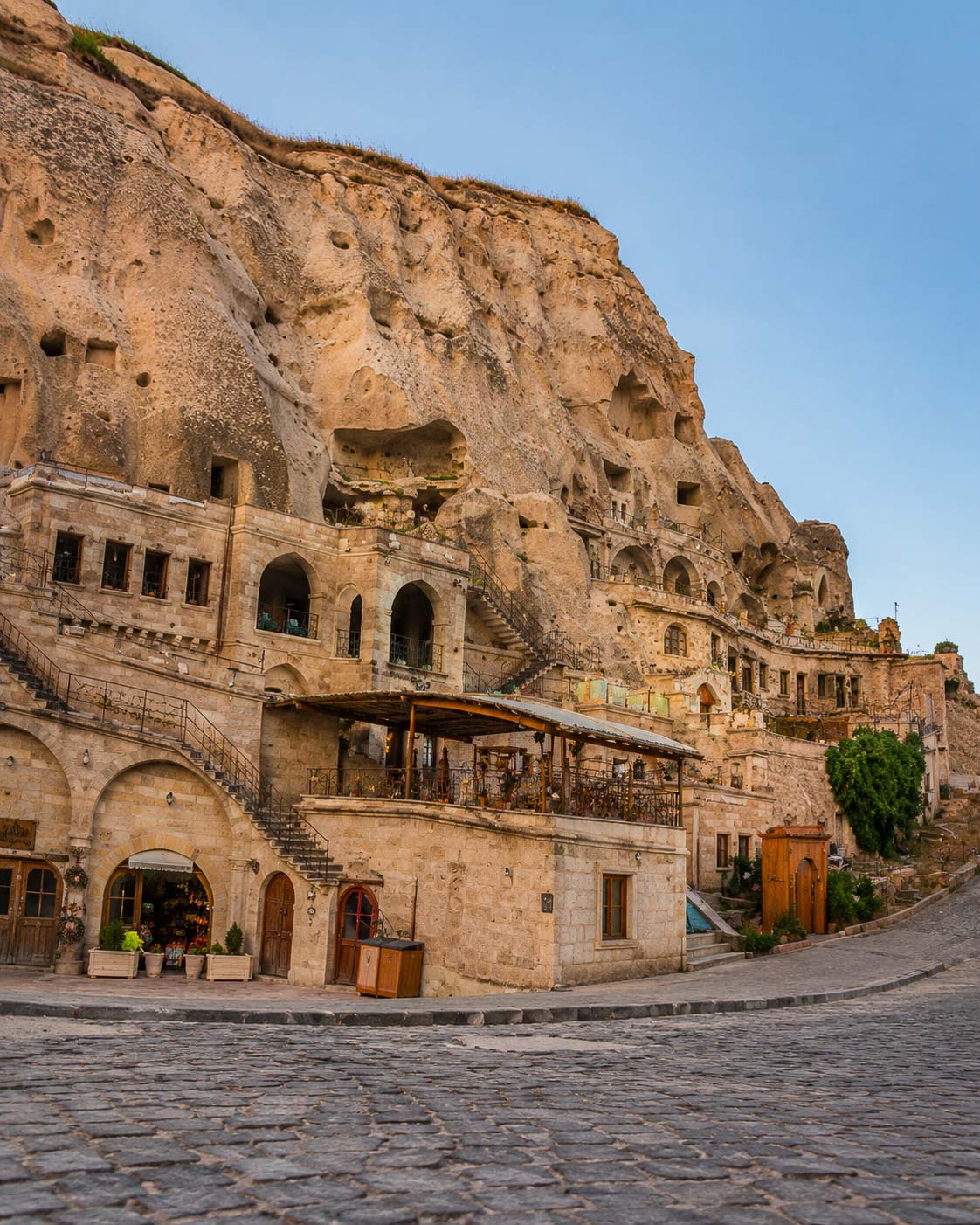
The highest point in Cappadocia, a 60-metre monolithic tufa rock riddled with tunnels and cave rooms that once housed a thousand people. The climb to the summit gives 360 degrees of Cappadocia: fairy chimneys, valleys, Mount Erciyes on the horizon. Best at sunset. The surrounding village has some of the best cave hotels in the region. 7 km from Nevşehir, 5 km from Göreme.

04
Derinkuyu

Derinkuyu

The deepest underground city in Turkey, extending 85 metres below the surface with at least eight excavated levels. It could shelter 20,000 people with livestock and food stores. The rolling stone doors, the ventilation shafts that drop 55 metres, and the cross-shaped underground church are the highlights. 30 km south of Göreme. The narrow passages require comfortable shoes and no claustrophobia. Allow 90 minutes minimum.

06
Rose Valley

Rose Valley

Named for the pink and ochre tones the cliffs turn at sunset, Rose Valley runs east from Göreme toward Çavuşin past rock churches and carved pigeon houses. The hike through to Çavuşin and back takes 3 to 4 hours. Bring water and sturdy shoes. Free of charge and rarely crowded on weekdays, and one of the best places in Cappadocia to watch the day end.

08
Ortahisar

Ortahisar

A quiet town built around an 86-metre rock castle riddled with rooms and tunnels, once used for storage and defence. Less visited than Göreme or Uçhisar, with old stone houses, cave warehouses still used to ripen citrus, and a relaxed village square. Climb the castle for a wide view over the valleys.

Next · Food and Cuisine ↓ continue reading
Anatolian Table

Food and Cuisine

Cappadocian food is Central Anatolian at heart: lamb, legumes, dried fruit, local honey and wine from volcanic soil vineyards. The region has a distinct cooking tradition that uses pottery extensively. Testi kebab, cooked and sealed inside a clay pot and broken open at the table, is the dish that defines the experience here.

Cappadocian Signature
Testi Kebab pottery

Lamb, vegetables and spices sealed inside a clay pot and slow-cooked in a wood oven. The pot is brought to the table intact and broken open with a small hammer. The steam carries the smell of the clay into the dish. This is a meal that requires advance ordering at most restaurants. The experience of breaking the seal at the table is part of the ritual.

Clay Pot Stew
Güveç clay pot

A slow-cooked stew of lamb or beef with onion, pepper, tomato and herbs, sealed inside a hand-thrown clay pot from Avanos and baked for hours in a wood-fired oven. Unlike testi kebab the pot is wider and shallower and the lid is lifted at the table rather than broken, so the same pot can be used many times. The clay holds the heat slowly and evenly, giving the meat a falling-apart texture and concentrating the broth. A Cappadocia winter staple, served at the traditional restaurants in Ürgüp and Göreme with bulgur pilav and pickles.

Local Wine
Cappadocia wines

Cappadocia's volcanic soil and high altitude produce wines with mineral character and lower alcohol than Mediterranean regions. The main local varieties are Emir (white) and Öküzgözü (red). Several family wineries around Ürgüp and Avanos offer tastings and direct sales. Turasan and Kocabağ are the most established names. Try Emir with the local cheeses before dinner.

Pantry Sweets
Pekmez and Walnuts

Grape molasses (pekmez) thickened to the consistency of dark honey and served alongside fresh walnuts from the Cappadocia orchards, a simple sweet eaten at breakfast or as an afternoon snack with bread. Pekmez is the staple winter sweetener of Central Anatolia, produced from the late-harvest grapes after the wine pressing is finished. The walnut tree grows well across the plateau and the kernels are dense, oily and slightly bitter — the right counterpoint to the molasses. Sold at roadside stops and village markets across the region.

Clay Pot Beans
Çömlek Fasulyesi

White beans slow-cooked in a sealed clay pot in a wood-fired oven for several hours with tomato, pepper, garlic and sometimes a small piece of pastırma or kavurma. The pot is cracked open at the table. The clay holds the heat evenly and the slow cooking gives the beans a creamy texture without breaking them. A Cappadocia winter staple, served at the traditional restaurants in Ürgüp and Göreme with bulgur pilav and pickles. The pot itself is local pottery, often sold as a kitchen souvenir.

Roasted Pumpkin Seed
Kabak Çekirdeği

Nevşehir is one of Turkey's main pumpkin seed producing regions, with the volcanic soil of the Cappadocia plain particularly suited to the variety grown for seed. The seeds are roasted with salt and sold by weight in shallow paper bags. Eaten as a snack throughout the day, particularly with tea or while talking. The producers and roasters in the region are well-established; the seeds you find in the rest of Turkey often come from here. A staple of the rural çay culture.

Where to Eat

Recommended Restaurants

A few Michelin tables and the local kitchens where you actually eat the testi, mantı and güveç from the food guide above

Revithia
★★★★★ Michelin Star · Ürgüp

Cappadocia's first Michelin-starred restaurant, set inside the UNESCO-listed Kayakapı site in Ürgüp. Chef Duran Özdemir revives near-forgotten regional recipes through a tasting menu: lamb braised in milk, fermented grains, tarhana, local condiments. Paired with Cappadocian terroir wines, with a terrace over the valley. Book well ahead.

Modern Cappadocian, tasting menu
Babayan Evi
★★★★★ Michelin Bib Gourmand & Green Star

A Bib Gourmand and Green Star kitchen built on generous traditional plates and deep respect for Cappadocia's land. Largely women-led, sourcing local produce and cooking heritage recipes with little fuss. The honest, affordable counterpoint to the fine-dining rooms, and one of the most quietly impressive tables in the region.

Traditional Cappadocian, local produce
Seten Restaurant
★★★★★ Michelin Guide · Göreme

A long-standing Göreme kitchen now in the Michelin Guide, cooking traditional Anatolian dishes with local ingredients. The lamb plates and the meze spread are the strengths, served in a calm garden-and-cave setting away from the busiest streets. A reliable choice for a proper regional dinner.

Anatolian lamb, meze
Topdeck Cave Restaurant
★★★★★ 4.6 · 1,900+ reviews

A small family-run cave restaurant in Göreme, carved into the tufa. The testi kebabı, slow-cooked in a clay pot and cracked open at the table, is the reason to come, alongside mantı and regional mezes. Only a handful of tables, so booking ahead is essential.

Testi kebabı, mantı
Dibek Restaurant
★★★★ 3.9 · 1,200+ reviews

One of the oldest restaurants in Göreme, set in a 475-year-old cave house with stone floors and arched ceilings. Home-style Central Anatolian cooking: slow clay-pot güveç, fresh mantı, local yogurt dishes and testi kebabı that needs ordering in advance. No pretension, consistent over many years.

Mantı, güveç, testi kebabı
Old Greek House
★★★★ 4.4 · 900+ reviews

A 250-year-old stone mansion in Mustafapaşa, the old Greek village south of Ürgüp, with cushioned floor seating and a courtyard. Home cooking at its best: hand-rolled mantı, stuffed dolma, and tandır beans or testi kebabı if you order ahead. The kind of slow, generous table the region is built on.

Mantı, dolma, tandır beans
Sofra Restaurant
★★★★ 4.5 · 1,700+ reviews

A small, honest esnaf lokantası right on Ürgüp's main square, and the spot locals point you to for the most reasonably priced testi kebabı in the region. Daily home-style stews, güveç and clay-pot beans alongside. No view, no frills, just good regional food at a fair price.

Testi kebabı, güveç, home cooking
Görkündere Cafe
★★★★★ 4.5 · 1,400+ reviews

A relaxed breakfast spot on the edge of Göreme with fairy chimneys rising right behind the tables. The village breakfast spread is endless: local cheeses, honey with kaymak, pekmez and tahini, fresh bread off the saç. The place for a slow morning before heading into the valleys.

Village breakfast, pekmez, kaymak
Experiences

Things to Do

01
Hot Air Balloon at Sunrise

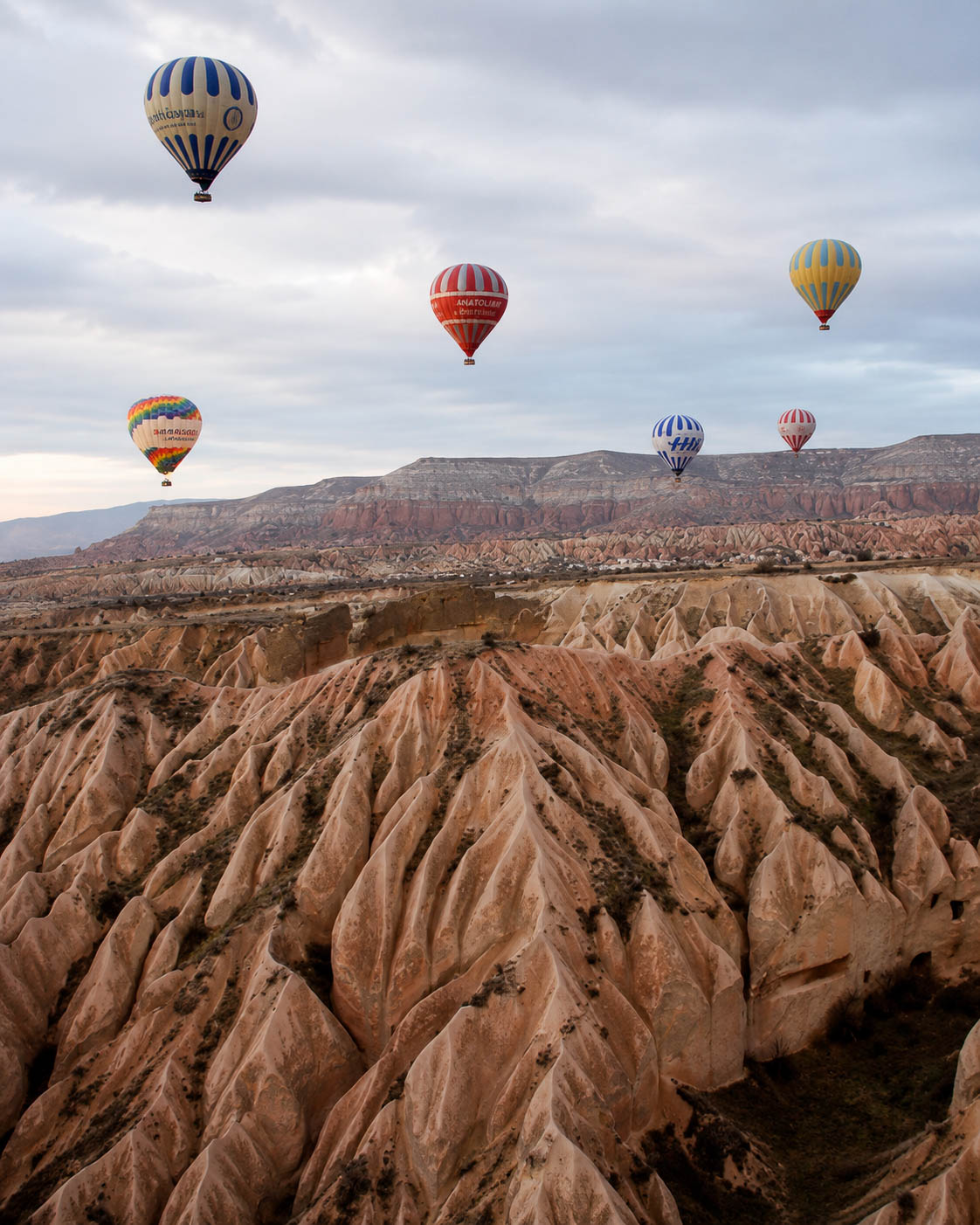
The balloon flights launch at first light and stay airborne for about an hour over the fairy chimneys and valleys. Book at least two weeks ahead in spring and summer. Prices range from 150 to 300 euros depending on the operator and basket size. Reputable operators: Kapadokya Balloons, Sultan Balloons, Royal Balloon. Flights are weather-dependent and may be cancelled with short notice. Book with an operator that offers a full refund for cancellations.

02
The Red Tour on Foot

The standard North Cappadocia day route: Göreme Open Air Museum, Uçhisar Castle, Çavuşin village, Paşabağ, Zelve Open Air Museum, Avanos for lunch and pottery. Can be done by rented scooter or car in one day, or broken across two days on foot through the connecting valleys. The walk from Göreme through Pigeon Valley to Uçhisar (about 4 km) is one of the best short hikes in the region.

03
Green Tour (Southern Route)

Derinkuyu Underground City, Ihlara Valley hike (2 to 3 hours along the river), lunch in Belisırma, Selime Monastery, Narlı Lake. Typically done as a guided day tour from Göreme as public transport is limited. The Ihlara section is the physical centrepiece. Wear walking shoes and bring water. The combination of underground and canyon in one day is physically demanding but covers Cappadocia's full range.

Day Trips

80 km northeast
Mount Erciyes

The extinct stratovolcano responsible for all of Cappadocia's geology, rising to 3,917 metres and visible from most of the region on clear days. The Erciyes ski resort operates from December through April with well-equipped facilities. In summer, trekking routes ascend to various plateau levels. The 80 km drive through the Kayseri plateau is a different landscape entirely from the tufa valleys.

110 km west
Sultanhanı Caravanserai

The largest Seljuk caravanserai in Anatolia, built in 1229 on the Silk Road between Konya and Aksaray. The portal is carved in extraordinary detail and the interior courtyard with its central raised mosque is intact. An hour's drive west from Nevşehir through the plateau. Combine with Aksaray and the Ağzıkarahan Caravanserai, also on the Silk Road route, for a full day of Seljuk history.