Food & Culture · Regions

Turkish Food by Region

Olive oil to butter, fish to lamb, herbs to pepper and pistachio. A food map of Türkiye, region by region, and the cities to eat it in.

Show Me Türkiye October 2026 8 min read

This page is a food map of Türkiye: it shows what changes on the plate as you travel from Istanbul to the Iraqi and Iranian borders, and which cities to visit to eat each region at its source. The main shift runs west to east. Olive oil gives way to butter, fish to lamb, and herbs to red pepper and pistachio, because the land changes from mild coast to cold plateau and dry Mesopotamian plain.

Understand that shift first, and the dishes make sense on their own. Each region below starts with its culinary identity (the fat, the grain, the protein, the flavour that runs through everything), then names a handful of dishes as evidence, then points to the Show Me Türkiye city guides that hold the local detail: the markets, the specific dishes and the places to eat.

RegionCooking fatStapleDefining flavourStart in
MarmaraOlive oil, butterFish, breadPalace and migrant mixIstanbul, Bursa
AegeanOlive oilGreens, fishWild herbsİzmir
MediterraneanOlive oil, tail fatCitrus, grilled meatHeat rising eastwardAdana, Mersin
Central AnatoliaButterWheat, cured meatDough and fenugreekKayseri, Konya
Black SeaButterCorn, anchovyDairy and teaTrabzon, Rize
SoutheastTail fat, butterBulgur, lambPepper and pistachioGaziantep, Şanlıurfa
Eastern AnatoliaButterLamb, dairyHighland cheese and honeyErzurum
§
01Marmara

Marmara: the imperial capital's table.

1 min read

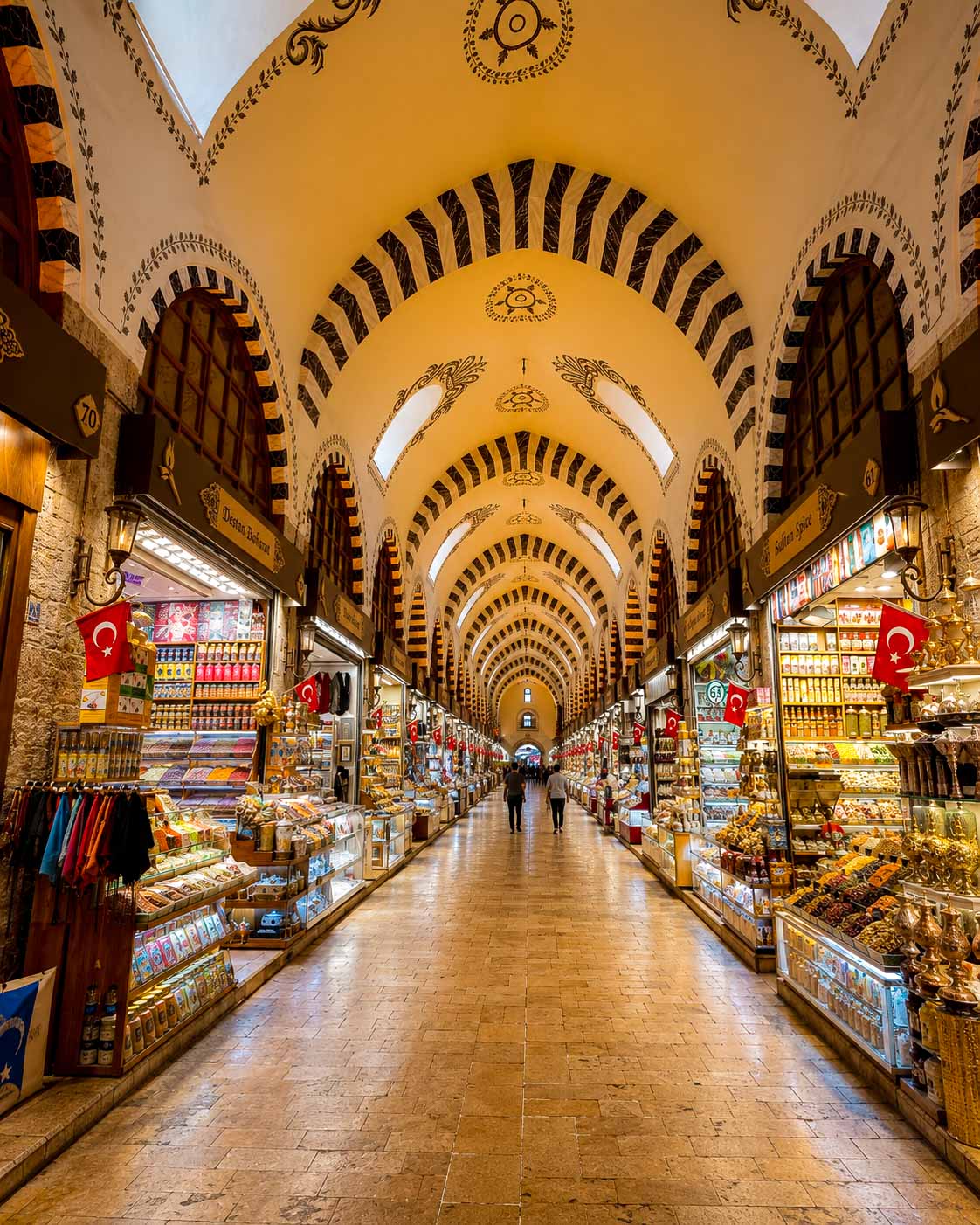
Istanbul does not have a regional cuisine so much as a collection of everyone else's. As an imperial capital for centuries, it absorbed palace kitchens and migrants from the Balkans to the Caucasus, and two seas meeting at the Bosphorus mean the fish changes with the migratory seasons. The Spice Bazaar still reads like an index of the old empire's trade.

Vaulted interior of Istanbul’s Spice Bazaar lined with spice and sweet stalls
The Spice Bazaar in Eminönü, still an index of the old empire’s trade.

Around the sea, the land takes over. Bursa gave the country İskender kebab, and its chestnut forests supply kestane şekeri, the city's candied chestnuts; the pastures of Çanakkale give Ezine cheese, a registered geographical indication; Kocaeli's forests at Maşukiye are where Istanbul goes for a long weekend breakfast and lake trout.

Start in: Istanbul for balık ekmek, meyhane meze, Kanlıca yoghurt and boza

Then: Bursa for İskender and İnegöl köfte, an easy food weekend from Istanbul

Also: Çanakkale for Ezine cheese and Dardanelles fish; Kocaeli for forest breakfasts

Use Istanbul to learn the vocabulary of Turkish food, then follow individual dishes back to the regions they come from. Our Istanbul blog covers the neighbourhoods the food sits in.

§
02The Aegean

The Aegean: olive oil, herbs and the sea.

1 min read

The Aegean is the lightest table in Türkiye, and the reason is visible from any hillside: olive groves, a mild climate and long dry summers. Vegetables are cooked slowly in olive oil and served cool (zeytinyağlılar), spring rain brings a short season of foraged greens, and fish and octopus come straight off the boats. In İzmir, Greek and Sephardic communities left recipes that are still sold on the street, from boyoz to kumru.

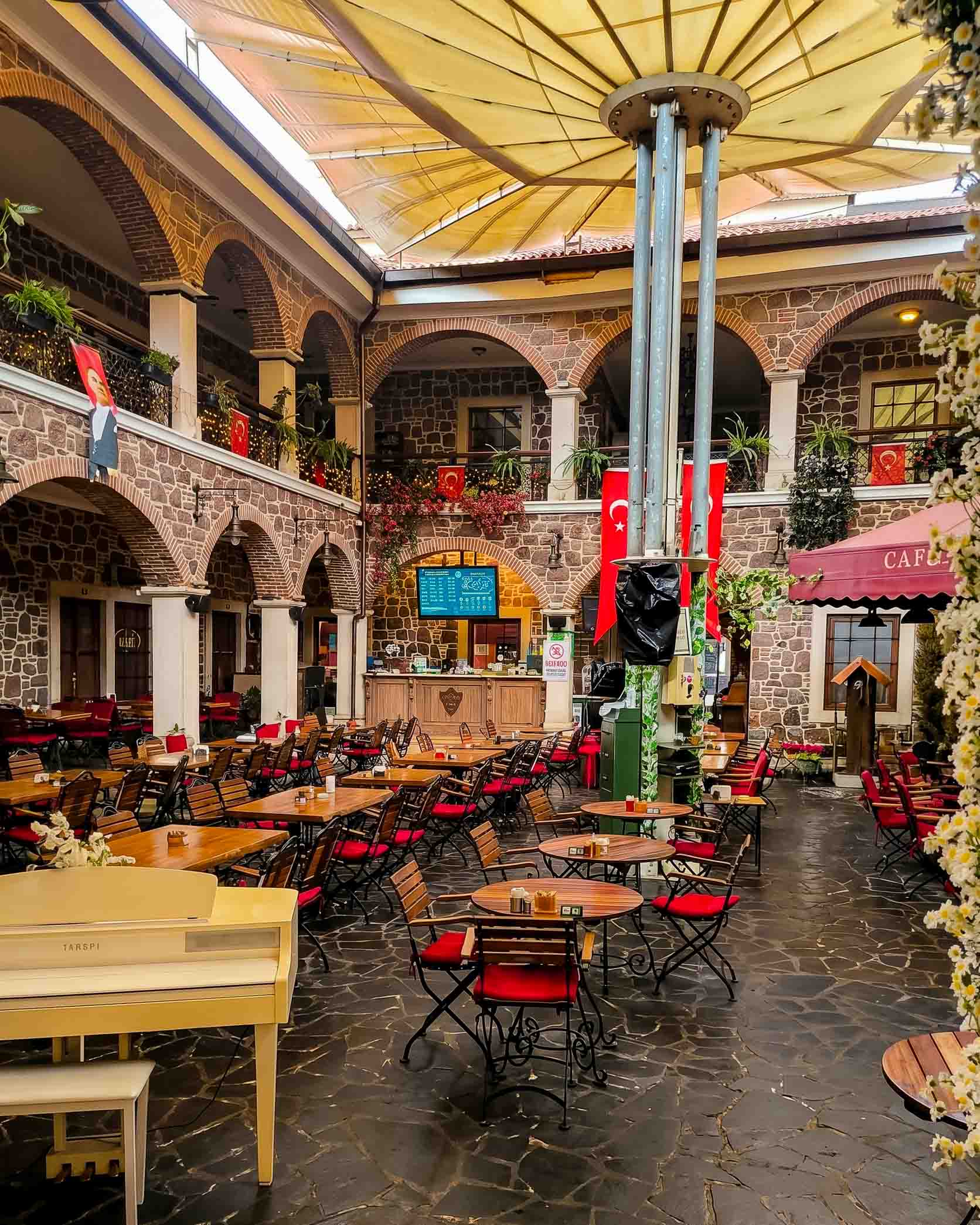
Café tables in a han courtyard in İzmir’s Kemeraltı Bazaar
Kemeraltı, İzmir: the old bazaar quarter where the city still eats and shops.

On the Aegean, the herb is the main ingredient and the meat is the garnish. Travel east and that order reverses.

Choose İzmir if you want the urban Aegean: Kemeraltı Bazaar, street pastries and herb dishes in the mezehanes. Choose Muğla if you want coastal cooking around Bodrum and Datça, çökertme kebab and long lunches by the water (Muğla guide). Choose Balıkesir if olive oil itself is the point: Ayvalık and the Edremit Gulf are the northern Aegean's olive heartland (city guide, blog).

Inland, the Aegean starts to change. Denizli eats more lamb from the hills, and Afyonkarahisar, officially in the Aegean region, already eats like the plateau: kaymak and Afyon sucuğu, a geographical indication also registered in the European Union, made it Türkiye's third UNESCO Creative City of Gastronomy in 2019.

Come in spring for the greens or early autumn for the olive harvest. The Aegean Coast Escape route links İzmir to Fethiye if you want to eat the coast in sequence.

Adana’s Roman stone bridge over the Seyhan at sunset: the Mediterranean’s kebab capital.
03The Mediterranean

The Mediterranean: where the heat starts.

1 min read

The Mediterranean coast is a transition you can taste in one road trip. Around Antalya the food is still coastal: fish, citrus, orange-blossom honey, piyaz and hibeş. The Taurus Mountains rise straight behind the shore, so highland lamb is never far away. Then, east of Mersin, the Çukurova plain opens out, among Türkiye's richest farmland, and the cooking turns hotter and more meat-led as it approaches the Southeast and the old trade routes to Syria.

  • Antalya: food as part of a beach and history trip, not the reason for it
  • Mersin: a port-city street table, tantuni and cezerye
  • Adana: Adana kebab at the source, red pepper flakes, şalgam and a late-night eating culture
  • Hatay: UNESCO Creative City of Gastronomy since 2017, meze and künefe; check the post-2023 situation first

Hatay (Antakya) has long been the region's food capital, but its historic centre was heavily damaged in the February 2023 earthquakes; check the current situation before planning a food trip there. Show Me Türkiye does not yet have a Hatay guide. For a single food stop on this coast, open Adana for grilled meat or Mersin for street food; Antalya and the Antalya blog cover the villages and coast behind the resorts.

§
04Central Anatolia

Central Anatolia: wheat, dough and preserved meat.

1 min read

Climb onto the plateau and the balance shifts away from olive oil. This is wheat country, with hot summers and hard winters, so the cuisine is built on flour and on keeping meat through the cold. Dumplings, flatbreads and long pides are the plateau's signature, and Kayseri's pastırma, air-dried under a fenugreek paste, is the clearest example of food designed for winter. In Cappadocia, clay from the Kızılırmak at Avanos gave the region its pot-cooked dishes.

The plateau also carries migration on the plate: Eskişehir's çibörek is a Tatar dish, a reminder that the steppe brought recipes as well as people.

  • Kayseri: pastırma (a geographical indication also registered in the EU) and tiny mantı
  • Konya: metre-long etli ekmek from wood ovens, slow-cooked tandır lamb
  • Cappadocia: testi kebab, Avanos pottery, wine from volcanic soil
  • Ankara: home-style lokanta cooking and Ankara tava
  • Eskişehir: Tatar-heritage çibörek

Combine Kayseri with Cappadocia: they are close neighbours and between them cover the plateau's food well. The Grand Tour passes through the region.

§
05The Black Sea

The Black Sea: corn, butter, anchovy and tea.

1 min read

The Black Sea is where the map breaks the west-to-east rule, because here the change runs from shore to summit. This is Türkiye's wettest coast, and its steep green slopes suited corn, tea and hazelnuts rather than wheat. Above the tea line, summer pastures (yaylas) supported dairy, which is why butter and cheese run through everything, from muhlama (cornmeal, cheese and butter) in the Ayder highlands to kuymak in Trabzon. Down at sea level, hamsi, the anchovy, is the defining fish of the colder months.

On the Black Sea, the altitude decides the meal: anchovy on the coast, tea on the slopes, butter and cheese on the yayla.

Along the coast the table shifts again from west to east. Kastamonu, in the west, is garlic country (Taşköprü garlic is a geographical indication) with its own sucuk. Giresun and Ordu are the hazelnut coast. Trabzon has Akçaabat köfte and Vakfıkebir bread. Rize is tea country. Artvin, against the Georgian border, shares walnut sauces, forest honey and dairy with the Caucasus.

Best for: dairy, cornbread, fish and tea in a mountain landscape

When: late summer for yayla dairy and tea slopes; winter if hamsi is the reason

Start in: Trabzon and Rize, then Artvin or Kastamonu

Read more: Rize, Trabzon, Giresun, Ordu

The Black Sea Highlands route puts the eastern coast and plateaus into one road trip.

§
06Southeastern Anatolia

Southeastern Anatolia: pistachio, pepper and the kebab.

1 min read

If food is your main reason for travelling in Türkiye, this is the region to choose. It sits on the northern edge of Upper Mesopotamia, a hot, dry land between the Euphrates and the Tigris that is good for pistachio, sun-dried peppers and grain. Centuries on the trade routes to Aleppo and Baghdad brought spice, pastry technique and a culture of specialist craftsmen: one shop for baklava, another for liver, another for kebab.

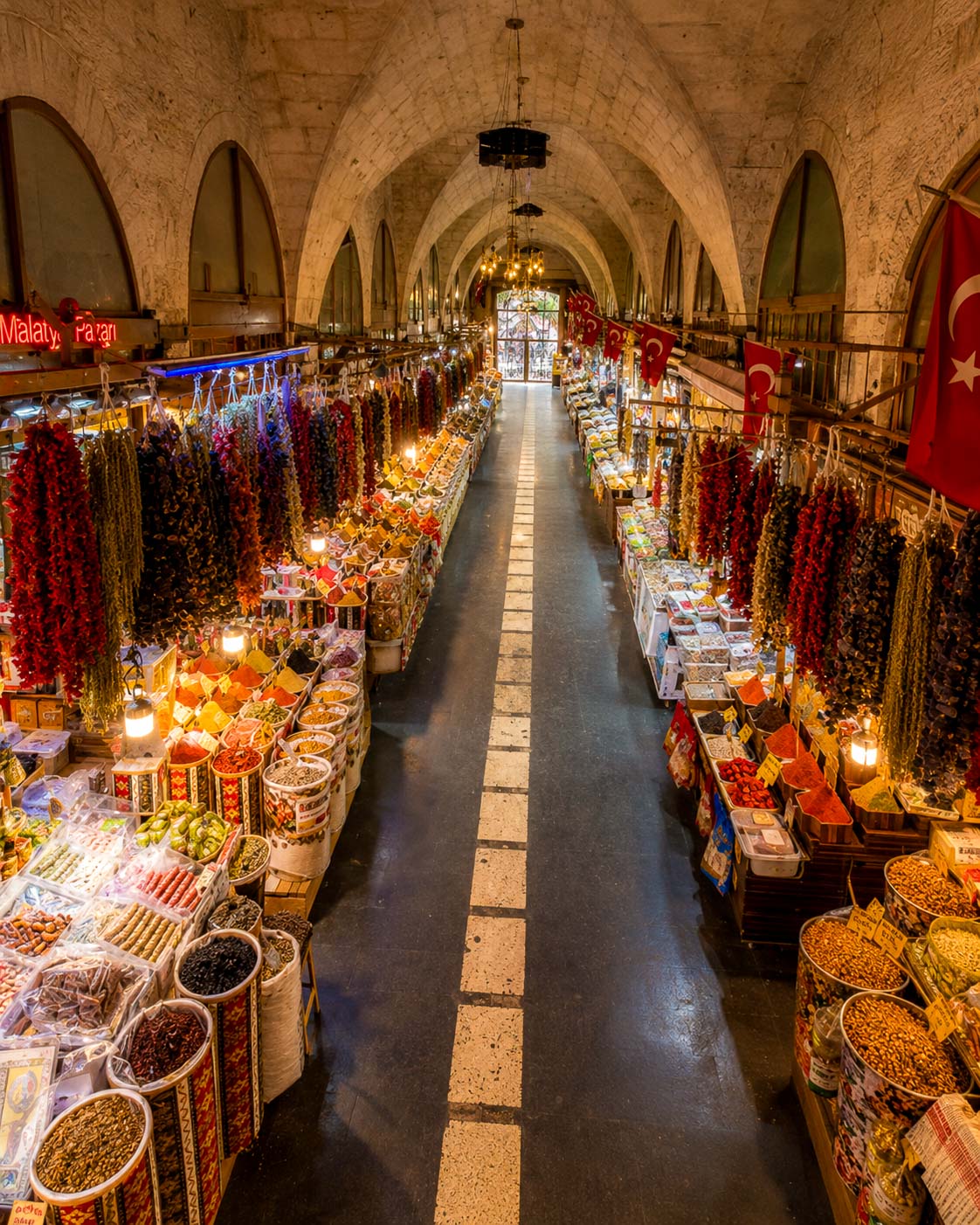
Dried peppers and spices hanging in a covered bazaar in Gaziantep
Dried peppers and spices in Gaziantep’s covered bazaar: the pantry of the Southeast.

The culinary identity is red pepper, pistachio, bulgur and lamb over charcoal. The dishes are the proof: Antep baklava and katmer, Urfa kebab and çiğ köfte, lahmacun, beyran soup, Diyarbakır's kaburga dolma, menengiç and bitter mırra coffee. The markets show it before the restaurants do, in the pepper and spice stalls of Gaziantep's old bazaars.

CityKnown forWhy go
GaziantepBaklava, pistachio, kebabTürkiye's first UNESCO Creative City of Gastronomy (2015)
ŞanlıurfaUrfa kebab, çiğ köfte, isotThe spice-and-pepper heart of the region
MardinArab, Syriac, Kurdish dishesCrossroads cooking, Syriac wine from Midyat
DiyarbakırKaburga dolma, liver breakfastThe Tigris-side table, burma kadayıf

The Eastern Heritage route links Gaziantep, Şanlıurfa and Mardin.

Erzurum’s Çifte Minareli Medrese in snow: winter shapes the eastern table.
07Eastern Anatolia

Eastern Anatolia: highland dairy, honey and slow cooking.

1 min read

The east is the end of the line: Türkiye's highest, coldest region, with long winters and short, intense summers on mountain pastures. Orchards and olive oil give way completely to livestock and dairy, and the cooking is built to last: soups finished with butter and wild thyme, preserved highland cheeses, bread from clay ovens, honey from mountain meadows and lamb raised on summer pasture.

Erzurum is the place to taste it in a city, with cağ kebab and kadayıf dolması, easily combined with Palandöken or the Doğu Ekspresi (Eastern Express) (Erzurum blog). In Hakkari, Kurdish highland cooking is eaten in homes, teahouses and simple lokantas rather than restaurants (Hakkari blog).

Here the food comes with the journey rather than being the reason for it. Plan the landscape first, and eat what the season and the plateau offer.

§
08Planning

Planning: which region should you eat your way through?

1 min read
  • First trip, limited time: Istanbul plus one regional stop; Gaziantep is the strongest single food city
  • Food is the reason: Gaziantep, Şanlıurfa and Mardin on the Eastern Heritage route
  • Light, vegetable-led: the Aegean, from İzmir to Muğla, in spring
  • Dairy and mountains: the eastern Black Sea, Trabzon to Artvin, in late summer
  • Comfort food, cured meat: Kayseri and Cappadocia, on the Grand Tour

To feel the whole west-to-east shift in one journey, pair an Aegean city with a Southeastern one: İzmir's olive oil and greens against Gaziantep's pepper and pistachio show the full range of the country's cooking. The Eastern Heritage route and the Grand Tour are the easiest ways to build that into a trip.

For eating basics (restaurant types, street food, water, vegetarian options), see First Time in Türkiye. For timing your trip around the seasons, see the best time to visit Türkiye.

Show Me Türkiye
Written by
Show Me Türkiye Editorial
Field notes, routes, and city guides from across Türkiye. Last checked October 2026.
Halil BekarReviewed by Halil Bekar, founder of Show Me Türkiye
Taste it on the road

Eat your way along a route.

Our routes connect the kitchens in this guide, from the Aegean to Gaziantep.

See the routes →