Photography · Light & Season

Photography Spots in Türkiye: Where, When and in What Light

A location guide from a filmmaking team: nine scenes, the light they need, and the season they reward.

Show Me Türkiye October 2026 7 min read

This guide helps you choose where to photograph in Türkiye by matching each place to the light and season it needs. The main distinction is between the dry interior and south, where low sun on stone and travertine does the work, and the wet north-east, where cloud, fog and soft overcast light are the material. Understand that first: the right hour at one location beats a fast tour of ten.

The nine scenes below run from Cappadocia and Istanbul to the Kaçkar valleys, Hakkari and the snow cone of Erciyes. Each gets the light it wants, its season, its crowd pattern and, only where it changes the picture, a note on lens or standpoint. City and blog pages hold the fuller practical detail.

SeasonStrongest scenesLight to expectWatch for
Spring (Apr–Jun)Cappadocia, Pamukkale, Mardin, Lycian coastclean air, green plains in the south-eastballoon cancellations on windy days
Summer (Jul–Aug)Kaçkars, Ayder yaylas, Hakkarihard high-altitude light; mist below ridgescoastal haze, south-east heat at midday
Autumn (Sep–Oct)almost everywherewarm, low sun; clearer coastal airBlack Sea rain, shorter mountain season
WinterIstanbul, snowy Cappadocia, Erciyesdramatic skies, snow lightclosed mountain roads in the north-east and east
§
01Cappadocia

Cappadocia: balloons, rock and the first twenty minutes.

1 min read

Cappadocia is one of the most photographed landscapes in Türkiye because its soft, pale tuff takes colour from whatever light falls on it, and on flying mornings the sky fills with balloons. The usable window is short: roughly from the first lift-offs until the low sun turns harsh. Flights depend on wind and weather and are cancelled at short notice, so give the balloons more than one morning.

  • Light: dawn for balloons; the last hour for pink and red rock in the valleys around Göreme
  • Best season: spring and autumn; winter for snow on the chimneys
  • Crowds: very high at the famous ridge viewpoints at sunrise

The ridges above Göreme are the classic standpoints. Move along the ridge rather than fighting for one rock. A medium telephoto compresses balloons against layered valleys and often reads stronger than a wide frame; from the basket, a wide-to-standard zoom covers near balloons and the valley floor. Away from town lights, rock pinnacles make strong night foregrounds on clear, moonless nights.

Go deeper: Cappadocia travel guide, things to do in Cappadocia, and the Cappadocia days in the Photographer's Türkiye route.

§
02Istanbul

Istanbul: water, skyline and street light.

1 min read

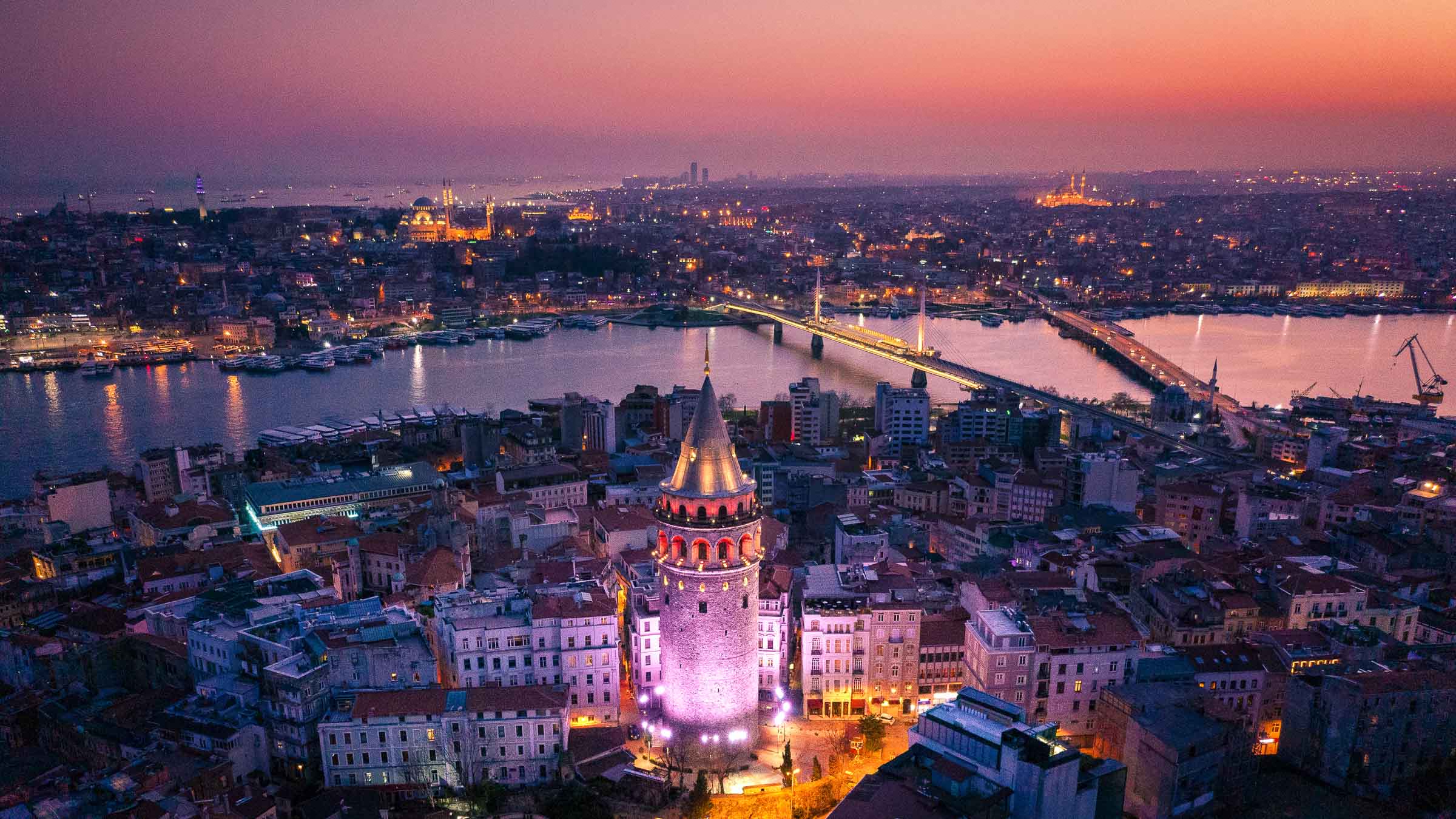
Istanbul's visual signature is a silhouette of domes and minarets above moving water. The historic peninsula lies south-west of Galata, so at sunset from the Galata side, or from a Bosphorus ferry, the skyline sits in backlight. The blue hour after sunset is often the better frame, with city lights balanced against the sky.

Galata Tower and the Golden Horn at dusk, Istanbul
Galata and the Golden Horn at dusk, when city lights balance the sky.

In Istanbul, the ferry is the tripod: cheap, regular, and on the water at exactly the right height.

  • Light: sunset and blue hour for the skyline; late-afternoon slant for Galata and Balat lanes
  • When to skip: midday in Sultanahmet, when crowds and flat light work against you

A long lens from the Asian shore stacks the peninsula into a dense, layered skyline. Inside the great mosques, respect prayer times and worshippers; a fast standard lens is more useful than a tripod.

Go deeper: Istanbul travel guide, things to do in Istanbul.

§
03Pamukkale and Salda

Pamukkale and Salda: white ground, turquoise water.

1 min read

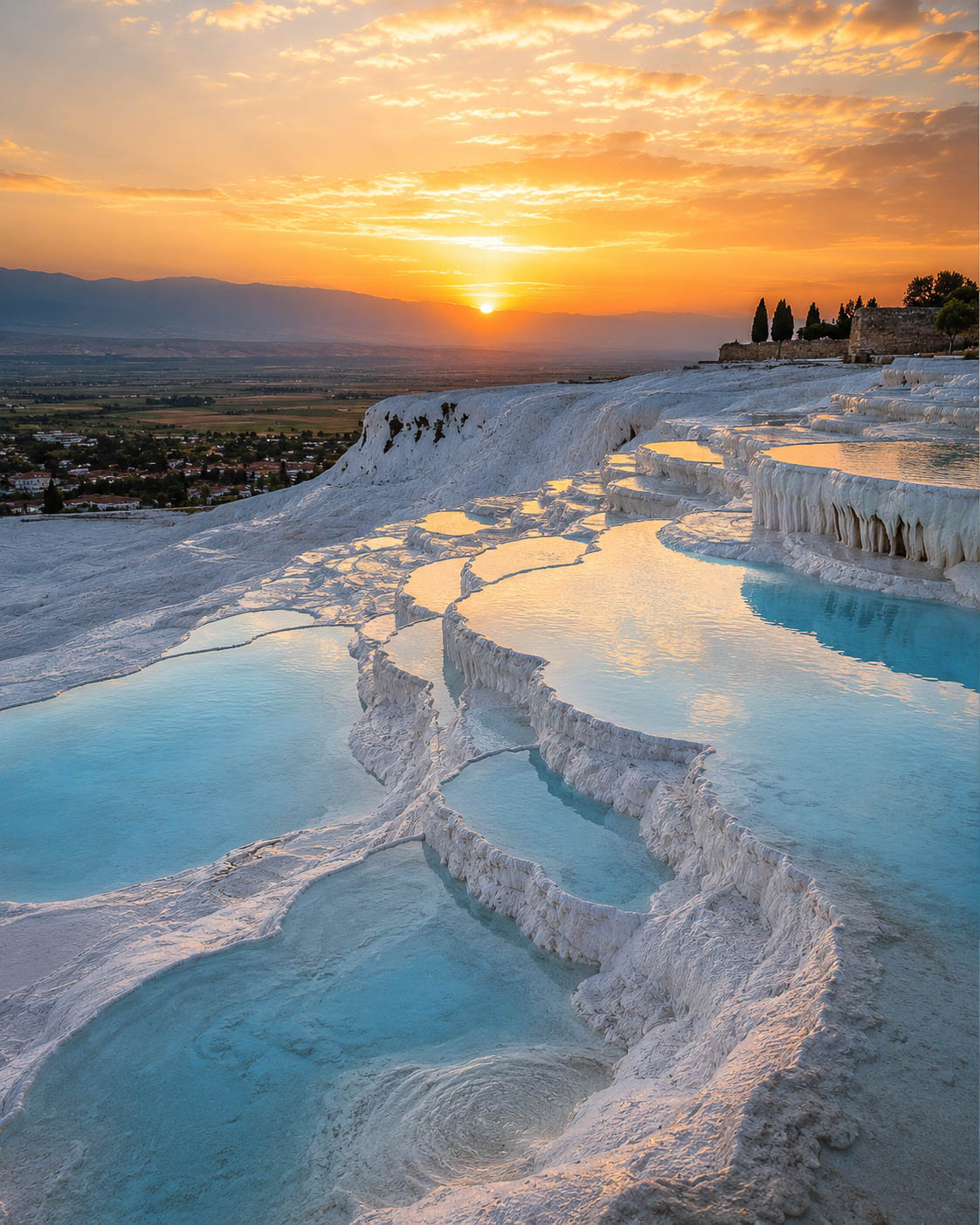
White travertine at Pamukkale behaves like snow: midday light flattens it and blows the highlights, while low sun shapes the terraces and brings out the blue in the pools. Arrive as early as the site allows, or stay for the end of the day, when the terraces face the setting sun over the valley.

Pamukkale travertine pools at sunset
Pamukkale’s pools take the colour of the sky at sunset.
  • Light: first and last light only; treat midday as scouting time
  • Crowds: high on the terraces by mid-morning
  • Access: easy; shoes come off on the terraces, so plan how you carry kit

Water in the pools varies with how the flow is managed, so not every terrace will be full. Salda Lake, under two hours by road from Denizli, gives a similar palette at a different scale: white mineral shore against clear blue water. It is a protected area with shoreline access rules, so follow marked paths and current local signage.

Go deeper: Denizli travel guide.

§
04Ölüdeniz and Babadağ

Ölüdeniz, Babadağ and the Lycian coast.

1 min read

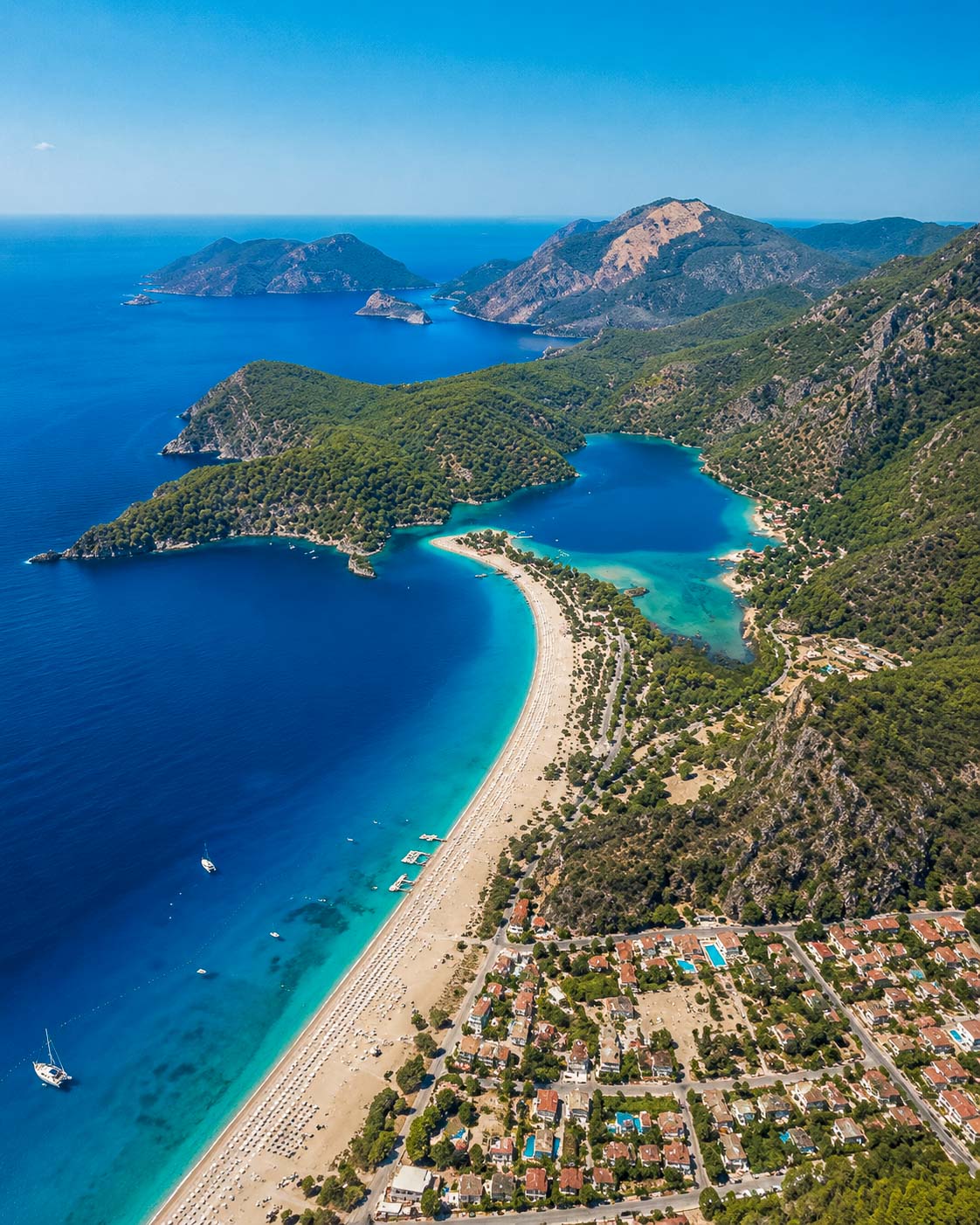
The south-west coast gives you elevation without a drone. From the slopes of Babadağ above Ölüdeniz, the lagoon and the curve of the beach sit far below, and paragliders add scale. Further east towards Kemer, the Tahtalı cable car lifts you above 2,300 metres for long views down the Lycian shoreline when the air is clean.

Ölüdeniz lagoon and beach seen from above
Ölüdeniz from above: the lagoon, the spit and Belcekız beach.

Choose Babadağ for the lagoon from above and moving subjects in the frame. Choose Phaselis and Olympos for ruins among pines and coves, in soft morning light before the beach crowds arrive.

  • Light: morning, when water is clearest and haze lowest; summer afternoons often go milky
  • Best season: late spring and early autumn

On foot, the Lycian Way links many of these viewpoints, the slow way to find frames no road reaches.

Go deeper: Muğla travel guide, things to do in Kemer, Antalya travel guide.

Mardin’s stone town at golden hour, stepping down towards the Mesopotamian plain.
05Mardin and Midyat

Mardin and Midyat: stone in low sun.

1 min read

Mardin is built of pale limestone that turns gold in low sun, and the old town faces south over the Mesopotamian plain, so terraces and rooftops catch long side light at both ends of the day. The town is a stack of horizontal layers: step back to a terrace and compose in tiers.

  • Light: both ends of the day; side light across south-facing façades
  • Best season: spring for a green plain; autumn for warm stone; summer is very hot

Late summer brings dust and haze over the plain, which can work with a long lens. Midyat and the Syriac monasteries of Tur Abdin add carved stone courtyards; ask before photographing inside places of worship or people at prayer.

Go deeper: Mardin travel guide, and for the wider south-east, the Eastern Heritage route.

§
06The Kaçkar valleys

The Kaçkar valleys: mist, forest and Zilkale.

1 min read

The eastern Black Sea is the opposite of the dry south: deep green slopes, rain, and cloud moving through the valleys. Overcast days give soft, even light for forest and water, and when cloud sits below the ridges, the high ground can rise clear above it.

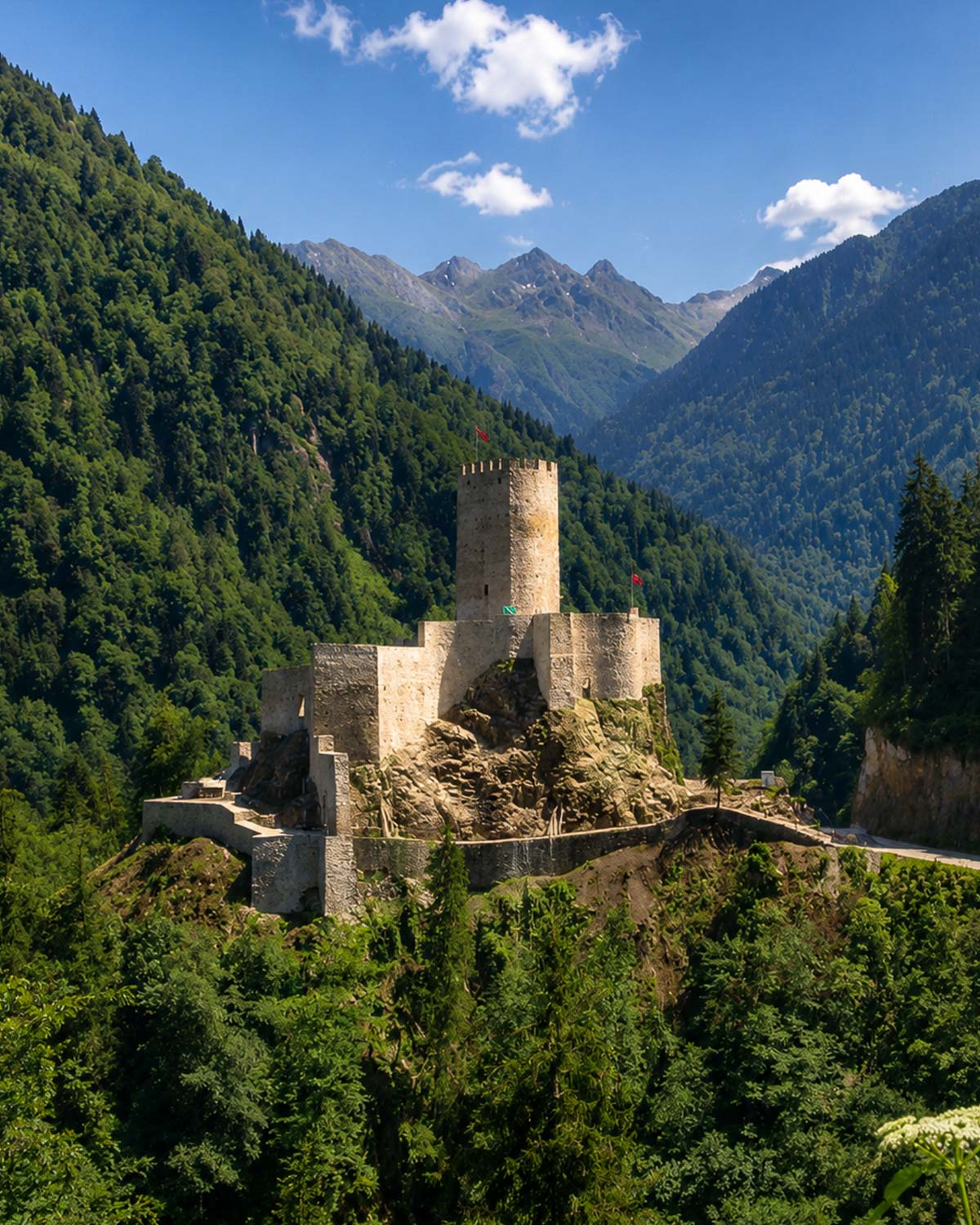
Zilkale castle on a rock spur above the Fırtına valley
Zilkale on its spur above the Fırtına valley.
  • Light: soft overcast in the valleys; above-the-cloud mornings on the high pastures
  • Best season: late spring to early autumn; summer for the yaylas
  • When to skip: summer weekends at Ayder if you want empty frames

In the Fırtına Valley, Zilkale stands on a rock spur above the river; a standard to short telephoto lens frames the castle against the forested valley. Ayder and the higher yaylas add wooden houses, pastures and the Kaçkar peaks when the cloud lifts. Further east, Artvin adds Borçka Karagöl and the Macahel forests. Fog can sit for days, so build spare time into any plan.

Go deeper: Rize travel guide, Rize blog guide, Artvin travel guide, and the Black Sea Highlands route.

A sea of cloud below the Kaçkar ridges.
07Trabzon

Trabzon: Sumela and Uzungöl.

1 min read

Sumela Monastery clings to a cliff in the Altındere Valley. The strongest frames come from across the valley, where the building reads as part of the rock face; morning mist in the gorge helps. Uzungöl is the region's classic reflection scene, with a mosque at the lake's edge, and calm water is likeliest early, before wind and crowds.

Sumela versus Uzungöl: Sumela rewards patience with mist; Uzungöl rewards the earliest start of the day.

Go deeper: Trabzon travel guide, things to do in Trabzon.

§
08Hakkari and Cilo

Hakkari and Cilo: the frontier mountains.

1 min read

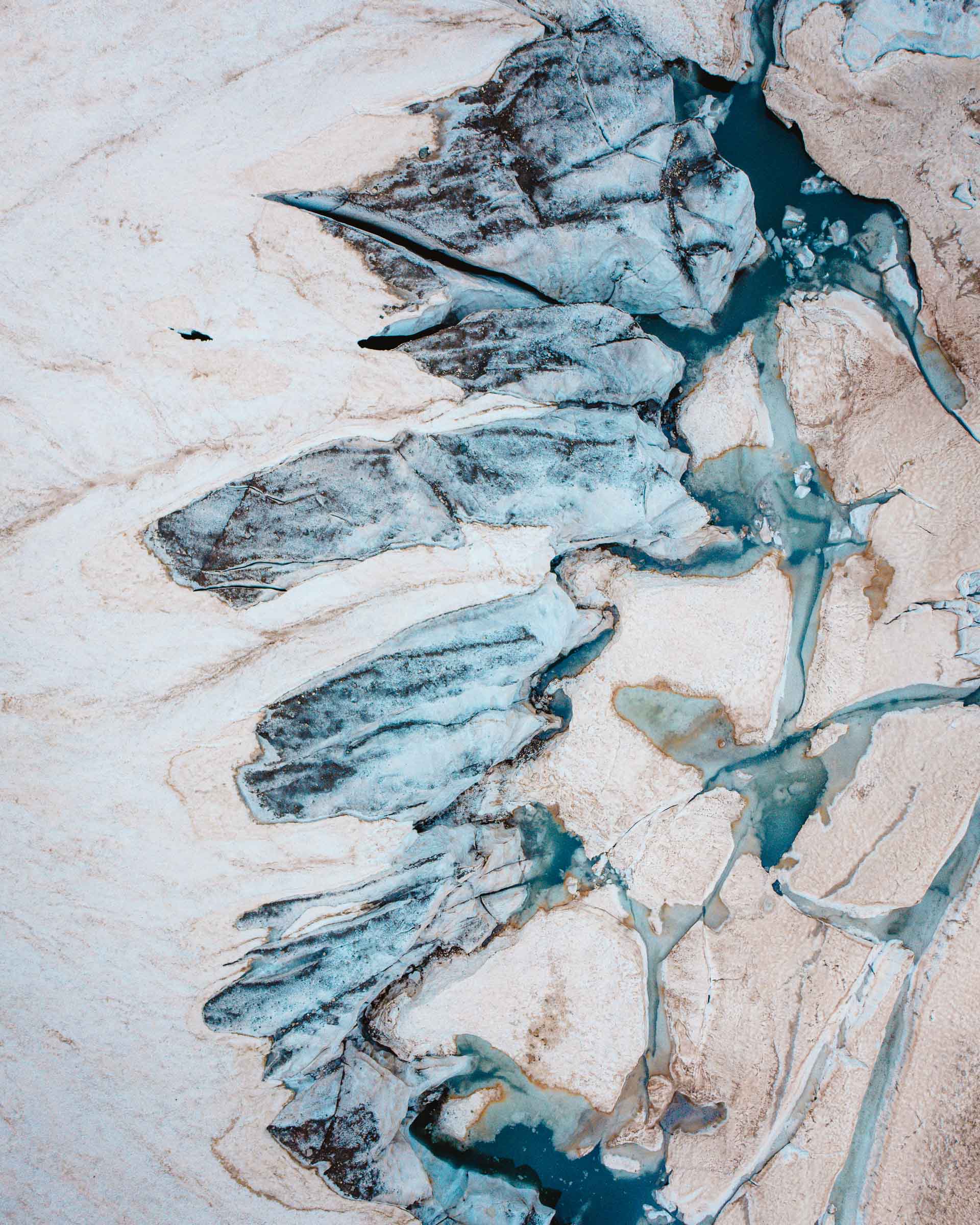
The Cilo range holds some of the highest and least photographed mountain terrain in Türkiye: glaciers, alpine plateaus such as Mergan, and the deep Zap valley. Clear mountain air gives hard, saturated light, so work at the edges of the day and use a person or tent to show scale.

Aerial view of glacier ice in the Cilo range, Hakkari
Glacier ice and meltwater in the Cilo range.
  • Light: hard and saturated; edges of the day only
  • Best season: summer
  • Access: hard; local guidance advised, and conditions in this border province change

Drone use near border and military zones is restricted. Check current local guidance before planning.

Go deeper: Hakkari travel guide, Hakkari blog guide.

§
09Erciyes and the winter volcano

Erciyes and the winter volcano.

1 min read

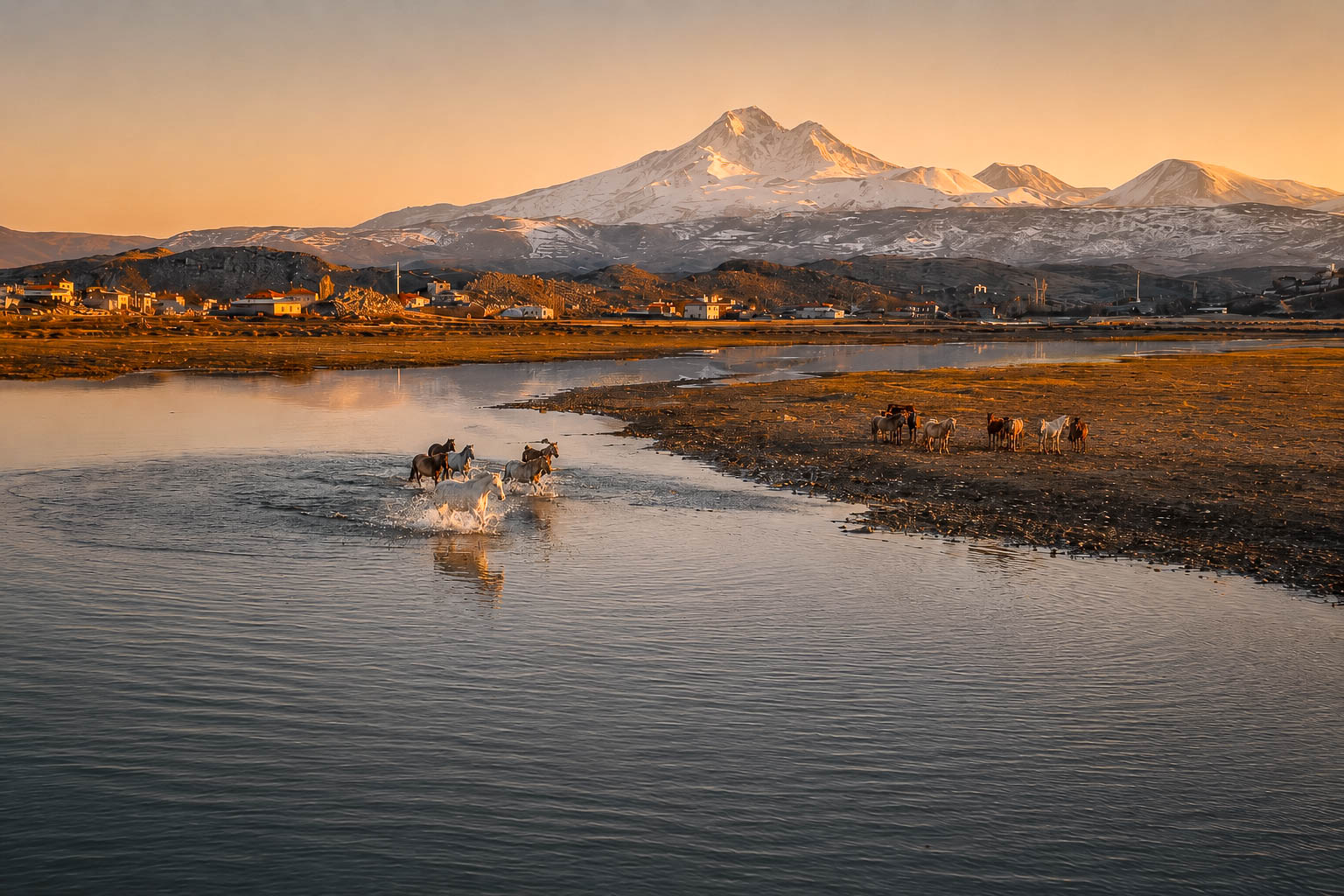
Mount Erciyes rises well above the Kayseri plain and is visible from parts of Cappadocia on clear days. In winter it gives the strongest snow scenes in central Anatolia: a long lens from the plain isolates the cone, while the ski area gives close mountain work. Clear days after a storm are the window.

Mount Erciyes at golden hour with horses in water
Erciyes at golden hour from the Cappadocia side.

Choose Erciyes over a second Cappadocia sunrise if you are there in winter and want one scene with no balloons in it.

Go deeper: Kayseri travel guide.

§
10Combining scenes and shooting

Combining scenes and shooting responsibly.

1 min read

Pair scenes by season, not by map. A spring trip pairs Cappadocia with Pamukkale or Mardin; a summer trip belongs to the Kaçkars and, for experienced travellers, Hakkari; a winter trip pairs Istanbul skies with snow in Cappadocia and on Erciyes. Distances are large, so getting around Türkiye and the best time to visit Türkiye are the next two reads.

Ask before making close or identifiable portraits of people, and never interrupt worship for a photograph. In mosques, keep quiet, dress modestly, follow the guidance at the door and avoid flash. Tripods may be restricted at some museums and archaeological sites, so check on arrival. On travertine and protected shorelines, stay on marked paths: the landscape is the subject, and it is fragile. Check current DGCA (SHGM) and local protected-area restrictions before flying a drone.

To see these landscapes in motion, our projects page collects Show Me Türkiye's films, including the aerial series Skies of Türkiye.

Show Me Türkiye
Written by
Show Me Türkiye Editorial
Field notes, routes, and city guides from across Türkiye. Last checked October 2026.
Halil BekarReviewed by Halil Bekar, founder of Show Me Türkiye
Make it a trip

Shoot it day by day.

The Photographer’s Türkiye route turns these locations into a ten-day itinerary with the light already planned.

See the route →